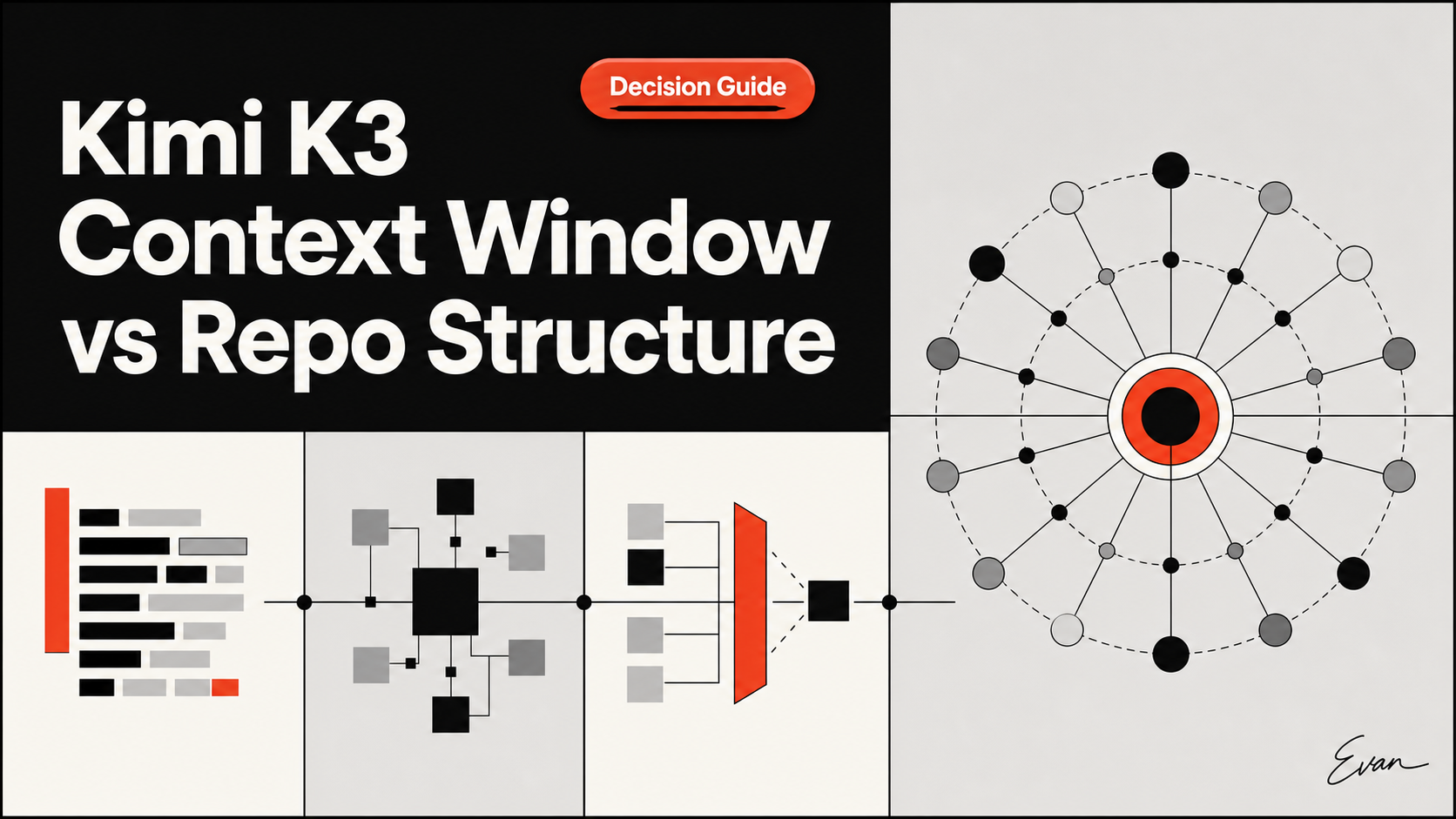
Kimi K3's context window can put more code and project material in one request, but repository structure still determines whether a coding agent can find, interpret, and verify the right evidence. Use the larger window to carry a scoped task packet and retrieved files. Use structure—module boundaries, dependency paths, tests, decisions, and revision-linked graph queries—to discover relationships and keep the plan reviewable.
The current official Kimi API documentation describes kimi-k3 with a one-million-token context window. Kimi Code, however, documents two K3 choices: k3 is up to 1M only on eligible membership tiers, while k3-256k is fixed at 256K. The meaningful comparison is therefore not “1M versus structure.” It is the effective client window and context policy versus a source-linked model of the repository.
Quick Verdict
Choose a larger Kimi K3 context window when a known task needs several related files, tests, decisions, or tool results together. Choose structured repo context when the difficult part is finding the relevant relationships across modules, generated layers, documents, and history. Use both for high-impact multi-file work: retrieve a small, revision-bound evidence set, give it to K3, inspect current source, and verify the change.
| Need | Larger context helps most when | Repo structure adds most when | Required final check |
|---|---|---|---|
| Diagnose a known subsystem | The relevant files and logs are already identified | The failure may cross an unknown dependency boundary | Read source and reproduce the failure |
| Plan a multi-file change | The task packet includes contracts, tests, and decisions | Consumers, configuration, or ownership are unclear | Review cited paths and affected tests |
| Refactor an interface | The agent must compare several implementations at once | Callers, schemas, migrations, and rollout paths must be found | Run compatibility and regression checks |
| Reuse project knowledge | A stable brief can remain in the request | Facts must survive sessions and model changes with provenance | Match every result to a revision |
This page owns the K3-specific capacity-versus-structure decision. It does not prescribe a benchmark or test rubric; Kimi K3 Codebase Understanding Tests owns that separate evaluation problem.
What a Larger Context Window Helps With
A larger window reduces the need to choose between a task description, code excerpts, a failing test, a decision record, and prior tool output. It can make long context coding more coherent when those materials are known, current, and traceable. Kimi's K3 quick-start documentation also describes automatic prefix caching for repeated long prefixes, which can make a stable task packet operationally practical on the API surface.
Kimi Code adds an important constraint: the actual window depends on model ID and plan. Its current model documentation says k3 can reach 1M for higher-tier members, whereas k3-256k is a 256K variant. It also notes that a tool may compact a session when switching from the 1M model to the 256K model if the current history exceeds 256K. A coding agent can therefore have less usable evidence than a headline context number suggests.
Use the window deliberately for:
- a task contract with desired behavior, constraints, and non-goals;
- code excerpts and tests already selected by a maintainer or retrieval step;
- recent, source-linked architecture and decision records;
- tool results that include the command, revision, paths, and uncertainty; and
- a final plan that separates observed facts from hypotheses.
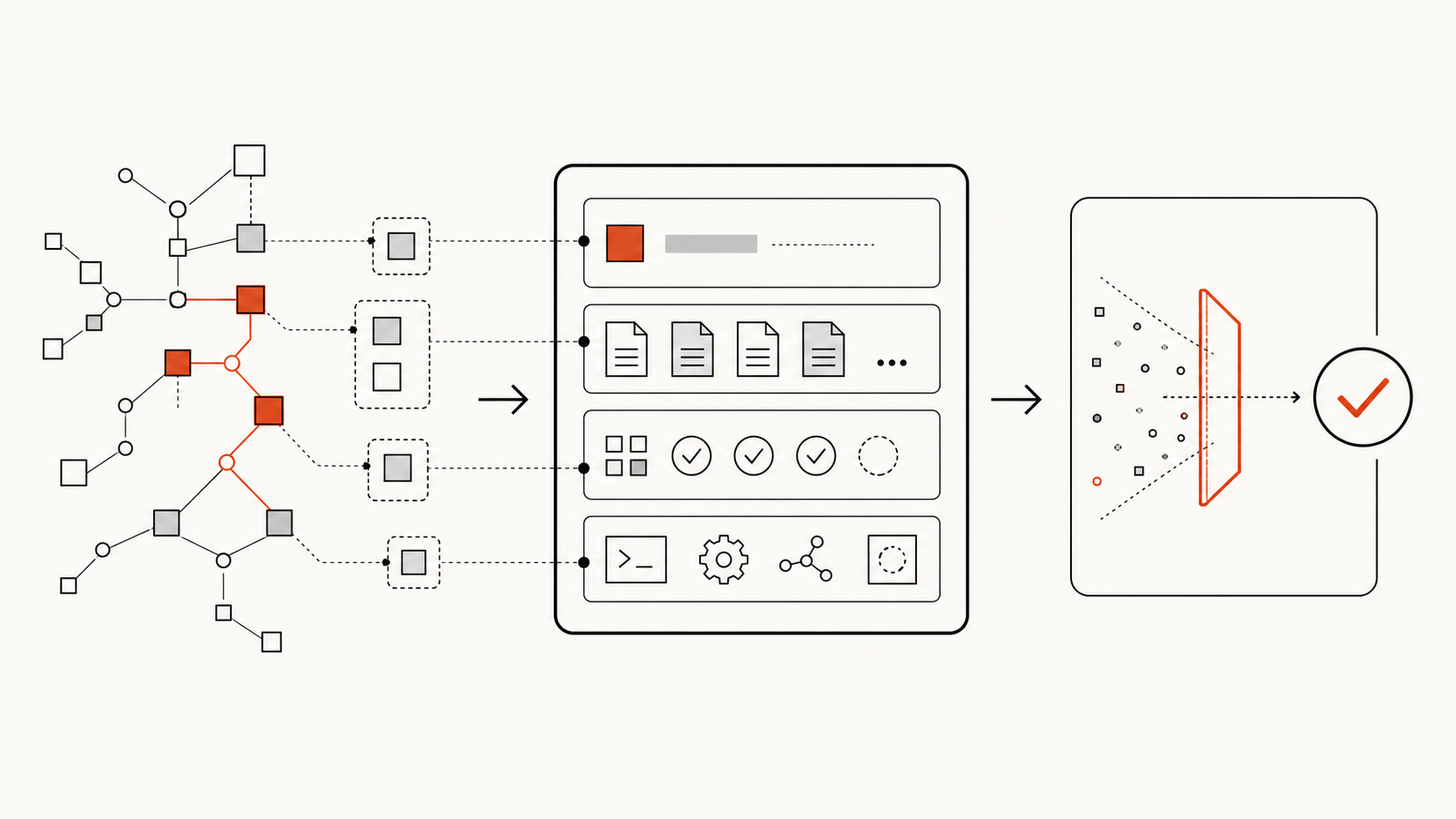
More tokens do not make every input equally valuable. A large prompt can preserve an obsolete configuration, an earlier wrong assumption, a hidden consumer, or duplicated summaries. The window is capacity. Selection, freshness, and verification remain workflow responsibilities.
What Repo Structure Adds Beyond Tokens
Repository structure turns relationships into evidence the agent can query. At minimum, it identifies module boundaries, entry points, public interfaces, dependency paths, configuration, tests, ownership, and decisions. A revision-bound code knowledge graph can make those relationships explicit across source and project material, but it should return source paths and an indexed commit rather than a free-floating answer.
This is valuable because software systems have relationships that token order hides. A schema can affect a worker defined far from its API route. A feature flag can alter behavior without appearing in an import tree. A generated client can conceal a consumer. A decision record can explain why a seemingly simple refactor is forbidden. Reading more files may find these facts, but it does not guarantee that the model selects or interprets them correctly.
For a coding agent, structured repo context should answer questions such as:
- Which modules own the behavior and public contract?
- Which direct and indirect consumers may break?
- Which tests, fixtures, migrations, and deployment settings constrain the change?
- What source or decision record supports each relationship, and at which revision?
That is why repository structure AI is not a substitute for K3 and K3 is not a substitute for structure. The model uses evidence; the structure discovers and qualifies it. The practical workflow in Kimi K3 Context Engineering for Coding Agents shows how to turn those answers into a task packet.
Where Long Context Still Fails
Long context fails when the important fact is absent, stale, ambiguous, or lost in a broad packet. It also fails when a client compacts the history, changes model IDs, omits tool-call history, or configures a context cap below the model's advertised maximum. Kimi's own K3 guidance says multi-turn and tool workflows must preserve the full assistant message, while Kimi Code warns that model changes invalidate cache context and can trigger compaction. These are explicit operational limits, not edge cases to ignore.
Common failure patterns include:
- False locality: The agent edits files near a symptom but misses a configuration or external consumer.
- Stale authority: A design note or prior summary conflicts with the current branch and is treated as fact.
- Relationship hallucination: The model infers a call or ownership link that source does not support.
- Prompt overload: Relevant evidence is present but not distinguished from irrelevant history.
- Unverified completion: The patch looks coherent but focused tests, contract checks, or rollout evidence are absent.
Do not solve these failures by simply maximizing the window. Require file and symbol citations, record the effective context setting, give tool results their source revision, and make the agent state what it could not inspect. If the task crosses a high-risk boundary, route it to a human reviewer before edits are merged.
How to Combine Context Windows and Code Graphs
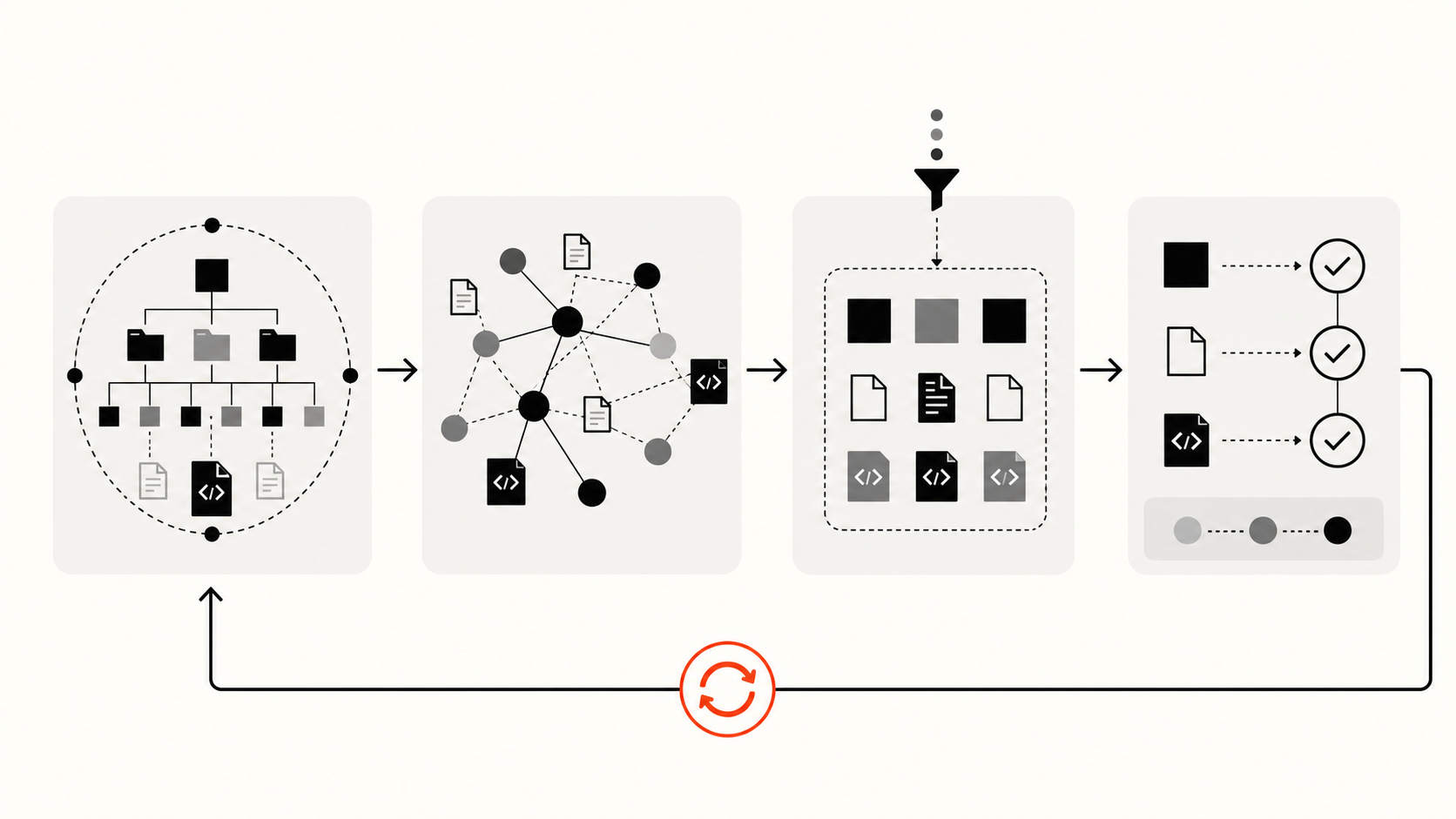
Combine the approaches in sequence. First use a repository index or knowledge graph to retrieve the narrowest current set of modules, relationships, tests, decisions, and gaps. Then place that evidence in K3's context with the task contract. Let the agent use tools to inspect current files and run focused checks. Finally, refresh or invalidate affected graph records after the change.
| Step | Window role | Structure role | Review signal |
|---|---|---|---|
| Scope the task | Carries goal, non-goals, and accepted constraints | Names likely boundary and owner | No unapproved expansion |
| Retrieve evidence | Holds selected files and tool output together | Finds callers, dependencies, docs, tests, and gaps | Sources point to task revision |
| Plan | Compares evidence and states uncertainty | Keeps relationships typed and attributable | Every critical claim is cited |
| Change and verify | Retains the patch and test evidence | Identifies affected consumers and stale records | Tests and human review pass |
Graph retrieval should not be treated as an answer key. A graph can miss runtime behavior or become stale; K3 can misread a correct result. Pair graph output with source inspection and tests. Kimi K3 Knowledge Graph for AI Developers explains the graph layer in detail, while Macaron Context vs Code Knowledge Graph offers a separate product-context comparison. For Graphify's broader code-relationship work, start at the Graphify hub.
FAQ
What context window claims should teams verify?
Verify the official model ID, the API or client surface, account-tier entitlement, configured client context limit, compaction behavior, reasoning setting, and whether tool and prior-assistant messages are retained. For K3, distinguish the API's one-million-token documentation from Kimi Code's plan-dependent k3 capacity and fixed-256K k3-256k variant. Record the effective setting for every serious trial.
When should teams prefer structured repo context?
Prefer it when the task requires discovering callers, ownership, configuration, schema consumers, tests, historical decisions, or relationships across repositories and documents. It is also the safer default when multiple agents or sessions need a shared, reviewable evidence layer. Use long context after that retrieval step, not in place of it.
Can long context and code graphs conflict?
Yes. A long prompt can carry an old branch summary while a graph is indexed from a newer revision, or the graph can be stale while the prompt includes current files. Compare revisions and sources, inspect the disputed code, and refresh or invalidate the graph record. Never settle the conflict by assuming the larger context or the more polished graph output is correct.
Conclusion
Kimi K3 gives developers substantial context capacity, but capacity does not establish repository structure, freshness, or authority. Use the effective K3 window to reason over a focused evidence packet. Use structured repository context to discover relationships and preserve provenance. Use source, tests, and human review to decide whether a change is safe.
The durable rule is simple: more code in context helps only after the team has identified which code, relationships, and constraints matter for the task at the current revision.
Leave a Reply