Kimi K3 context engineering means giving a coding agent a small, current, reviewable evidence packet before it edits a repository. Start with a bounded task, add the architecture, dependencies, decisions, and tests that govern it, let the agent inspect the current revision, and keep a human accountable for the final change. A one-million-token model window can hold more material; it does not turn an old chat or a broad prompt into durable repository memory.
Kimi exposes K3 as the kimi-k3 API model and as k3 or k3-256k in Kimi Code. Its official documentation describes tool calling, long context, and coding clients, but it does not describe a native, persistent repository-memory feature. Treat repository memory as a team-maintained context layer, not an ability the model automatically acquires. For a K3-specific evaluation protocol, see Kimi K3 Codebase Understanding Tests.
Before You Use Kimi K3 on a Repo
Confirm the actual surface before you design the workflow. On the Kimi API platform, kimi-k3 is documented with a one-million-token context window, automatic prefix caching, custom tools, and top-level reasoning_effort. Kimi Code documents a separate membership-based client surface: k3 can reach up to 1M for eligible plans, while k3-256k is fixed at 256K. A third-party agent can also impose a smaller context setting or compact the session before K3 receives it.
That distinction changes the first operational question. Do not ask “Does K3 have 1M?” Ask “Which model ID, client, account tier, client-side context cap, compaction policy, and reasoning setting will this task actually use?” Record them with the repository revision. A result from a 256K compacted session and one from a 1M API request are different runs, even if both say “K3.”
Use this preflight before granting edit permissions:
| Check | Why it belongs in the task record | Owner |
|---|---|---|
| Repository commit and working-tree state | Makes source claims reproducible and exposes local changes | Task owner |
| Model ID, surface, and effective window | Separates kimi-k3, k3, and k3-256k behavior |
Agent operator |
| Task boundary and non-goals | Prevents a broad request from becoming an unreviewed redesign | Tech lead |
| Permissions and network policy | Limits what the agent can change or disclose | Repository owner |
| Required tests and acceptance criteria | Gives the agent a verifiable stopping condition | Reviewer |
Kimi's API guidance also says that multi-turn and tool workflows must return the full assistant message, not only its visible text. Preserve that protocol in the harness. If a tool wrapper silently drops tool-call history, the next turn has less evidence than the operator assumes.
Prepare Architecture and Dependency Context
An AI coding context should begin with the task, not with a repository dump. Write a one-page task contract: the user-visible behavior to change, the interface that must remain compatible, relevant paths, prohibited areas, expected tests, and the definition of done. Then attach the smallest current evidence set that can prove or disprove the plan.
For a multi-file change, that packet often includes:
- an architecture note that identifies entry points, ownership boundaries, and runtime flow;
- dependency evidence for imports, calls, schemas, configuration, generated artifacts, and external consumers;
- a recent test or fixture that demonstrates the contract;
- current build, lint, and focused-test commands; and
- a short list of unknowns the agent must investigate before editing.
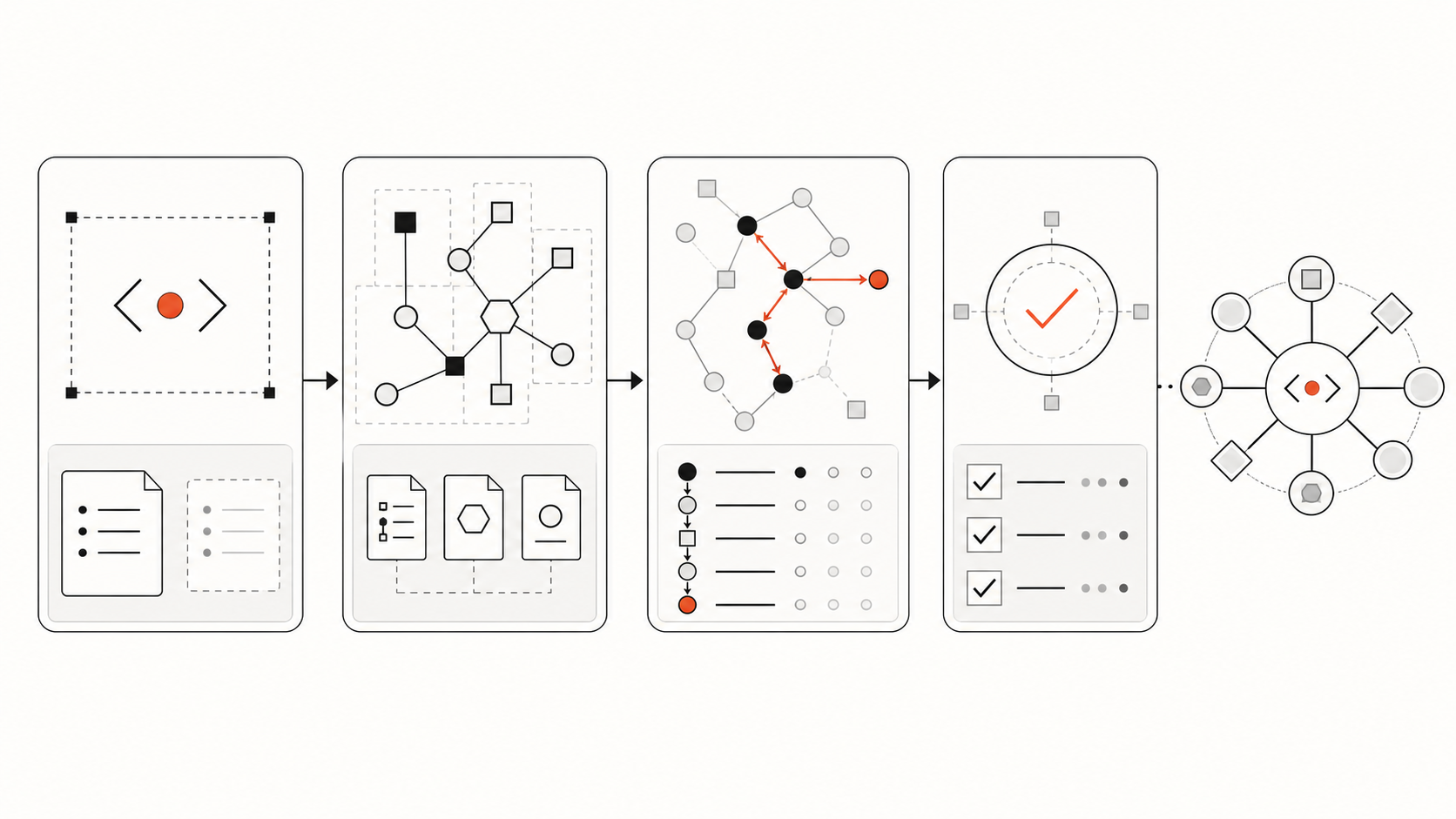
Keep evidence distinguishable. A design document states intended behavior; source and tests show implemented behavior; an issue explains a requested change; a tool result reports what was observed at a particular revision. Labeling these roles helps the agent avoid treating an outdated diagram as a runtime fact.
K3 can use custom tools and dynamic tool definitions, but tool availability is not repository understanding. Expose narrow queries such as “find references for this symbol,” “read this lockfile,” or “run this focused test.” Return file paths, revisions, command output, and uncertainty with every result. A giant “repository search” tool that produces untraceable summaries makes later review harder.
Add Repository Memory and Historical Decisions
Repository memory is a maintained record of decisions and durable facts that are expensive to rediscover. It is not the agent's conversation transcript. Keep the two separate.
Useful memory candidates include an architecture decision record, supported deployment targets, compatibility rules, migration status, package ownership, and an explanation of an intentionally unusual dependency. Each entry should identify an owner, source links, the affected paths, a revision or date, and an expiry or review trigger. A note without a source or freshness rule is a hint, not an authority.
Use a simple lifecycle table:
| Context item | Refresh trigger | First person to verify |
|---|---|---|
| Generated dependency map | Lockfile, build graph, or public API changes | Maintainer of the affected module |
| Architecture decision | A proposed change challenges its assumptions | Decision owner or tech lead |
| Task-specific issue summary | Ticket scope, priority, or acceptance criteria changes | Task owner |
| Test and environment instructions | Toolchain, fixture, or CI image changes | Build owner |
This makes “repository memory” accountable. If the entry conflicts with current source, the agent should surface the conflict, inspect the revision, and ask for a decision rather than reconcile it by guessing. For workflows that must share evidence across more than one agent or model, Share Repo Context Across Coding Agents explains why source-linked packets travel better than copied chat histories.
Query Context Before Multi-File Tasks
Require an evidence pass before any multi-file edit. The agent should first name the likely entry point, trace one relevant dependency path, identify tests and configuration, and list assumptions. Only then should it propose an edit plan. This sequence is slower than immediate code generation, but it exposes a wrong model of the repository before a patch spreads it across files.
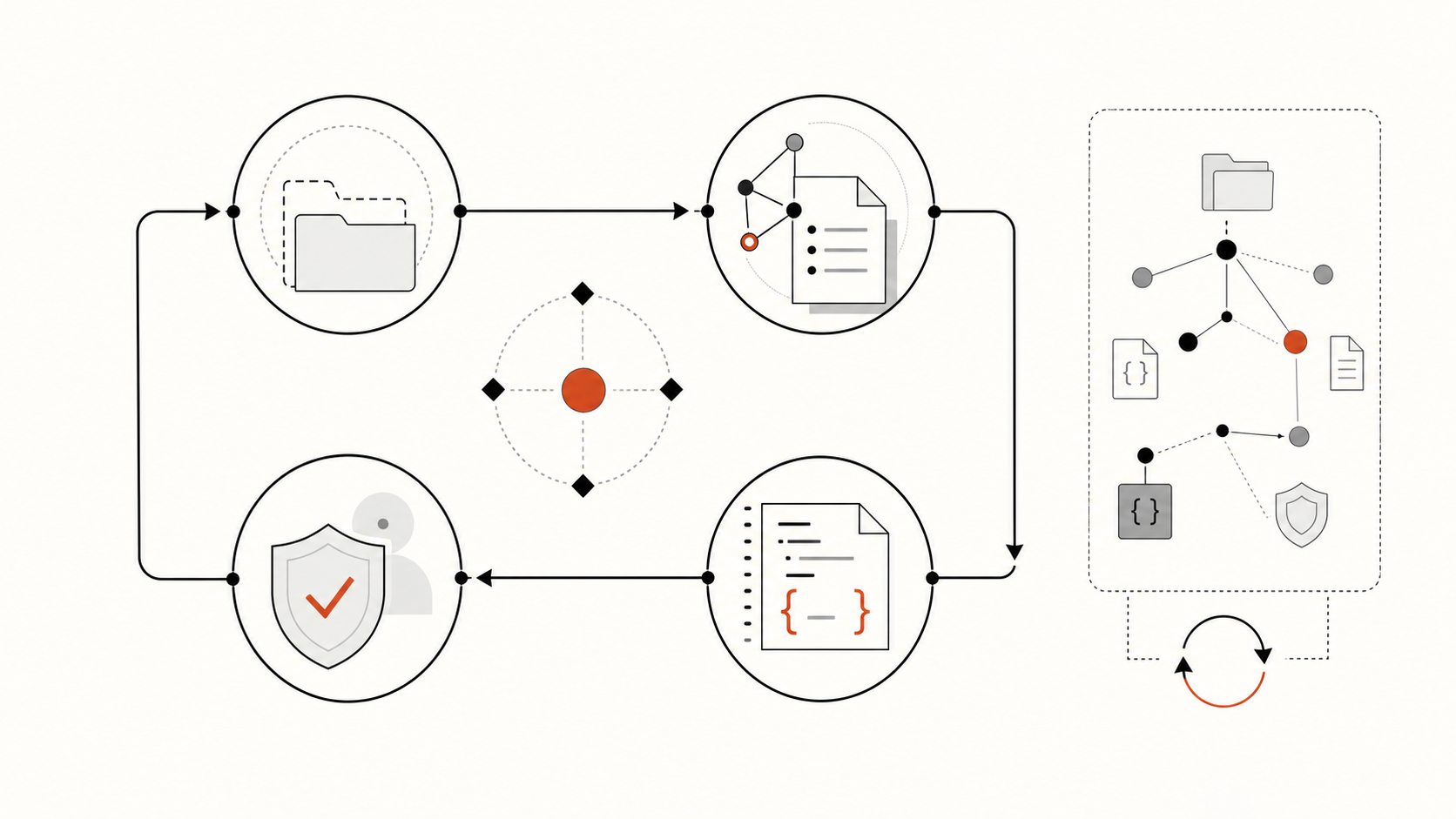
An effective Kimi K3 coding-agent workflow has four gates:
- Scope: Restate the change, compatibility constraints, permissions, and non-goals.
- Evidence: Query current source, dependency paths, tests, and approved decision records; cite paths and symbols.
- Plan: Separate observed facts from inferences, identify unknowns, and request approval for a risky boundary crossing.
- Verification: Run the agreed checks, inspect the diff, and report every remaining uncertainty.
Kimi's documented tool protocol supports this shape: the client can provide tools, process returned tool calls, append the full assistant message and tool results, and call again. The protocol is a transport mechanism, however. Your team still decides which tool results count as evidence and which changes need approval.
For larger projects, expose structural queries through a revision-bound index or graph when repeated relationship discovery is costly. That layer should return the source files and indexed revision behind a result. It is complementary to the model window, not a replacement for source inspection. The companion guide Kimi K3 Knowledge Graph for AI Developers covers that boundary.
Limits, Drift, and Human Review
Long context has predictable failure modes. It can contain stale design notes, hide the few files that determine behavior, retain an earlier mistaken plan, or be compacted by the client. Kimi Code explicitly notes that changing model IDs can invalidate built context caching and recommends a new session; its model page also warns that a session over 256K may be compacted when moving from k3 to k3-256k. These are workflow facts, not proof of code correctness.
Counter drift with three controls. First, make every nontrivial conclusion cite a path, symbol, test, command, or decision record. Second, attach a revision and freshness condition to every derived summary. Third, require a human reviewer for authentication, authorization, data migrations, public contracts, destructive commands, and unbounded refactors.
Do not treat a successful tool call as approval. A tool can read the wrong environment, a test can omit a consumer, and a model can turn a plausible inference into a confident sentence. The reviewer should check the evidence trail as well as the diff. If the task depends on how a specific terminal agent supplies files and tools, retain its own configuration boundary; for example, Context Engineering for OpenCode covers OpenCode rather than assuming that its behavior transfers to Kimi Code.
FAQ
What repository context should expire first?
Expire derived summaries, generated dependency maps, CI logs, and ticket summaries first because they change with code, configuration, and scope. Keep an architecture decision longer only when it has an owner and a clear review trigger. Source-linked facts do not become permanently true merely because they were once placed in a prompt.
Who should review generated project notes?
The maintainer responsible for the affected boundary should review technical claims; a task owner should review scope and acceptance criteria. For cross-cutting notes, assign one accountable owner rather than asking an agent to merge disagreements. The reviewer should be able to trace each important statement to a current source or explicitly mark it as an assumption.
How much context is too much?
It is too much when the agent cannot distinguish task-critical evidence from background, when stale material conflicts with current source, or when the client will compact it before the decision is made. Start with a small packet, let the agent retrieve evidence as needed, and retain a stable task contract and provenance trail instead of maximizing token use.
Conclusion
Kimi K3 can support a rigorous coding-agent workflow through its hosted API and Kimi Code surfaces, long-context options, and tool-calling protocol. Reliable repository work still comes from the context system around it: bounded tasks, current architecture and dependency evidence, expiring memory, explicit queries, tests, and human approval.
Use the effective context window as capacity, not as a repository-memory guarantee. Before a multi-file edit, require the agent to show what it observed, what it inferred, what it could not verify, and how the proposed patch will be tested.
Leave a Reply