1-Minute Briefing
01 | Claude Code accused of hidden China-user detection; Alibaba bans Claude
A reverse-engineering report claimed Claude Code had used timezone checks, proxy-domain matching, and Unicode-based prompt markers to identify suspected China-based users. Anthropic said the mechanism was an anti-abuse experiment aimed at resale and distillation risks, and that the code was removed in a July 2 update. Alibaba later classified Claude products as high-risk software and ordered employees to uninstall them from work environments starting July 10.
02 | DeepSeek V4 set for mid-July release, with peak-hour API pricingDeepSeek V4 is moving out of preview and is expected to launch officially in mid-July. The new pricing model doubles API prices during weekday peak hours in Beijing time: 9:00-12:00 and 14:00-18:00. Off-peak pricing remains unchanged. The older deepseek-chat and deepseek-reasoner endpoints are scheduled to shut down on July 24.
03 | Meituan releases LongCat-2.0, a trillion-parameter model trained on domestic chips
LongCat-2.0 has 1.6T total parameters, around 48B active parameters on average, a dynamic activation range of 33B to 56B, and native 1M-token context support. Meituan says the model was pretrained from scratch on a 50,000-card domestic accelerator cluster, making it a large-scale test of China’s local AI compute stack. Independent third-party benchmarks are still limited.
04 | Claude Sonnet 5 launches, beating Opus 4.8 on Terminal-Bench
Anthropic released Claude Sonnet 5, positioning it as the strongest agentic model in the Sonnet line. It scored 80.4% on Terminal-Bench 2.1, ahead of Claude Opus 4.8 at 74.6%, while reaching 63.2% on SWE-bench Pro. The limited-time API price is $2 per million input tokens and $10 per million output tokens, rising to $3 and $15 after August 31.
05 | Fable 5 returns globally, then moves from subscription to usage billing
After the U.S. Commerce Department lifted restrictions on June 30, Claude Fable 5 returned to global availability on July 1. Three days later, Anthropic announced that Fable 5 would be removed from Pro-style subscriptions and moved to separate usage credits from July 7. Pricing is $10 per million input tokens and $50 per million output tokens.
06 | Anthropic launches Claude Science for labs and pharma teams
Claude Science is Anthropic’s new research workbench for scientific users. It is designed to support literature review, experimental planning, data analysis, chart generation, and manuscript iteration inside longer research workflows. The initial target customers are academic labs and pharmaceutical R&D teams.
07 | Gemini Spark lands on Mac as Google rolls out new image and video models
Gemini Spark is now available on Mac, with integrations across Google Tasks, Keep, Canva, Dropbox, and other apps. Google also launched Nano Banana 2 Lite and Gemini Omni Flash for developers. Nano Banana 2 Lite focuses on fast, low-cost image generation, while Omni Flash supports mixed text, image, and video inputs for video generation.
08 | Cursor and OpenClaw both move onto mobile
Cursor Mobile lets users manage cloud coding agents from a phone and stay in sync with desktop sessions. OpenClaw launched native iOS and Android apps that connect to a self-hosted OpenClaw Gateway, allowing users to approve actions and expose selected device capabilities to agents.
01 | Claude Code Accused of Hidden Detection Logic; Alibaba Bans Claude
A developer reverse-engineering Claude Code found hidden logic that had not appeared in the changelog. According to the public analysis, the code had been present since version 2.1.91 on April 2 and checked whether the system timezone matched Asia/Shanghai or Asia/Urumqi when proxy use was detected.
The more sensitive part was domain matching. The report said Claude Code contained a 147-entry domain list covering Chinese companies such as Baidu, Alibaba, ByteDance, Moonshot AI, MiniMax, and StepFun, as well as Claude resale and mirror services. The detection result was allegedly encoded through subtle formatting changes: switching slashes and hyphens in dates, and replacing apostrophes with visually identical Unicode characters.
Anthropic engineer Thariq Shihipar said the mechanism was an experimental anti-abuse measure introduced in March to prevent unauthorized resale and model distillation. The company said the code was removed in a July 2 update. The dispute was later covered in broader reports on the Claude Code security controversy. Alibaba responded by adding Claude products to its high-risk software list, banning workplace use of Claude Sonnet 5, Claude Opus 4.8, Claude Fable 5, Claude Code, and related agent tools from July 10.
02 | DeepSeek V4 Targets Mid-July Release, Peak-Hour API Prices Double
DeepSeek announced on June 29 that DeepSeek V4 is expected to launch officially in mid-July, graduating from preview. The production version is expected to bring additional performance and feature updates, but the bigger operational change is pricing.
Under the new model, weekday peak hours in Beijing time, from 9:00 to 12:00 and 14:00 to 18:00, will cost 2x the base API price. Evening and weekend usage stays at the preview-period rate. For teams that call DeepSeek heavily during Chinese business hours, this directly raises daytime costs; teams with batch or async workloads can shift jobs to off-peak windows to avoid the premium. DeepSeek’s public API pricing documentation is now worth watching more closely than the model card itself.
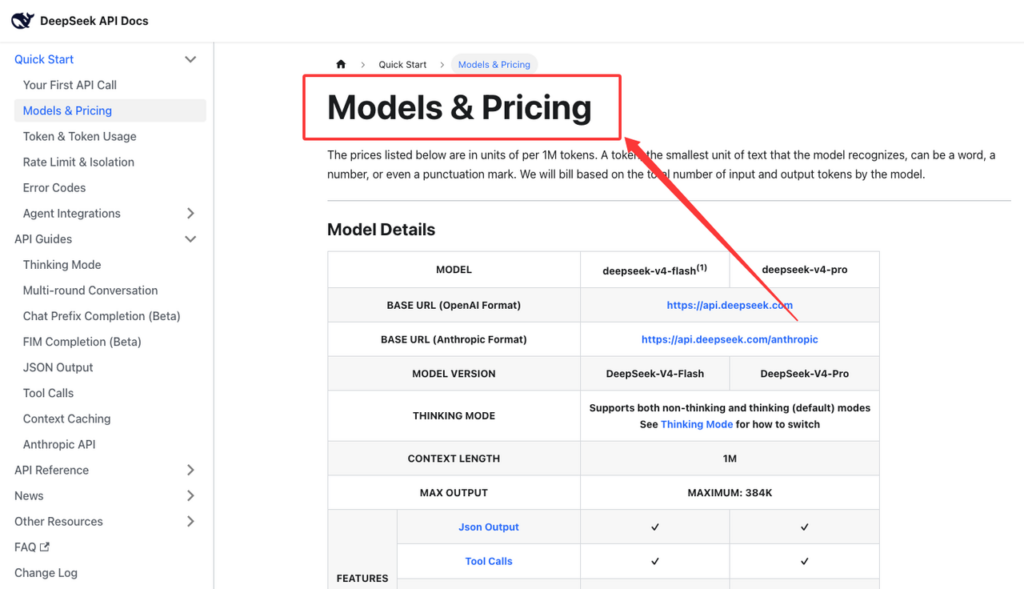
The older deepseek-chat and deepseek-reasoner endpoints will be retired on July 24 and will stop accepting requests after that date. Any production system still using the old endpoints needs to migrate before then.
03 | Meituan Releases LongCat-2.0, a Trillion-Parameter Model on Domestic Compute
Meituan released LongCat-2.0 on June 30. The model has 1.6T total parameters, around 48B active parameters on average, and a dynamic activation range between 33B and 56B. It also supports a native 1M-token context window.
The model uses an ultra-sparse MoE architecture, activating different parameter ranges depending on the task. Meituan says the model was pretrained from scratch on a 50,000-card domestic AI accelerator cluster and describes it as the first trillion-parameter model to complete both training and inference fully on Chinese-made chips. External coverage of Meituan’s LongCat-2.0 release frames it as an infrastructure milestone as much as a model launch.
Independent evaluation is still thin, so capability claims need more testing. But from a systems point of view, the important part is that a domestic compute cluster at this scale appears to have supported full pretraining, inference, and long-context service.
04 | Claude Sonnet 5 Launches, Passing Opus 4.8 on Terminal-Bench
Anthropic released Claude Sonnet 5 on June 30, positioning it as the strongest agentic model in the Sonnet family. On Terminal-Bench 2.1, it scored 80.4%, ahead of Claude Opus 4.8 at 74.6%. On SWE-bench Pro, it reached 63.2%, close to Opus 4.8’s 69.2%, and it scored 84.7% in BrowseComp single-agent search evaluation.
Claude Sonnet 5 supports a native 1M-token context window and up to 128K tokens of output in a single response. The limited-time API price is $2 per million input tokens and $10 per million output tokens. After August 31, pricing returns to $3 input and $15 output. Sonnet 5 is now the default model for Claude Code as well as free and Pro Claude users.
Anthropic staff also said Claude Code’s system prompt has been cut by roughly 80%. The message is interesting: newer models seem to need less handholding, and too many examples or constraints may start to limit performance instead of improving it.
05 | Fable 5 Returns Globally, Then Moves to Usage Billing
Claude Fable 5’s export-control episode lasted almost three weeks. The U.S. Commerce Department notified Anthropic on June 30 that the restrictions had been lifted, and Fable 5 returned to global availability on July 1. Before that, the model had been pulled globally on June 12, with Claude Mythos 5 partially restored to around 100 organizations on June 26.
Access came back with new safety controls. Anthropic introduced an updated safety classifier and worked with partners including Amazon, Microsoft, and Google on jailbreak severity evaluation. Reports on Fable 5 access being restored also noted that the free-access window would be brief.
On July 7, Fable 5 was removed from Pro-style subscription plans and moved to a separate usage-credit system. Pricing is $10 per million input tokens and $50 per million output tokens, five times the limited-time Sonnet 5 price. Anthropic says this is not permanent and that Fable may return to subscriptions when server capacity allows, but heavy users will feel the cost change immediately.
06 | Anthropic Launches Claude Science for Labs and Pharma
Anthropic also introduced Claude Science, a research workbench aimed at scientists. It supports literature review, experimental planning, data analysis, chart generation, and manuscript drafting inside longer research workflows, so users do not need to keep moving between separate tools for every step.
The initial audience is academic labs and pharmaceutical R&D teams. Anthropic wants scientists to spend more time on judgment and creative research, and less time formatting, moving data, and repeating analysis steps. The launch has been described as an AI workbench for scientific research, with life sciences and scientific computing as early focus areas.
This also shows how Anthropic is splitting the Claude product line. Sonnet 5 pushes coding and agents, Fable 5 moves toward high-end usage billing, and Claude Science goes after vertical research workflows.
07 | Gemini Spark Comes to Mac, Alongside New Image and Video Models
Gemini Spark launched on Mac on July 1. It integrates with Google Tasks, Google Keep, Canva, Dropbox, and other third-party apps, and can handle multi-step tasks such as ordering, shopping, design, and real-time topic tracking. Compared with a normal chat assistant, Spark is closer to a desktop agent that can operate across files and apps.
On the same day, Google released Nano Banana 2 Lite and Gemini Omni Flash for developers. Nano Banana 2 Lite is built for low-cost, high-speed image generation, producing an image in around four seconds at a reported cost of $0.034 per thousand images. Gemini Omni Flash supports mixed text, image, and video inputs for video generation, with natural-language editing after generation.
The direction is clear: Gemini is moving from answering questions toward operating apps, tracking context, and generating media across modalities.
08 | Cursor and OpenClaw Both Launch Mobile Apps
Cursor released Cursor Mobile on June 30. Users can talk to cloud coding agents from their phones, check generation progress, and stay synced with the desktop app. Cursor’s bet is that developers are shifting from writing every line of code themselves to managing code-generation agents, and mobile access makes that management layer more continuous.
OpenClaw launched native iOS and Android apps the day before. Unlike a standalone chatbot, the mobile app acts as a control node. It connects to a self-hosted OpenClaw Gateway, which then routes requests to backend AI agents. Users can authorize access to device capabilities such as camera, screen, location, contacts, and calendar.
The two launches point in the same direction. AI coding tools are moving beyond “sit at a computer and type prompts.” The next interface is about monitoring, approving, and taking over agent work from wherever you are.
Related posts:
Leave a Reply