The first thing I check with a new coding model is not whether it can solve a benchmark prompt. I check what happens when it lands in a repo where the answer depends on three folders, an old design decision, and a test nobody remembers writing. Ornith-1.0 is interesting because it pushes open coding models further into agentic workflows. But the harder question is still the same: what structure does the model actually see?
For developers using OpenCode, OpenHands, Ollama, or other local agent stacks, the model is only one layer. The missing layer is often a code knowledge graph: a durable map of files, symbols, docs, dependencies, and relationships that an AI coding agent can query before it starts guessing.
Why Ornith-1.0 Raises the Context Question
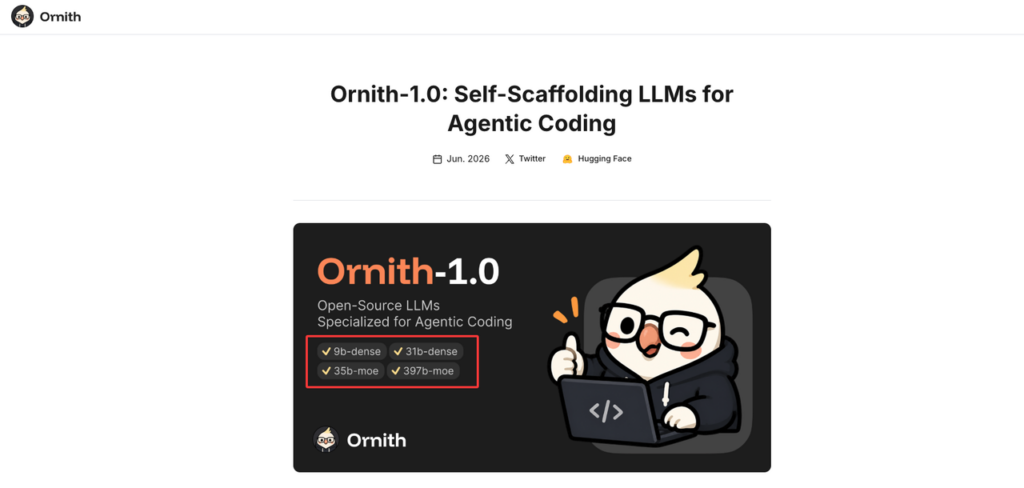
DeepReinforce describes Ornith-1.0 as a family of open-source models for agentic coding, with 9B Dense, 31B Dense, 35B MoE, and 397B MoE variants. The public release frames the model around self-scaffolding: the model is trained not only to generate solutions, but also to generate task scaffolds that help guide those solutions.
That is a useful direction. Agentic coding is not just “write the patch.” It includes planning, tool use, shell commands, retries, test interpretation, and sometimes a small amount of stubbornness. A model that learns better scaffolds may become more reliable inside terminal workflows.
But I would separate two things.
- One is model capability. Can the model reason, call tools, use long context, and recover from failed attempts?
- The other is repo visibility. Can the model see the right structure before it acts?
Those are related, but not the same. A stronger model can still inspect the wrong files. A longer context window can still be filled with low-value text. A local deployment can still lack the project memory that a team has built up over months.
What Open Coding Models Can and Cannot See
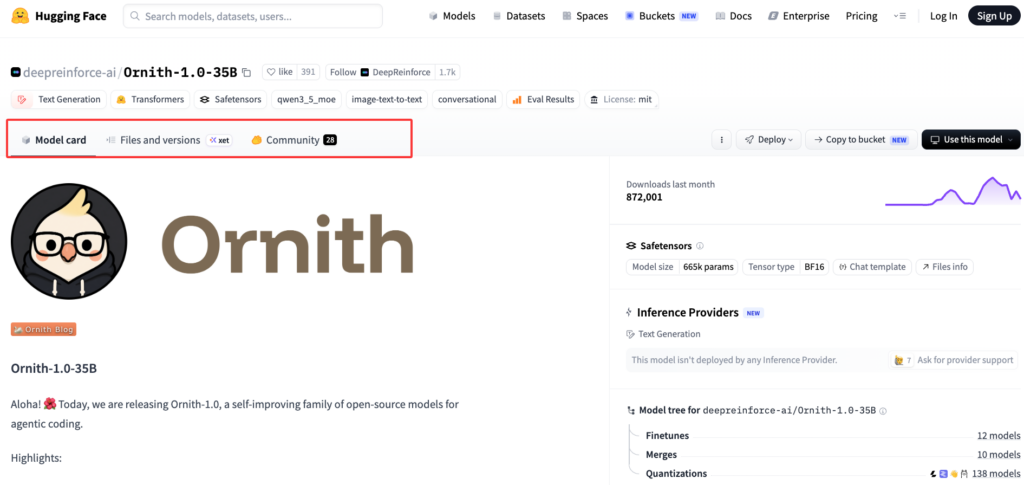
The Ornith-1.0-35B model card is unusually relevant for workflow builders because it documents more than a download link. It shows OpenAI-compatible serving through vLLM and SGLang, parser requirements for reasoning and tool calls, a 262,144-token serving example, and agentic usage examples for frameworks and coding CLIs.
That means a developer can wire the model into local or self-hosted workflows instead of waiting for a hosted product to expose it. You can run an endpoint, point tools at it, and start testing.
But here is the uncomfortable part: model serving does not equal codebase understanding.
A model can see:
- Files included in the prompt.
- Output from tools it is allowed to run.
- Search results from grep, ripgrep, LSP, or custom tools.
- Instructions from AGENTS.md, README files, or framework-specific config.
- Conversation history until the context gets compacted or dropped.
A model usually cannot see:
- Why a module boundary exists.
- Which docs are stale.
- Which generated files should not be edited.
- Which previous refactor failed.
- Which ownership boundary matters in review.
- Which dependency path is architectural rather than incidental.
This is where open models make the problem more visible. When you run a local model through Ollama or a self-hosted endpoint, you control more of the stack. That is good. But you also inherit the responsibility for context retrieval, graph freshness, memory policy, and review boundaries.
OpenCode is a good example. Its official docs describe it as an open-source AI coding agent available through terminal, desktop, and IDE surfaces. It supports provider configuration, project initialization, AGENTS.md generation, planning, undo, and team sharing. Those are useful mechanics. They still need a reliable context layer underneath.
Why Large Repos Need Code Knowledge Graphs
A large repo fails differently from a small repo.
In a small project, a coding model can often read a few files and get enough signal. In a larger system, the relevant context is rarely sitting in one file. It is spread across imports, tests, generated types, config, migrations, internal docs, issue history, and naming conventions.
That is where a code knowledge graph starts to matter.
A code knowledge graph does not try to replace the model. It gives the model a map. The graph can represent relationships such as:
| Repo signal | Why it matters for agents |
| Symbol definitions and references | Helps the agent avoid editing the wrong implementation |
| Import and dependency paths | Shows how a change can move across modules |
| Test ownership and coverage | Points the agent toward validation paths |
| Docs-to-code links | Separates living documentation from stale notes |
| Generated files | Reduces accidental edits to derived artifacts |
| Architectural communities | Helps the model reason at system level, not file level |
This matters even more when the agent is local. If you run an open model through Ollama, llama.cpp, vLLM, or SGLang, you may not get the same managed retrieval layer that a closed coding product provides. That can be an advantage if you build your own layer well. It can also be a quiet failure mode if every session starts from scratch.
The real test is not whether the model can summarize the repo. The test is whether it can answer, “Which path should I inspect next, and why?”
How Graphify Turns Codebases Into Queryable Structure
Graphify fits into this workflow as a knowledge layer for AI coding agents. The point is not to make every local model magically understand a repo. That would be the wrong promise. The point is to give agents a queryable structure that makes context selection less random.
For an Ornith-based workflow, the shape could look like this:
- Serve the model locally or on your own infrastructure.
- Connect it through OpenCode, OpenHands, or another agent interface.
- Build a code graph from the repo and supporting docs.
- Expose graph queries through MCP, CLI tools, or a retrieval service.
- Ask the agent to justify which files, symbols, and docs it used before editing.
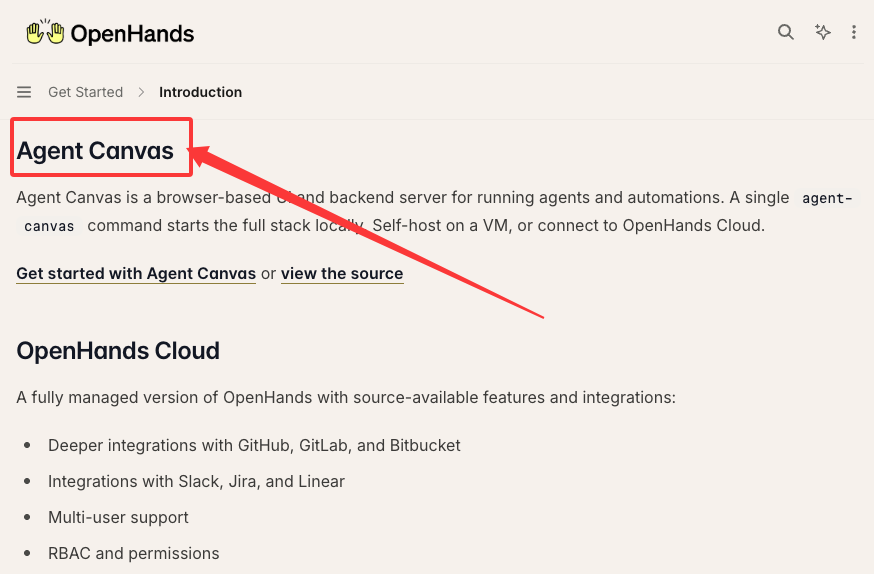
OpenHands is especially relevant here because its current docs describe multiple operating surfaces, including Agent Canvas, Cloud, Enterprise, CLI, and SDK paths. The OpenHands introduction also calls out GitHub/GitLab/Bitbucket integrations, multi-user support, permissions, reporting, and budget enforcement in managed versions. That makes it closer to an agent operations layer than a simple terminal assistant.
If OpenHands or OpenCode is the workbench, Graphify can be the map. The agent still needs permissions. It still needs review. It still needs tests. But the first retrieval step becomes less improvised.
For local model users, Ollama is the other practical piece. The Ollama GitHub repository currently positions it around open models and notes that it can connect to existing agents and applications, including OpenCode and other coding-agent tools. That makes Ollama a natural runtime layer for developers who want local inference, offline testing, or simpler model switching.
The key is shared context. If one developer uses OpenCode, another uses OpenHands, and a third uses a raw Ollama endpoint, the team should not rebuild project understanding three different ways. A shared graph layer gives each agent the same structural map.
Limits and What to Verify
I would not treat any of this as automatic.
Before putting an open coding model into a real repo workflow, verify the boring details. Boring details are where production failures usually hide.
Check these first:
- Model variant: 9B, 31B, 35B, or 397B changes hardware, latency, and capability.
- Serving runtime: vLLM, SGLang, Transformers, llama.cpp, or Ollama may expose different behavior.
- Parser settings: reasoning blocks and tool calls need the right parser path.
- Context length: advertised context and usable context are not always the same.
- Tool permissions: shell access, file writes, network access, and secret exposure need policy.
- Graph freshness: stale structure is worse than no structure because it feels authoritative.
- Review cost: measure how much human review the agent adds or removes.
The model card for the 35B variant documents vLLM and SGLang recipes, OpenAI-compatible chat completions, tool calling, and GGUF/Ollama-style usage. That is enough to start a serious evaluation. It is not enough to assume safety, cost, or repo fit.
I would also avoid over-reading benchmark tables. They are useful, but they are not your repo. Your repo has naming conventions, hidden coupling, old migration scripts, and tests that only fail on Tuesday. Fine, maybe not Tuesday. But you know the category.
A good pilot should include three tasks:
- A local bug with a clear failing test.
- A cross-module change with generated or shared types.
- A repo onboarding question where the agent must explain the system path before editing.
If the agent cannot explain why it chose its files, the model is not ready for unsupervised work. If the graph cannot answer the same question, the graph is not ready either.
FAQ
What repo signals should be indexed first?
Start with signals that reduce wrong-file edits.
Index symbols, definitions, references, imports, dependency edges, test files, config files, generated-file markers, and architecture docs. After that, add issue links, ADRs, API schemas, database migrations, and ownership metadata.
Do not index everything with equal weight. A 4-year-old design note and a current type definition should not have the same authority.
When should teams update the code graph?
Update the graph whenever structural meaning changes, not only on a calendar.
Good triggers include merged PRs, dependency changes, generated-code updates, schema migrations, route changes, package boundary changes, and documentation edits. For active repos, a CI-driven update after merge is usually cleaner than asking each developer to rebuild manually.
For slower repos, daily or weekly updates may be enough. The important rule is simple: if the graph is older than the code paths being edited, the agent should know that before it trusts the map.
Can local agents share the same graph layer?
Yes, and they probably should.
A local Ornith endpoint, OpenCode session, OpenHands workspace, and Ollama-backed agent can all benefit from the same graph if the graph is exposed through a common interface: MCP, a local API, a CLI query tool, or a shared artifact generated in CI.
The hard part is not technical access. It is governance. Decide who can update the graph, which repos it covers, how stale entries are handled, and whether sensitive docs are included.
Conclusion
Ornith-1.0 makes open agentic coding more interesting because it gives developers another serious model family to test in local and self-hosted workflows. But model strength is not the whole system.
For small tasks, a capable model and a terminal agent may be enough. For larger repos, the failure mode shifts. The model does not only need more tokens. It needs better structure.
That is where Graphify belongs in the stack. Not as a replacement for OpenCode, OpenHands, Ollama, or the model itself. As the code knowledge graph layer that helps those tools ask better questions before they edit.
The moment this becomes useful is the moment file-level context stops being enough.
Leave a Reply