For teams evaluating open source AI agent projects in 2026, the most interesting projects are no longer only chat interfaces. My opening inference from RisingRepo's snapshot generated on 2026-07-25 at 17:19 UTC is that the stronger pattern was infrastructure: desktop execution, shared browser state, model routing, human-agent workspaces, reusable skills, vertical workflows, and edge inference.
These eight repositories are worth watching because they target different failure points in an agent workflow. Their GitHub momentum is a discovery signal, not proof of quality. Seven had recognized open-source licenses when I checked on July 26, 2026; ESP32-AI had public source but no detected license, so teams should not assume reuse rights.
Quick Verdict
RisingRepo marked its 2026-07-25 17:19 UTC report as a "High Signal Day." For readers comparing open source AI agent projects in 2026, the useful signal is not that one repository won a popularity contest. It is that several projects from different layers rose together.
| Project | Agent-stack role | RisingRepo signal | Verified fit | Main caveat |
|---|---|---|---|---|
| OpenWorker | Desktop execution | +18 | Local-first agent with connectors, schedules, and approval gates | Open beta; Windows build was not code-signed |
| Buzz | Human-agent workspace | +14 | Self-hosted rooms, identities, workflows, and signed events | Broad architecture; parts of workflow approval were still in progress |
| OmniRoute | Model routing | +13 | One local endpoint with routing and fallback | Provider, free-tier, and savings figures are maintainer-reported and volatile |
| Skills | Engineering process | +12 | Small, composable skills for coding agents | Process skills do not supply repository facts by themselves |
| AI Job Search | Vertical workflow | +9 | Local application, CV, review, and interview workflow | Outcome numbers are one maintainer's self-reported case |
| video-shotcraft | Creative skill | +7 | Remotion-based product-video workflow | Very new; third-party asset and Remotion licensing still matter |
| ESP32-AI | Edge inference | +7 | Tiny language model experiment on an ESP32-S3 | No detected license; not a general-purpose agent |
| ego-lite | Browser execution | +7 | Separate agent browser Spaces with migrated login state | macOS only; performance claims are vendor-reported |
The star totals were also substantial at the 2026-07-26 02:15 UTC GitHub check: from 824 for the two-day-old ESP32-AI repository to 188,326 for Matt Pocock's Skills. Those totals are volatile. I would use them to decide what to inspect, not what to deploy.
For an editorial team, this makes the snapshot useful as a reporting queue. OpenWorker and ego-lite support an article about controlled execution; Buzz supports a collaboration and auditability angle; OmniRoute supports a routing and cost-governance angle; Skills and video-shotcraft support the rise of packaged expertise; AI Job Search supports vertical workflow design; and ESP32-AI supports an edge-inference experiment. Each angle has a different evidence burden, so a single star-growth ranking would hide the distinctions that matter to readers. Graphify's AI Coding hub provides the broader engineering context, while the best AI coding agents in 2026 page owns the evergreen product-ranking intent.
Why This Snapshot Is High Signal
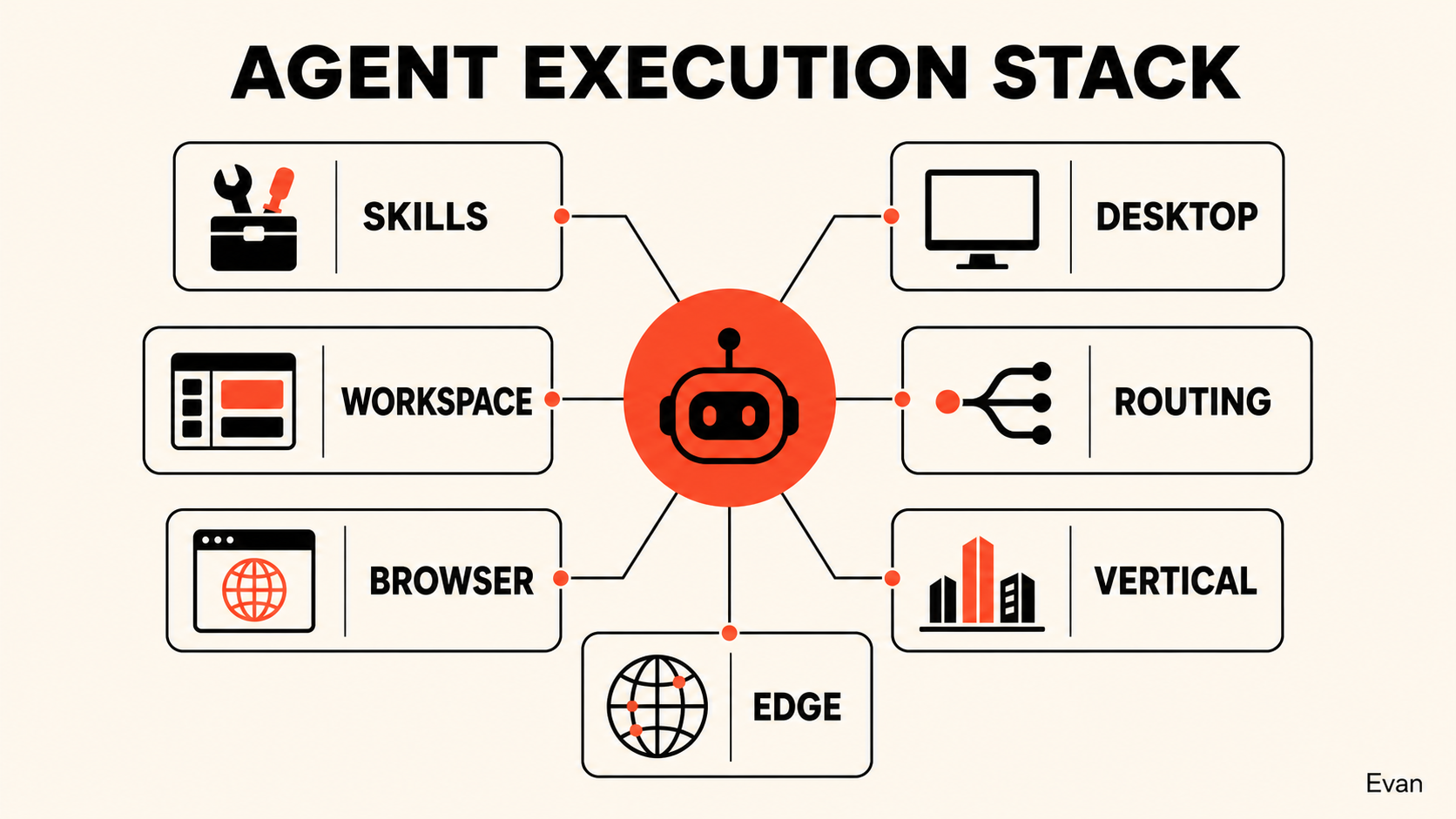
I map the eight selected repositories to seven distinct layers: reusable skills, desktop execution, collaboration state, model routing, authenticated browser work, vertical applications, and edge inference. That editorial distribution matters more than any single star count.
The inference I draw is that AI agent infrastructure is becoming more modular. Instead of building one agent that owns every interface and workflow, developers are packaging narrower capabilities around an existing harness. The model remains important, but the engineering pressure has moved toward access, state, permissions, context, and repeatable execution.
RisingRepo's addedStars field cannot establish reliability, security, or long-term maintenance. The captured snapshot does not provide enough methodological detail to treat the values as audited lifetime growth or a universal velocity window. They can still show where attention clustered inside that report. On this date, it clustered around making agents act in real environments rather than making chat responses look better.
Eight Projects and the Problems They Solve
OpenWorker
OpenWorker tries to turn a desktop agent into a coworker that delivers files and completed actions. It was created on July 20 and had 5,054 stars and 669 forks at the July 26 check, after a +18 RisingRepo signal.
The commit-pinned README describes a local Python agent server, macOS and Windows desktop packages, 25+ connectors, scheduled runs, approval gates, multiple model providers, and Ollama support. That combination targets a practical gap: an agent can reason about a task, but it still needs controlled access to files, calendars, messages, and business tools.
The project is MIT-licensed and unusually complete for its age, but it was still labeled open beta. The Windows build was not yet code-signed. I would test one bounded workflow and inspect its approval and credential paths before connecting a production account.
This is the practical boundary for local AI agents: the control plane can stay on the user's machine while selected model calls still leave it. “Local” should describe the verified data path and execution surface, not imply that every dependency runs offline.
Buzz
Buzz addresses coordination rather than individual task execution. It had 12,005 stars, 961 forks, and a +14 RisingRepo signal. The repository is Apache-2.0 licensed and was pushed again during the verification window.
Buzz models people, agents, workflows, reviews, and Git activity as signed events on a Nostr relay. The useful idea is not "Slack with an agent." It is that an agent gets an identity, room membership, and an audit trail similar to a teammate. That makes project memory and responsibility more visible.
The cost is system scope. Buzz includes a desktop client, relay, database, search, workflows, Git integration, and agent tools. Its README also said workflow approval infrastructure existed while some glue was still drying. Teams should evaluate the operational burden, not only the collaboration model.
OmniRoute
OmniRoute sits between coding tools and model providers. It had 30,067 stars, 3,917 forks, and a +13 RisingRepo signal. The MIT-licensed project exposes an OpenAI-compatible local endpoint with routing, fallback, and provider management.
This layer becomes useful when a team already uses several models or subscriptions and wants one policy surface for quota, cost, and availability. It solves a routing problem, not a repository-understanding problem.
The README reported 290 providers, 516 models, large free-tier totals, and token savings from compression. Those are maintainer-reported, fast-changing figures rather than independent benchmarks. Provider terms and free allowances can change independently of the code, so verify the current catalog and each provider's terms before treating the headline totals as capacity.
Skills
Matt Pocock's Skills had the largest star total in this group: 188,326 stars, 16,181 forks, and +12 in the RisingRepo snapshot. The MIT-licensed repository packages engineering practices as small, editable, composable agent skills.
The README supports two distribution models: copy skills through skills.sh so a team can edit them, or install a managed Claude Code plugin. Agent Skills-compatible harnesses such as Codex can use the copied form. The important pattern is that workflow knowledge is becoming a distributable dependency.
That does not remove the need for repository context. A testing or design skill can enforce a process, but it cannot know module boundaries or historical decisions that were never supplied. Graphify's Matt Pocock Skills code graph is useful when you want to inspect the repository itself, while the Skills directory page owns installation-oriented details.
AI Job Search
AI Job Search shows what happens when an agent workflow becomes a vertical application. It had 26,832 stars, 8,783 forks, and a +9 RisingRepo signal. The MIT-licensed repository covers profile setup, job discovery, fit evaluation, tailored CV and cover-letter drafting, independent review, and interview preparation.
The core workflow is described as country-agnostic, while several portal integrations target Denmark. The maintainer reports 69 tailored applications, 20 first interviews, and one signed contract. That is useful first-person evidence, but it is not a controlled success-rate benchmark and should not be generalized.
The project is valuable as a workflow design example: it keeps source materials local, separates drafting from review, and records outcomes. You can inspect its structure through the existing AI Job Search code graph.
video-shotcraft
video-shotcraft packages motion-design knowledge as an installable skill for Claude Code and Codex. The seven-day-old Apache-2.0 repository had 1,749 stars, 150 forks, and a +7 RisingRepo signal.
Its README lists 106 shot recipe cards, 162 styles, 161 motion previews, Remotion implementations, and a 36.2-second product-video template. This is a concrete example of an agent skill carrying domain constraints, references, and reusable implementation patterns rather than a single prompt.
The repository's license does not erase downstream rights checks. Its README calls out audio attribution, replacement of demonstration screenshots, and Remotion's separate license conditions. A team should verify every asset and runtime license before publishing commercial output.
ESP32-AI
ESP32-AI is the outlier in this list. It is not a general-purpose agent. It is an edge-inference experiment that reports a 28.9-million-parameter TinyStories model running on an ESP32-S3 at roughly nine tokens per second.
The two-day-old repository had 824 stars, 93 forks, and a +7 RisingRepo signal. Its README explains how most parameters stay in flash while a smaller computation core uses faster memory. It also states the model's boundary clearly: it generates simple stories but does not reliably answer questions, follow instructions, write code, or know facts.
GitHub exposed no license metadata when I checked. Public source is not the same as permission to reuse, modify, or distribute it. Treat the architecture as research material unless the maintainer adds explicit terms or grants permission.
ego-lite
ego-lite focuses on authenticated browser work. It had 3,626 stars, 178 forks, and a +7 RisingRepo signal. The repository is MIT-licensed, while the browser itself is described as a separate free download.
The product gives agents separate browser Spaces and can migrate Chrome logins, cookies, extensions, and bookmarks. That targets a common automation failure: the agent needs an authenticated browser, but the user still needs control of their own tabs.
The current download is macOS-only. Claims about being up to 2.5 times faster, using fewer tokens, or producing the strongest snapshots come from the project's own benchmark and marketing material. Test the pages, authentication boundaries, and tasks that matter to your team.
What These Projects Say About the Agent Stack
Three patterns connect these otherwise different repositories.
My first editorial inference is that capabilities are becoming packages. Skills and video-shotcraft distribute engineering or creative judgment as files an existing agent can load. AI Job Search applies the same idea to a complete vertical workflow. These agent skill repositories make process knowledge portable, but they still depend on the receiving harness and project context.
My second editorial inference is that execution is moving closer to the user's environment. OpenWorker acts from the desktop, ego-lite carries browser state, and Buzz keeps human and agent actions in one signed workspace. These systems still call external models in many cases, but the control plane, credentials, approvals, and artifacts increasingly live near the user. Graphify's browser automation MCP server guide covers adjacent browser-control approaches without turning this snapshot into an evergreen tool comparison.
Third, the stack is separating into specialized infrastructure. OmniRoute handles model access. Buzz handles shared state and coordination. ego-lite handles browser execution. ESP32-AI explores a much smaller edge boundary. This is an editorial inference from one snapshot, not a claim that the market has settled on a standard architecture.
What Teams Should Verify Before Adopting One
A fast-rising repository deserves inspection, not automatic installation.
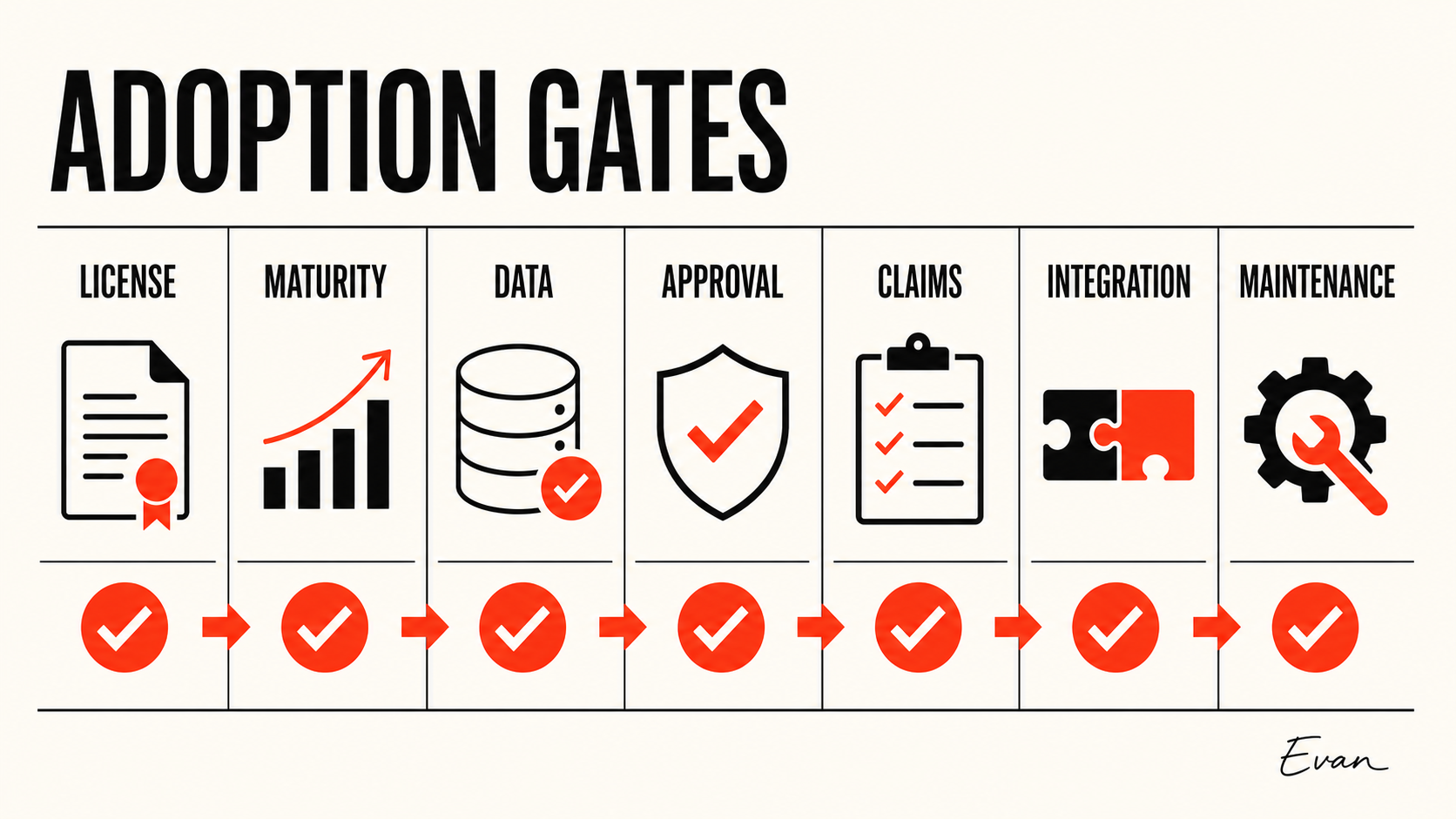
Use these checks before giving a project real data or credentials:
- License: Confirm that the code, bundled assets, model weights, and downloaded binaries have terms that fit your use.
- Maturity: Check repository age, release history, recent commits, issue patterns, and whether critical components are still marked beta or roadmap.
- Data path: Identify what stays local, what reaches model providers, and where credentials or browser state are stored.
- Approval boundary: Test which actions require confirmation and what unattended runs can do.
- Claim provenance: Separate independent results from maintainer outcomes, vendor benchmarks, and future features.
- Integration surface: Verify the exact operating systems, agents, APIs, providers, and file formats your workflow needs.
- Maintenance cost: Estimate how often skills, routing rules, browser state, indexes, or workflow definitions must change.
The right project is the one that reduces a known execution failure without creating a larger review or maintenance burden.
Apply the gates in order. A missing or incompatible license can end the evaluation before a team spends time benchmarking. If the terms fit, test the data and approval boundaries with disposable accounts and non-sensitive fixtures. Only then measure workflow quality, integration effort, and maintenance cost. This sequence keeps a polished demo or a large star count from outranking the conditions that determine whether a tool can be used safely.
FAQ
What is the best AI agent in 2026?
There is no universal best agent in this snapshot. OpenWorker targets desktop work, Buzz targets collaboration, OmniRoute targets model routing, Skills targets engineering process, and ego-lite targets browser execution. Choose the layer that matches the failure mode you need to reduce, then validate it on a bounded task.
Are all eight projects open source?
Seven repositories had MIT or Apache-2.0 licenses when checked on July 26, 2026. ESP32-AI had public source but no detected license. ego-lite also distinguishes its MIT-licensed repository contents from a separate free browser download, so binary terms should be verified independently.
How should teams evaluate a fast-rising GitHub project?
Treat growth as a discovery signal. Verify license, commit and release activity, platform support, data flow, approval controls, claim provenance, integration fit, and maintenance cost. Run one real task with limited permissions before expanding access.
Conclusion
My concluding inference from the July 25 RisingRepo snapshot is that an agent stack is taking shape across several repositories at once. Skills, execution environments, state, routing, and vertical workflows are becoming separate design choices.
I would follow the project that addresses a concrete bottleneck, not the one with the largest star count. Then I would verify its license, data path, maintenance model, and failure behavior before trusting how polished the demo looks.
Leave a Reply