A Kimi K3 knowledge graph workflow gives the model structured, revision-bound evidence about a repository; it does not give K3 a built-in graph or replace source inspection. K3's large context can carry code and tool results. A code knowledge graph adds named entities, typed relationships, source provenance, and freshness rules so an agent can ask narrower questions before it plans or edits.
Kimi documents K3 with a one-million-token API context window and tool-calling support, and Kimi Code exposes a k3 coding-model surface with plan-dependent context. Those capabilities are useful transport and reasoning capacity. They are not documentation that K3 maintains a code graph, automatically knows repository history, or can validate graph edges. The graph remains an external evidence layer that a team must build, refresh, and audit.
What a Kimi K3 Knowledge Graph Means
For AI developers, a code knowledge graph is a queryable representation of repository facts. Nodes can represent modules, files, symbols, services, schemas, tests, configuration, decisions, or documentation. Edges can represent imports, calls, ownership, data flow, build dependencies, test coverage, or a claim's source. Every useful result should name the revision and the evidence behind it.
The phrase “Kimi K3 knowledge graph” therefore describes an integration pattern, not a Moonshot product feature. The model receives a focused graph query or evidence packet, reasons over it, and then reads the current source or runs a tool when the decision is consequential. The agent does not get to promote a guessed relationship into graph truth.
Use this ownership model:
| Layer | Responsibility | What it should not claim |
|---|---|---|
| Kimi K3 | Interpret task instructions, request tools, synthesize an answer or plan | Permanent repository memory or verified graph edges |
| Graph/index service | Return versioned entities and relationships with provenance | Runtime behavior it has not observed |
| Source, tests, and runtime checks | Establish current implementation and behavior | Architectural intent without a decision record |
| Human owner | Approve contracts, risk boundaries, and corrections | That a generated summary is automatically current |
This separation makes failures diagnosable. If an answer is wrong, the team can ask whether the model reasoned badly, the graph was stale, the query was too broad, source was missing, or the approval rule was skipped.
Long Context vs Structured Code Knowledge
Long context and structured code knowledge solve different parts of the problem. A K3 request can carry a large task packet, code excerpts, decisions, and tool results. That helps when a task needs several related artifacts in one reasoning window. It does not make relationships explicit, select the relevant evidence, or reveal that a dependency was rebuilt after the packet was created.
Structured code knowledge makes relationships queryable. An agent can ask for callers of a symbol, the services that consume a schema, the tests around a route, or the source records behind a design constraint. The answer should still be a starting point, not a patch instruction. Dynamic dispatch, generated code, reflection, plugins, undocumented operational dependencies, and stale indexing can all make an edge incomplete.
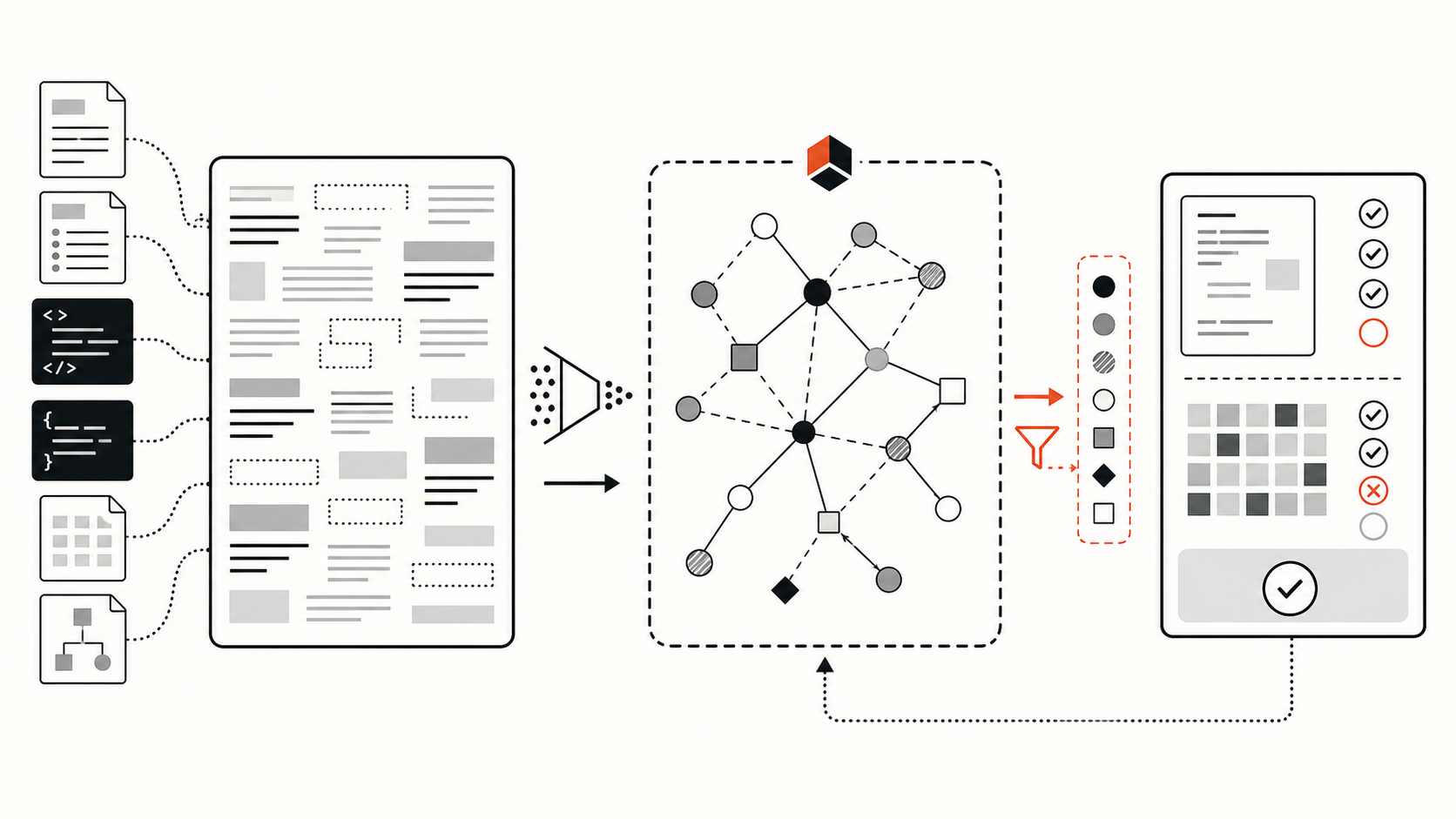
The decision rule is practical:
- Use a bounded context packet when the task has a known scope and the relevant artifacts can be cited directly.
- Use graph retrieval when the hard question is relationship discovery across modules, documents, tests, and ownership boundaries.
- Read source and run verification when the answer will change behavior, permissions, data, or a public contract.
The two approaches can work together. A graph query finds a narrow evidence set; K3 reads it in context; tools confirm the current revision; a reviewer evaluates the resulting plan. The Kimi K3 Context Engineering guide explains how to make that packet accountable.
What Graphs Add for AI Developers
A useful AI code graph adds traceability more than it adds prose. Instead of asking an agent to remember a long repository dump, give it a relationship query with file and symbol evidence. That is especially valuable when the codebase has repeated names, indirect dependencies, generated layers, design records outside source, or multiple agents working from different sessions.
Four graph capabilities are worth prioritizing:
- Module and ownership maps: Show where a responsibility begins, which public interfaces cross its boundary, and who can review a change.
- Dependency and impact paths: Connect imports, calls, schemas, configuration, queues, build artifacts, and affected tests without pretending all edges are runtime proof.
- Decision and document links: Connect a technical choice to its source record, owner, date, and the code paths it constrains.
- Freshness and provenance: Attach an indexed commit, generation time, extractor version, and source locations to every important result.
K3's official API documentation supports custom tools, tool choices, and tool-result turns. That makes it possible to expose graph queries through an agent harness. The documentation is a protocol contract, not a guarantee that a graph query is correct; the harness must return clear evidence, respect access boundaries, and preserve the complete tool-call history required by K3's multi-turn flow.
For a product-level model of structured repository evidence, visit the Graphify knowledge-graph hub. For a comparison that keeps a model-specific context system separate from graph retrieval, Macaron Context vs Code Knowledge Graph offers a related decision boundary.
When Graph Retrieval Can Still Fail
A graph can be wrong in a more precise way than a raw prompt, but it can still be wrong. Static extraction can miss dynamic imports. A call graph can overapproximate a dispatch path. A code graph may not see private deployment configuration. A document link may be obsolete. A branch can move after the graph is indexed. And a retrieved neighborhood can be so broad that K3 treats incidental relationships as task requirements.
Build failure handling into the response format. A graph query should return its indexed revision, timestamps, source paths or symbols, relationship type, confidence or unknown state, and a statement of what it cannot observe. Make the agent say which edges it inspected in source and which remain graph-derived. This prevents a polished dependency diagram from functioning as an unearned fact.
The same rule applies to model memory. K3 may have earlier messages, a compacted summary, or client-managed cache context, but those states are not authoritative over a revision-bound source record. When graph context and a prior model statement disagree, treat the disagreement as a retrieval task, not a vote.
How to Combine Both Approaches
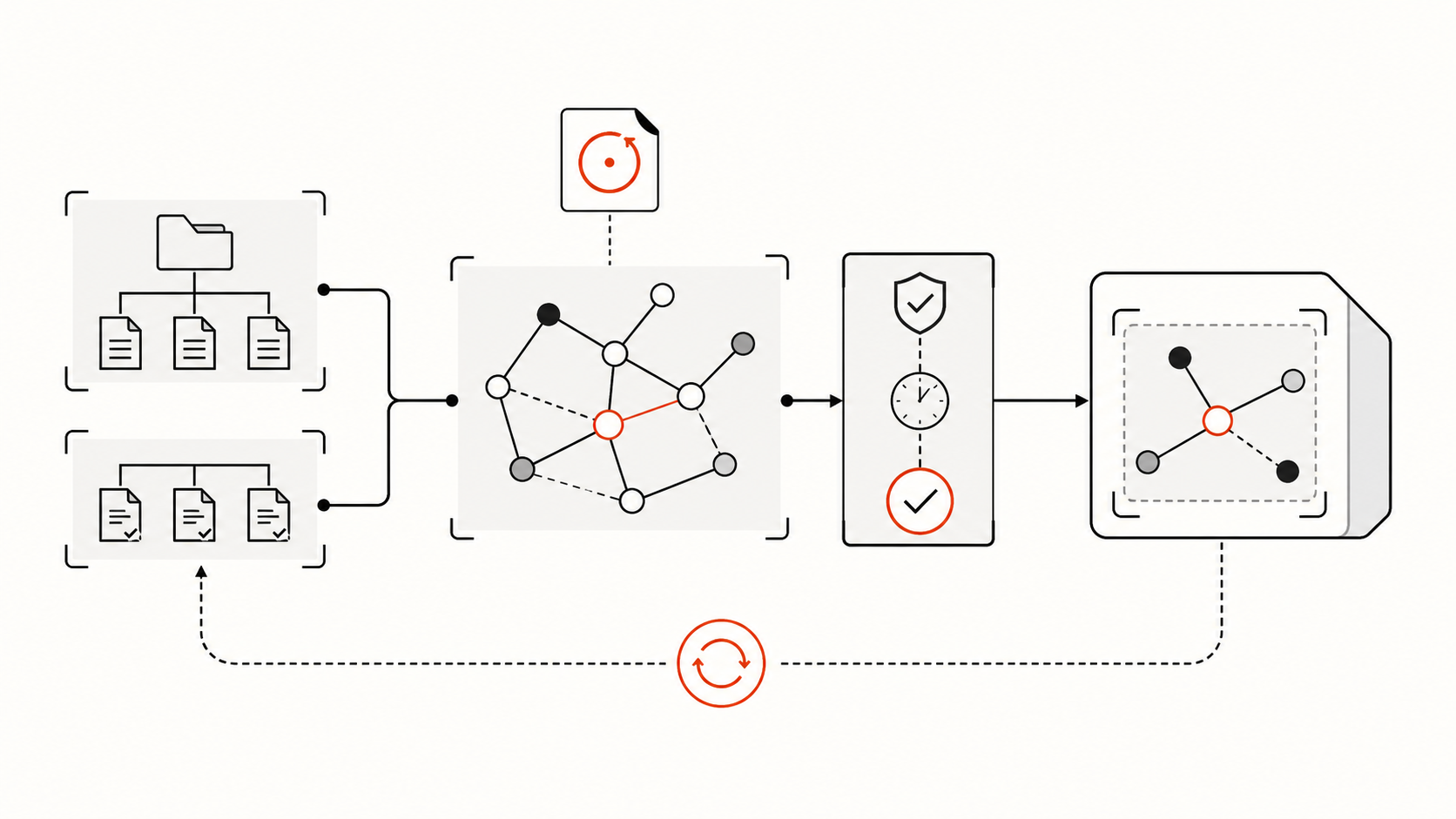
Use a two-stage workflow. First, query a versioned graph for the smallest set of modules, dependencies, tests, decisions, and unknowns that can bound the task. Second, place that evidence and its provenance into K3's context, let the agent inspect current files and tools, and require an explicit plan before an edit. K3's kimi-k3 API documentation says long conversations and tool calls must carry the full assistant message forward; retain that record so later reviewers can reconstruct the evidence path.
Then add governance:
| Stage | Required artifact | Stop condition |
|---|---|---|
| Retrieve | Revision, sources, relationships, and known gaps | Graph revision does not match the task revision |
| Interpret | K3's evidence-backed plan and uncertainties | Plan contains an uncited critical claim |
| Verify | Source reads, focused tests, and diff review | A graph edge is relied on but never checked |
| Refresh | New index or marked stale records after change | Changed paths invalidate indexed facts |
Keep the graph independent of a single model or provider. That lets a team reuse the same evidence layer when a client or model changes, while preserving access controls and audit records. CC Switch Knowledge Graph Workflow shows why provider routing and structured repository evidence should not be conflated.
FAQ
What facts should a code graph expose?
Expose facts that a reviewer can trace: entity names and types, source paths and symbols, relationship types, indexed revision, generation time, owner, links to supporting documents, and explicit unknowns. Start with module boundaries, public interfaces, dependencies, tests, configuration, and decisions. Do not expose a generated narrative without its source locations.
How should teams audit graph freshness?
Store the indexed commit and extractor version on every result, invalidate or flag records when relevant files, configuration, schemas, or lockfiles change, and sample important edges against current source and tests. A high-risk task should refuse graph evidence from an unmatched revision instead of silently accepting it.
Can graph context conflict with model memory?
Yes. A prior prompt, session summary, or cached prefix can describe an earlier branch or a mistaken inference. Treat the conflict as an evidence mismatch: compare revisions, inspect the named sources, update or invalidate the graph record, and make a human decide if the technical contract is ambiguous. Neither a large context window nor a graph result wins automatically.
Conclusion
Kimi K3 can reason over large, tool-assisted context, but that is different from maintaining structured repository knowledge. A well-governed code graph supplies versioned relationships and provenance; K3 turns a focused evidence set into questions, plans, and proposed changes; source, tests, and humans remain the authority.
Combine them when relationship discovery is the bottleneck. Keep them separate when reporting capabilities: the model is not the graph, the graph is not the repository, and neither removes the need to verify the current revision.
Leave a Reply