CC Switch can change provider configuration, routing, and related tool settings, but it does not automatically transfer a model’s understanding of your repository. Treat CC Switch codebase context as an access-and-configuration concern. Preserve architecture facts, dependency evidence, task decisions, and verification results in a separate model-independent layer.
That distinction prevents a dangerous assumption: a successful provider switch proves that requests reach a different backend; it does not prove that the new model knows which files matter, why a boundary exists, or which tests validate the planned change.
What CC Switch Actually Switches
CC Switch is a third-party, open-source desktop application, not an official feature of Claude, Kimi, Codex, or OpenAI. Its repository describes one interface for managing provider profiles across supported coding tools, along with MCP and Skills synchronization, session browsing, local proxy routing, and configuration backups.
The application can therefore affect several operational layers:
| Layer | What CC Switch can manage | What that does not establish |
|---|---|---|
| Provider profile | Endpoint, API format, model choice, credential reference, and active profile | That the new model has read the repository |
| Local routing | Protocol conversion and forwarding for providers that need it | Equivalent model behavior or tool semantics |
| Shared configuration | Selected MCP, Skills, prompts, or common config fields | Shared private reasoning or task conclusions |
| Session interface | Browsing, searching, restoring, or reclassifying supported history | Guaranteed cross-provider continuation |
| Backup state | Copies of configurations or migrated session records | A current architecture map |
The v3.18.0 release demonstrates the routing role clearly. It added and refined paths that let Codex communicate with providers using different upstream protocols. The Kimi guide explains a Responses-to-Chat-Completions conversion path; the Claude guide explains a Responses-to-Anthropic-Messages path. Both require local routing, and both recommend restarting the Codex process after switching so it reloads configuration and model-catalog data.
Those are meaningful capabilities, but they answer where requests go and how protocols connect. They do not answer what the repository means.
What Happens to Codebase Understanding
Repository understanding is constructed inside a task from selected files, instructions, search results, tool output, and intermediate judgments. A model may infer that a schema is authoritative, that a generated client must change, or that a failing test is unrelated. None of those conclusions becomes part of another provider merely because the endpoint changes.
After a Claude-to-Kimi context switch, for example, the new model may receive the same checked-out files and the same committed instructions. It does not automatically inherit:
- which paths the earlier model inspected and which it skipped;
- the earlier model’s private reasoning about an architectural trade-off;
- unresolved hypotheses, rejected alternatives, or confidence levels;
- an in-memory list of callers, dependencies, owners, and affected tests;
- tool results that were never written to a durable handoff;
- permissions or credentials held by the previous process.
Even shared Skills and MCP configuration should not be confused with coding agent repository memory. A Skill can define a workflow. An MCP server can expose a tool. Neither proves that the new provider has loaded the same evidence, interpreted it the same way, or validated it against the current commit.
The safe operating assumption is simple: a provider switch starts a new evaluator unless you explicitly supply a reviewed evidence packet. The existing guide to sharing context across coding agents owns the generic cross-tool pattern; this article focuses on the CC Switch boundary.
Session History vs Repository Knowledge
CC Switch’s unified Codex session-history feature makes an especially useful boundary test. Its official project guide says the feature only rewrites the model_provider classification tag so official and third-party sessions can appear in one history list. It backs up records before migration, but it does not rewrite the conversation body into a provider-neutral reasoning format.
The same guide warns that resuming an old session through another backend may fail because the session can contain encrypted_content reasoning that only the backend that created it can decrypt. The record may still be visible and its plain text may still exist on disk, yet provider B may be unable to continue provider A’s session.
This creates three distinct states:
- Visible: the session appears in a history or resume list.
- Readable: the stored plain-text messages can be inspected.
- Continuable: the active backend can resume the session and generate another turn.
Unified history improves the first state. It does not guarantee the third. More importantly, even a continuable transcript is not a verified repository model. It can contain old file paths, assumptions from an earlier commit, failed experiments, and conclusions that were never tested.
Use session history as an audit trail and task clue. Promote only verified facts into durable repository evidence.
How a Code Graph Reduces Context Loss
A model-independent code graph can preserve structural evidence that is expensive to rediscover: packages, files, symbols, imports, calls, schemas, routes, tests, owners, and architecture records. The graph should be tied to a repository revision and should link every important relationship back to inspectable source.
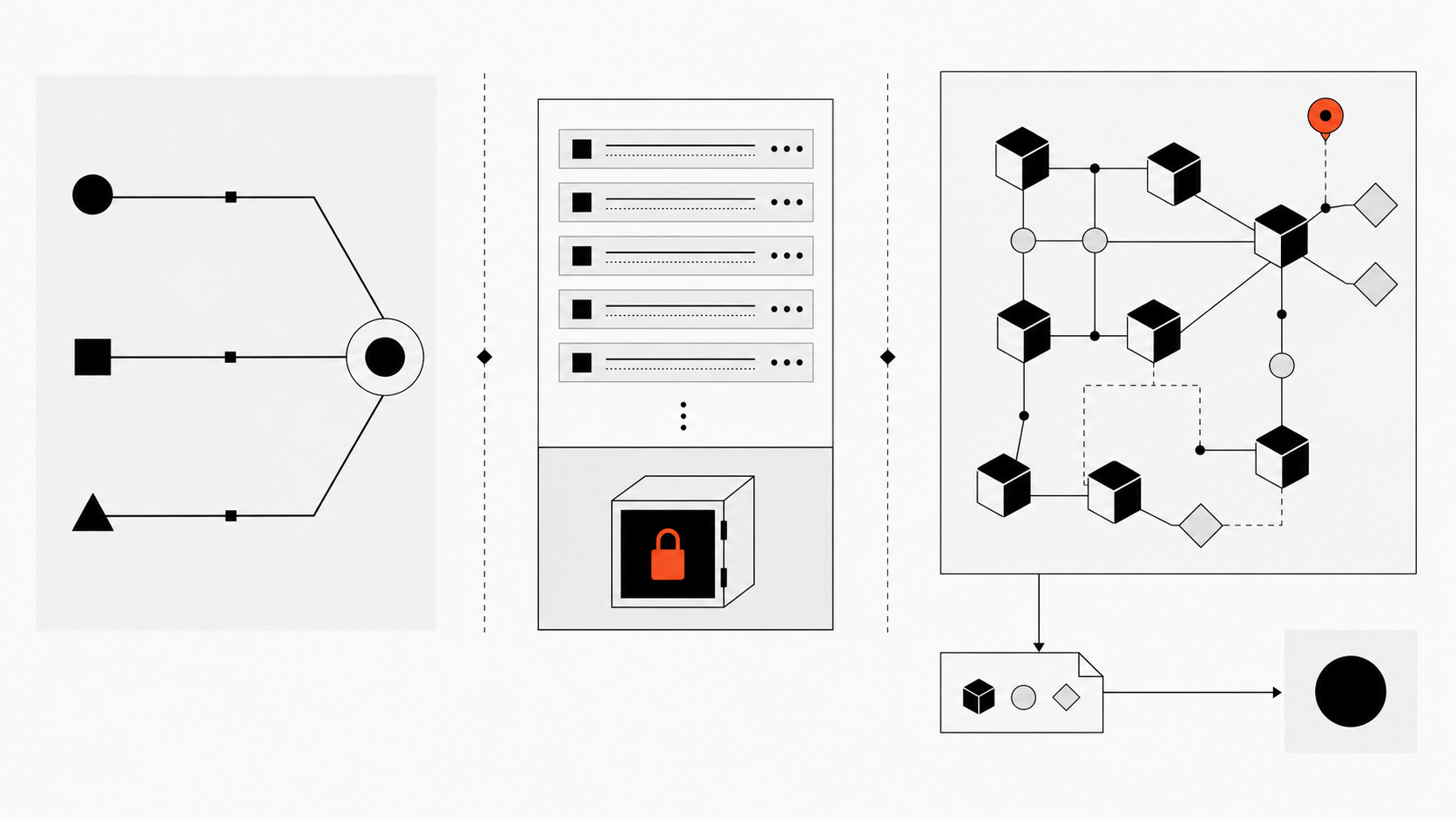
The graph reduces context loss when it serves a narrow handoff:
- Pin the source state. Record the commit or worktree revision that produced the graph.
- Query for the task. Retrieve only the modules, dependency paths, contracts, owners, and tests relevant to the requested change.
- Preserve provenance. Include file paths, symbols, edge types, and source locations rather than an unsupported summary.
- Mark uncertainty. Separate deterministic imports or references from inferred runtime relationships.
- Verify after switching. Ask the new model to open high-impact source and run the required tests.
This is not automatic memory transfer. It is a repeatable way to reconstruct the right working set for another model. Graphify can serve as one external evidence layer, while the CC Switch knowledge graph workflow covers the complete two-layer operating model.
Practical Migration Checklist
Before changing a provider, create a compact migration packet. After switching, require the new model to validate it before editing.
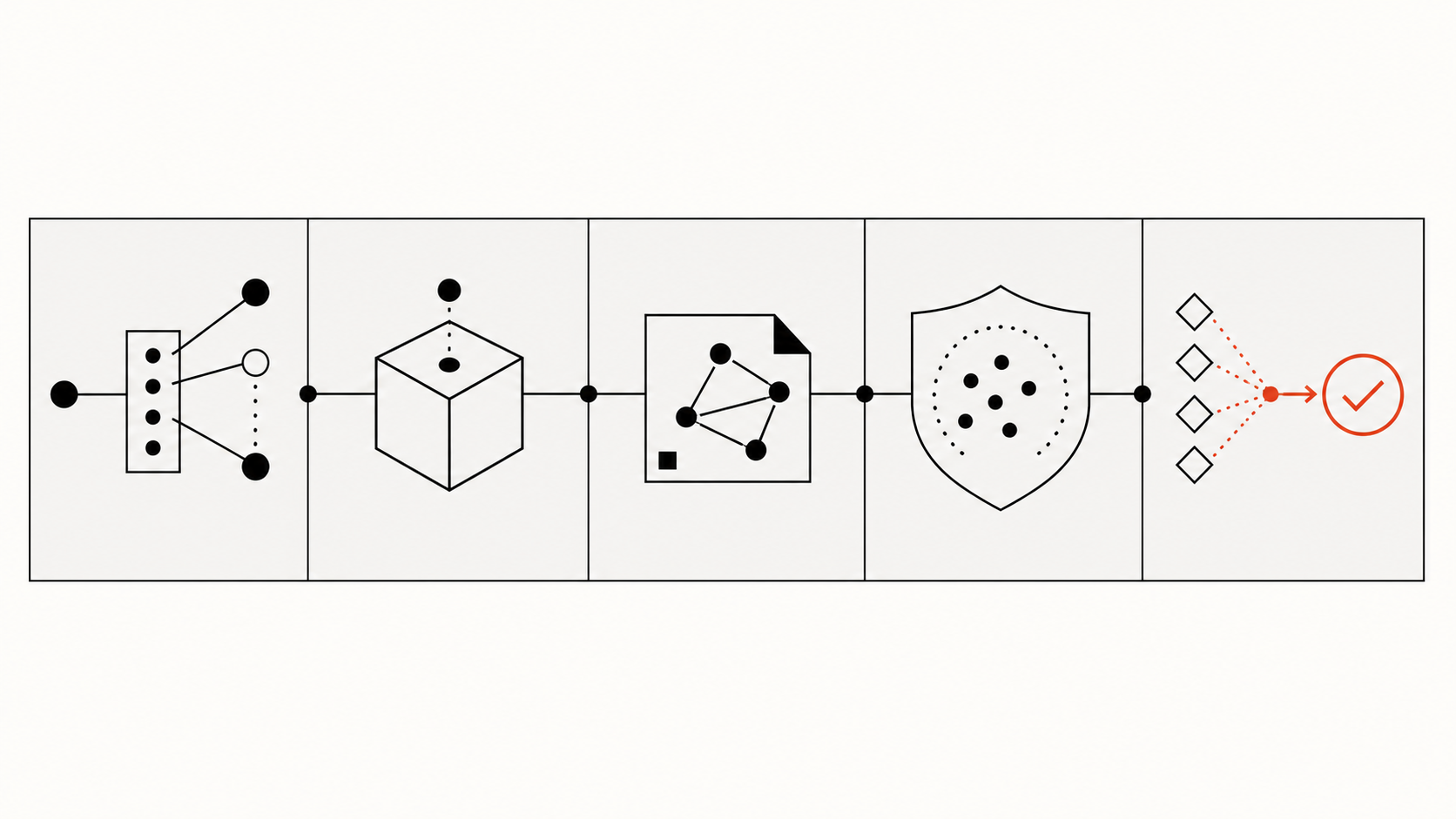
Before the switch
- Record the active provider, model, protocol path, and CC Switch routing state.
- Pin the repository commit and list any uncommitted changes.
- Save the task goal, non-goals, acceptance criteria, and protected paths.
- Export verified file, symbol, dependency, owner, and test evidence.
- Label model-specific conclusions as hypotheses unless source or tests prove them.
- Record failed commands, partial migrations, and unresolved risks.
- Remove secrets, raw credentials, private data, and irrelevant transcript content.
After the switch
- Restart the affected CLI when its configuration is read at process startup.
- Confirm the intended provider, endpoint path, model, and local-routing state.
- Start a new session if cross-provider resume fails or reasoning provenance is unclear.
- Reopen the authoritative source behind every high-impact graph edge.
- Rerun focused tests for the changed surface, then the repository-required suite.
- Compare the new plan with the saved constraints before allowing writes.
This checklist makes a failed transfer observable. “The session opened” is not a validation result; “the new model confirmed these paths at this commit and these tests passed” is.
Keep the first post-switch change deliberately small when the task allows it. Review the new model’s selected files, stated assumptions, patch, and focused test result before assigning a broader refactor. If that short pilot exposes a mismatch between the evidence packet and current checkout, refresh the packet and restart planning instead of compounding uncertain context with more edits.
FAQ
What should be checked after switching providers?
Check provider identity, model, endpoint, protocol conversion, local-routing status, loaded instructions, repository commit, dirty files, and tool permissions. Then verify the task’s important dependency paths against source and rerun focused tests. If the CLI reads configuration only at startup, restart it before trusting the check.
Can old session notes mislead a new model?
Yes. Notes can describe a previous commit, preserve an abandoned hypothesis, omit failed tests, or mix facts with model-specific inference. Keep provenance and timestamps, label uncertainty, and require the new model to confirm high-impact claims in current source. Do not treat a visible transcript as repository truth.
How should teams document failed transfers?
Record the source and destination providers, session identifier, repository revision, routing state, exact failure, affected evidence, and recovery choice. Distinguish “history not visible,” “history readable but not resumable,” and “task evidence incomplete.” Preserve logs only after checking them for credentials or sensitive content.
Conclusion
CC Switch makes provider and configuration changes easier, but a provider switch is not a repository-understanding transfer. Unified session visibility, synchronized Skills, and working protocol conversion remain separate from the model’s current evidence about code.
Use CC Switch for the access layer. Use a revision-bound repository graph, source-controlled instructions, decision records, and test results for the knowledge layer. When the provider changes, start from a compact evidence packet, verify it against current source, and restart planning whenever the old model’s assumptions cannot be reproduced.
Leave a Reply