This comparison means Muse Spark 1.1 vs Claude Opus 4.8, the current versions verified on July 17, 2026. Meta’s published table gives Opus 4.8 an advantage on three coding evaluations, while Muse Spark 1.1 leads on some tool-use evaluations. Neither result proves that one model understands an unfamiliar repository’s architecture better in every workflow.
The better repository understanding model is the one that locates the right architectural evidence, predicts affected components, makes a constrained change, and passes hidden tests under your harness. Compare those outcomes on the same private repository instead of choosing from context size or a blended leaderboard.
Quick Verdict
Muse Spark 1.1 and Claude Opus 4.8 are both long-context, tool-oriented models aimed at demanding agent work. Meta documents an exact 1,048,576-token window for Muse Spark 1.1. Anthropic describes Opus 4.8 as a one-million-token hybrid reasoning model for serious coding and agents.
Their product surfaces differ. Muse Spark 1.1 is available through the hosted Meta Model API public preview for US developers, with OpenAI-compatible formats, an Anthropic Messages format, and an OpenCode provider path. Opus 4.8 is available through Claude, Claude Code, the Anthropic API, and supported cloud platforms.
For teams making a Muse Spark vs Opus codebase choice, use this initial decision guide:
| If the pilot emphasizes | Starting candidate | What still needs proof |
|---|---|---|
| Coding tasks represented by SWE-Bench Pro, DeepSWE, or terminal work | Opus 4.8 | Performance under your tools, constraints, and private tests |
| Broad MCP tool selection and multi-step orchestration | Muse Spark 1.1 | Correct repository evidence and safe tool behavior |
| Architecture location and impact analysis | Neither by default | File citations, dependency recall, and uncertainty handling |
| Cost, latency, or regional deployment | Measure both available endpoints | Current pricing, rate limits, data handling, and total run cost |
That is a starting hypothesis, not a ranking. If the context layer retrieves different evidence for each model, the test measures infrastructure as much as model intelligence.
What Repository Understanding Means
Repository understanding is the ability to build a sufficiently accurate task-specific model of a software system. It is not the ability to summarize a folder or repeat files that fit inside a long prompt.
For a change request, the model should identify:
- the behavior’s architectural owner and entry points;
- the symbols, modules, contracts, and data paths involved;
- direct and indirect consumers that could be affected;
- relevant tests, build rules, configuration, and generated artifacts;
- design constraints, ownership, and operational requirements;
- uncertainties that require more evidence or human judgment.
This definition matters because coding benchmarks usually score an outcome: a test passes, an issue resolves, or an environment reaches a target state. A correct patch is valuable, but it does not reveal whether the model formed a complete architecture map or followed a fortunate path through the visible tests.
Long context helps preserve inspected code, plans, tool output, and earlier decisions. It does not decide which files are authoritative, detect a stale design document, discover an unindexed runtime registration, or explain why a team rejected an apparently simpler design.
A credible Claude vs Meta coding evaluation should therefore score evidence quality before code generation. Ask each model to cite files and symbols, describe the dependency path, state what it has not verified, and propose tests before it edits. This exposes unsupported assumptions that a polished patch can hide.
Architecture Location and Impact Analysis
Architecture location asks, “Where does this behavior belong?” Impact analysis asks, “What else changes if we modify it?” They are connected but distinct tasks.
A strong architecture-location answer should trace from an observable behavior to an entry point, coordinating module, domain rule, persistence or integration boundary, and representative tests. It should distinguish the owner from adapters and consumers. Similar filenames or high reference counts are weak evidence on their own.
Impact analysis should expand outward through typed relationships:
- callers and callees;
- imports and implementations;
- schemas, serializers, and generated clients;
- events, queues, feature flags, and configuration;
- tests and fixtures;
- deployment dependencies and external consumers.
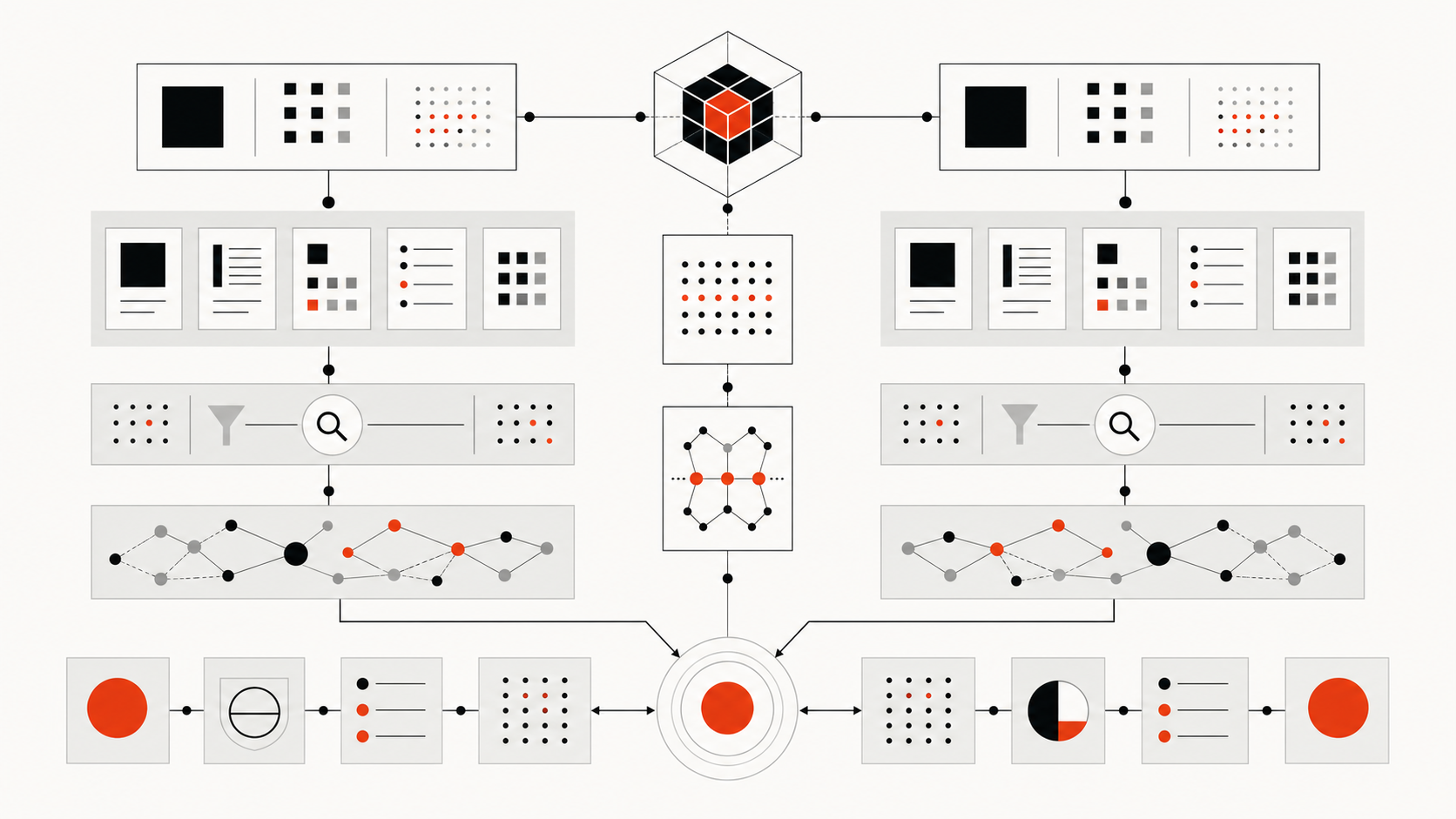
The model should not receive a preselected answer. Give both models the same repository snapshot, search tools, code graph, documentation index, and permissions. Require them to retrieve evidence and show the path that supports each conclusion.
False negatives deserve more weight than harmless extra leads when a missed consumer can cause a production regression. False positives matter too: an agent that labels half the repository “possibly affected” shifts the investigation burden back to reviewers.
A code knowledge graph can make this comparison fairer by exposing the same symbol and dependency queries to both models. The graph is a shared evidence layer, not an answer key. Dynamic calls, reflection, generated code, and stale indexes can still hide relationships, so graph results should carry source provenance and the indexed commit.
For the model-specific boundary, see Muse Spark 1.1 for large codebases. For a different example of separating model roles from repository tasks, see Sonnet 5 vs Fable 5 for repository tasks.
Multi-File Refactoring Fit
Multi-file refactoring tests whether repository understanding survives execution. The agent must preserve behavior while changing coordinated definitions, callers, tests, and possibly public contracts.
Use a controlled refactor that is meaningful but reversible. Good candidates include moving a domain rule across package boundaries, replacing a shared interface, consolidating duplicated validation, or changing a serialized field with compatibility requirements. Avoid tasks already present in public benchmarks or model training examples.
Run this protocol for Muse Spark 1.1 and Opus 4.8:
- Freeze the environment. Use the same commit, container, dependencies, network policy, and clean working tree.
- Lock the harness. Provide identical tools, repository instructions, context service, permissions, reasoning budget, and maximum run time.
- Require analysis first. Each model must cite the architecture owner, list affected entities, identify risks, and propose tests before editing.
- Use hidden checks. Keep compatibility, regression, architecture, and negative tests outside the visible prompt.
- Repeat runs. Run each task several times because agent trajectories vary.
- Review blind. Have reviewers score patches without knowing which model produced them.
Measure more than pass rate. Record dependency recall, incorrect impact claims, unnecessary files touched, first-pass test success, regressions, tool calls, tokens, latency, endpoint cost, reviewer corrections, and rollback safety.
The best multi-file refactoring AI is not necessarily the one with the largest successful diff. Prefer the model that finds the relevant boundary, keeps scope small, explains uncertainty, and produces a patch reviewers can verify.
Shared context is especially important when main agents and subagents divide the work. Keep repository facts and provenance consistent while isolating tool-specific instructions, as described in sharing repository context across coding agents.
What Benchmarks Cannot Prove Alone
Meta’s Muse Spark model page publishes the following comparison. These numbers are Meta-reported, not results from a new Graphify test.
| Meta-published evaluation | Muse Spark 1.1 | Claude Opus 4.8 |
|---|---|---|
| Terminal-Bench 2.1 | 80.0 | 82.7 |
| SWE-Bench Pro | 61.5 | 69.2 |
| DeepSWE 1.1 | 53.3 | 59.0 |
| MCP Atlas | 88.1 | 82.2 |
| Toolathlon-Verified | 75.6 | 76.2 |
| JobBench | 54.7 | 48.4 |
| OSWorld-Verified | 80.8 | 83.4 |
The pattern is mixed. Opus 4.8 leads the three listed coding evaluations and several computer or tool workflows. Muse Spark 1.1 leads MCP Atlas and JobBench and is close on Toolathlon-Verified. That supports targeted pilot hypotheses, not the claim that either model universally wins repository understanding.
Meta’s evaluation report explains why. Coding and agentic comparisons may use self-reported results and Meta runs when self-reported results are unavailable. Meta also notes that its tools and system prompts may not be tuned for proprietary competitors, so results may not reflect those models’ best performance.
Harness differences can also change values with the same benchmark name. Anthropic’s Opus 4.8 system card documents its own configurations, trial counts, effort settings, and timeouts. A score should travel with that methodology; it should not be copied into an apparently uniform table without qualification.
Most importantly, no benchmark in the table directly proves architecture location, dependency completeness, design-intent recovery, or change-impact recall in your repository. Public issue-resolution tasks can reward a patch without measuring whether the agent found every relevant consumer.
Before deciding, verify current model IDs, regional availability, pricing, retention controls, and harness versions. Then let the private-repository protocol determine fit.
FAQ
What test repo should teams use first?
Use a private, representative repository that the team can safely freeze and restore. Choose a component with current documentation, reliable tests, at least one cross-module dependency, and a reversible refactor. Avoid both a toy project that hides integration risk and the most critical production system for the first pilot.
How should teams compare model mistakes?
Classify mistakes by stage: evidence discovery, architecture location, dependency impact, planning, editing, test selection, or verification. Track severity and review cost, not just count. A missed external consumer is more consequential than an unnecessary file inspection, while repeated unsupported assumptions reveal a different weakness than a syntax error.
When should context infrastructure decide the result?
If one model receives fresher indexes, better dependency queries, or more relevant documentation, do not attribute the difference solely to the model. Fix the retrieval or indexing imbalance and rerun. If both models repeatedly fail because the repository lacks ownership, contracts, or tests, improve the shared knowledge layer before spending more on model comparison.
Conclusion
Muse Spark 1.1 vs Claude Opus 4.8 is a legitimate current comparison, but “repository understanding” cannot be reduced to one benchmark column. Meta’s table currently favors Opus 4.8 on the listed coding evaluations and Muse Spark 1.1 on selected tool-use evaluations.
Use those results to design a pilot, not to skip one. Give both models the same private repository, evidence layer, permissions, tasks, and hidden tests. Choose the model that cites the right architecture, finds consequential dependencies, limits its change, and reduces review burden. If neither can do that consistently, the first investment should be better repository context and verification—not a larger prompt.
Leave a Reply