CodeWhale large codebase work needs a repository evidence layer that remains stable when the active model or provider changes. Codewhale can read and edit code, run commands, check results, and route many models through one terminal-agent runtime. Those capabilities do not automatically reveal module boundaries, indirect callers, design intent, related tests, or cross-repository contracts.
This guide uses Codewhale for the product’s spelling and preserves CodeWhale where it is part of the supplied search language. Facts were checked against the v0.9.0 documentation and release published on July 16, 2026. The repository may move ahead of that release, so unreleased files should not be presented as installed behavior.
What CodeWhale Brings to Terminal Agents
Codewhale is an open-source, MIT-licensed coding agent for the terminal. Its official README describes an interactive TUI and a headless codewhale exec path for scripts and CI. The runtime can read code, edit files, execute commands, and inspect results. It also resolves a selected provider and model to a concrete API route.
The provider layer is valuable for teams that want one operational surface across hosted and local models. Codewhale documents DeepSeek, Claude, GPT, Kimi, GLM, and many other routes. In the TUI, /model selects a provider and model together, while /provider changes the active provider. A team can therefore compare routes or assign different configured models to Fleet profiles without replacing its whole agent harness.
Large-repository usefulness still depends on how the task is framed. A terminal agent sees the workspace, tools, instructions, and context supplied for a run. It does not gain a complete architecture model simply because the provider supports a large context window or because the runtime can search files.
The latest public release at the verification cutoff is v0.9.0, published on July 16, 2026. npm also marks 0.9.0 as its latest distribution tag. Do not describe a later repository version as released until both the release channel and the package channel support that claim.
Codewhale’s own onboarding advice is appropriately conservative: start unfamiliar work in Plan mode, identify sources and critical files, then move to Act for changes. That sequence is useful, but the team must still provide or discover the repository facts on which the plan depends.
Why Large Repos Need More Than Model Routing
Model routing answers, “Which provider and model will process this turn?” Repository understanding answers, “Which system relationships must this task preserve?” These questions intersect, but neither resolves the other.
Consider a change to an authentication claim. The named type may live in one package, while its serializers, middleware, generated clients, deployment flags, database migrations, and contract tests live elsewhere. A model can produce a locally plausible edit after reading the definition and its obvious callers. The edit can still break a consumer reached through registration, configuration, reflection, generated code, or another repository.
Switching providers can make this gap more visible. The new model receives the current prompt, workspace, and whatever durable instructions the harness loads. It does not inherit private reasoning that another model formed in an earlier turn. A saved session or summary may preserve text, but text is not proof that the underlying relationships remain accurate.
Three failure patterns are common:
- Path familiarity masquerades as architecture knowledge. An agent repeatedly opens popular directories and misses a less obvious runtime path.
- A prior summary becomes authority. A handoff says a module is unused, although current imports or configuration say otherwise.
- A provider change alters the explanation, not the evidence. Two models produce confident but incompatible impact summaries because neither received a revision-bound dependency map.
Treat provider choice as an execution decision. Treat repository evidence as a separate, inspectable input that any suitable model can query.
Repository Knowledge CodeWhale Still Needs
A useful repository context layer is small enough to retrieve and specific enough to audit. It should not be a giant prose summary of everything the team knows.
Start with these model-independent facts:
| Evidence | Useful contents | Verification anchor |
|---|---|---|
| Module map | packages, services, entry points, generated areas, ownership | repository revision and manifests |
| Dependency paths | imports, calls, registrations, schema and event flows | exact source locations |
| Test index | unit, integration, contract, migration, and end-to-end coverage | current test files and commands |
| Decision links | architecture records, approved constraints, deprecations | dated documents and owners |
| External boundaries | APIs, queues, databases, clients, sibling repositories | contracts plus deployment configuration |
This evidence should identify its source revision. “Service A calls service B” is only reusable when the record says how that relationship was derived and when it was last refreshed. Generated and inferred edges should be labeled differently from directly parsed imports or explicit configuration.
Codewhale already separates some authority layers. Its documentation places repo instructions in AGENTS.md, repo governance in .codewhale/constitution.json, and optional personal memory in a user-scoped file. None of those should become an improvised dependency database. Instructions explain how an agent should work. A constitution ranks authority and verification expectations. User memory stores durable personal preferences when explicitly enabled.
For a fuller treatment of portable repository facts, see Share Repo Context Across Coding Agents. The principle is the same for Codewhale: keep structural evidence independent from one provider’s session.
Code Graphs for Multi-Model Workflows
An external, revision-bound code graph can make the repository evidence layer queryable. “External” is important: Codewhale v0.9.0 does not document a native code graph, repository index, or automatically shared repository-memory service.
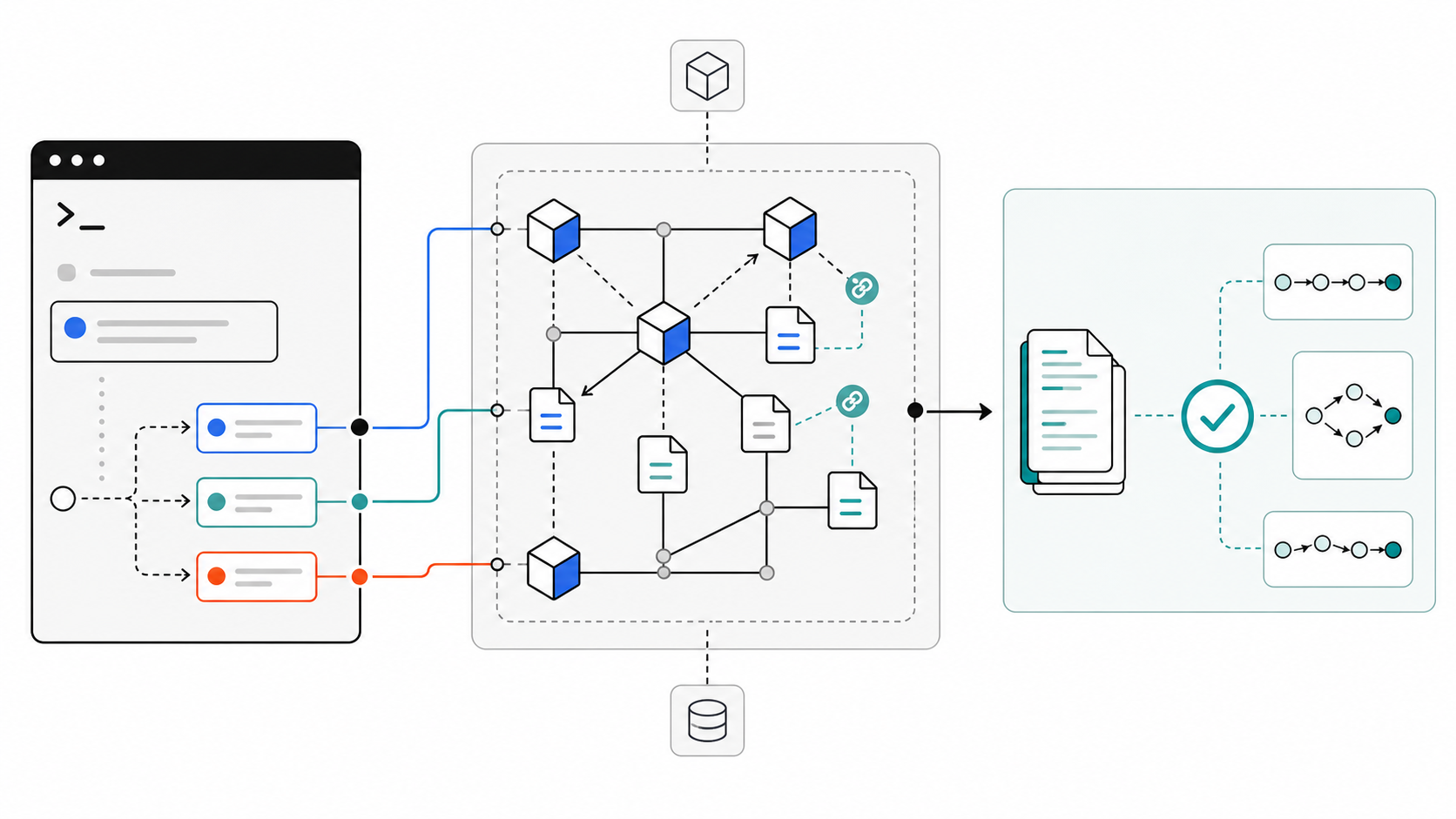
A graph can represent files, symbols, packages, tests, documents, owners, schemas, and their typed relationships. Before an agent edits a parser, the task can retrieve the parser’s callers, relevant configuration, generated consumers, and tests. The model then reads the selected current files rather than trusting the graph as an oracle.
A practical query packet contains:
- the task objective and acceptance criteria;
- the repository revision and allowed write scope;
- relevant nodes and relationship paths;
- direct source locations for every important edge;
- applicable decisions and instructions;
- tests that cover the affected behavior;
- unresolved or low-confidence relationships.
This pattern keeps providers replaceable. DeepSeek and Claude may explain a path differently, but they can receive the same versioned evidence. Their model-specific conclusions stay in the task record until source or test results justify promoting a fact into shared repository knowledge.
Graphify’s broader knowledge graph guide for AI coding assistants explains structural retrieval in more depth. The important operating rule is simpler: use a graph to select and connect evidence, then use current code and tests to verify the claim.
Verification Checklist
Before relying on Codewhale for a large-repository change, verify the product surface, the task evidence, and the result separately.
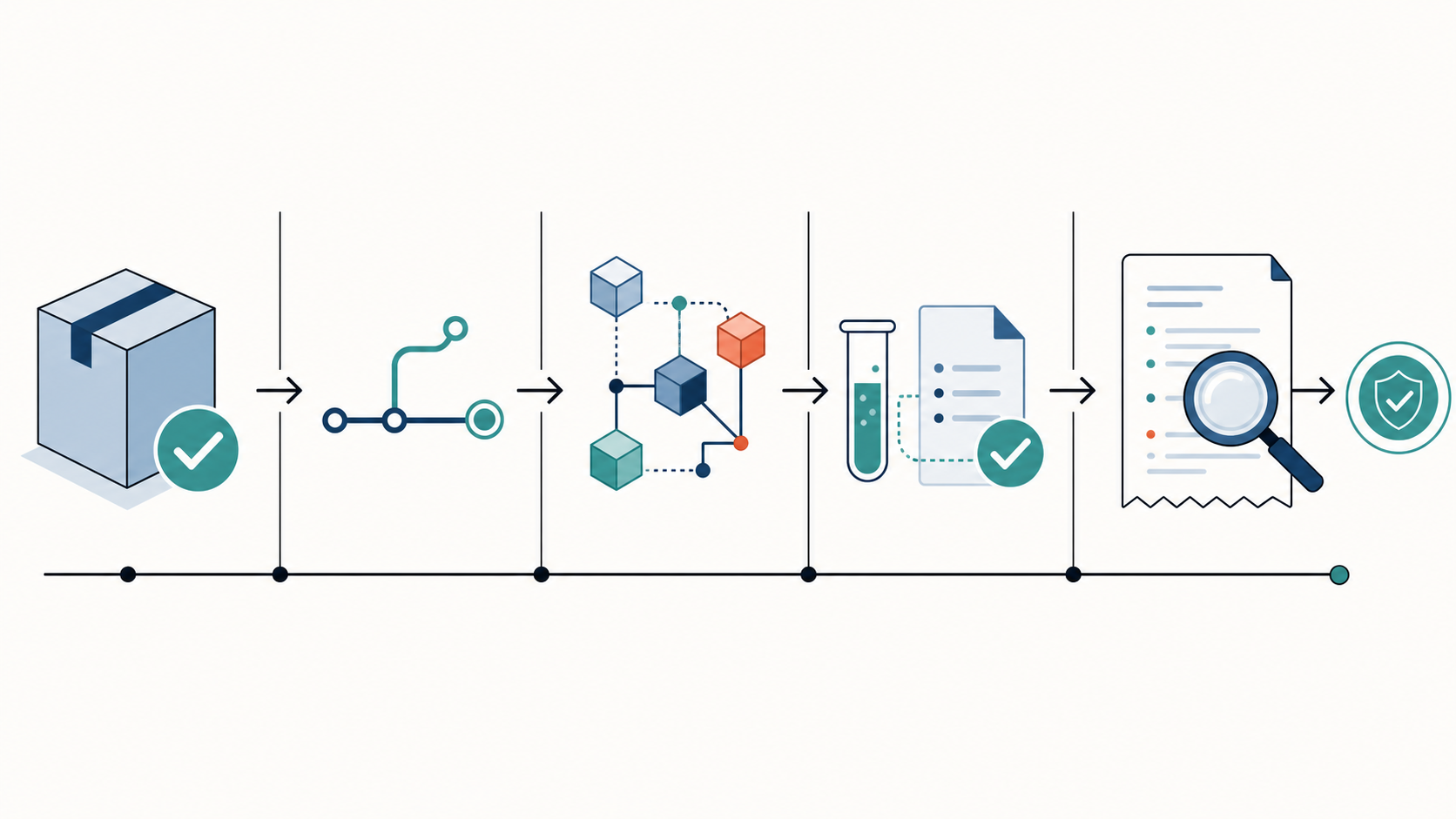
- Confirm the installed package and public release. At this cutoff, both point to v0.9.0.
- Record the active provider, model, workspace, branch, and commit.
- Read the applicable
AGENTS.mdand repo-local constitution without treating either as repository structure. - Identify entry points, affected modules, indirect consumers, generated artifacts, and external contracts.
- Pin graph or index output to the same revision as the checkout.
- Read the current source behind load-bearing relationship claims.
- Select behavior-relevant tests, not only tests located beside the edited file.
- Label model-specific hypotheses and reject unsupported handoff claims.
- Re-query changed dependency paths after the patch.
- Preserve commands, test output, diffs, and unresolved risks for review.
This checklist does not guarantee correctness. It gives a reviewer a reconstructable evidence path and makes provider changes less likely to erase why the task was considered safe.
FAQ
Which repo facts should be model-independent?
Keep stable, verifiable facts model-independent: module ownership, public entry points, imports, calls, schema relationships, deployment boundaries, test coverage, architecture decisions, and source provenance. Store the repository revision and evidence path with each fact. Do not promote an agent’s unverified diagnosis, speculative intent, or private chain of reasoning into the shared layer.
What should writers verify in CodeWhale docs?
Verify the product spelling, latest released version, provider and model controls, terminal and headless execution paths, Fleet terminology, constitution location, memory scope, and subagent behavior against the released documentation. At the July 23 cutoff, the relevant public release and npm package are v0.9.0. Also verify negative boundaries: the cited docs do not claim a native code graph or shared repository index.
When should teams avoid provider switching mid-task?
Avoid switching during a migration, incident response, release gate, or security-sensitive change when the incoming model cannot reconstruct the plan and evidence. Finish the current verification boundary first, or create a handoff containing the revision, task scope, source paths, graph queries, tests, results, assumptions, and open risks. Restart planning if that evidence cannot be reproduced.
Conclusion
Codewhale gives teams a flexible terminal-agent runtime and a practical way to route different models through common tools. For a large codebase, that is the execution layer—not the repository understanding layer.
Use Codewhale with a pinned task, current source, explicit instructions, and revision-bound relationship evidence. Keep architecture and dependency facts model-independent, label uncertain conclusions, and make tests the final gate. If another provider cannot reproduce the evidence behind a proposed change, the workflow is not ready to switch models or edit the repository.
Leave a Reply