An agent searches for a feature name, finds no exact match, and concludes that the feature does not exist. It then adds a second implementation beside the first. That is not a random search failure. It is an inference failure: the retrieval method answered a narrower question than the agent believed it had asked.
Ralph code search problems become costly because the loop can repeat the same false negative with fresh confidence. The remedy is to understand what text search proves, recognize repository patterns that hide relationships, and require source-backed verification before turning “not found” into “missing.”
Why Ralph Can Miss Existing Features
Ralph code search problems begin where task language and repository language diverge. “Audit failed logins” may be implemented under event names, middleware, hooks, or a generic security pipeline. An exact search for the task phrase can return nothing even though the behavior exists.
That is a coding agent search failure when the agent converts a narrow text result into a broad behavioral conclusion. The correction is to narrow the conclusion or expand the evidence surface.
Geoffrey Huntley’s Ralph account documents this class of failure: an agent used ripgrep, concluded functionality was absent, and created duplicate code. The lesson is not that ripgrep behaves unpredictably. The lesson is that absence of a string is weak evidence about absence of behavior.
Repeated loops magnify the issue when each iteration starts with the same query and no durable record of the earlier search boundary. The next attempt may see a clean context but inherit the same task wording. Without a better retrieval plan, fresh context reproduces the same blind spot.
Implementation details matter too. Snarktank’s loop starts a new Amp or Claude process per iteration, while the Ralph Wiggum Claude Code plugin continues inside the current session through a Stop hook. Neither process model automatically supplies semantic repository search.
Where Text Search Breaks Down
A coding agent search failure is often a mismatch between the engineering question and the evidence a text query can return. ripgrep is deterministic, line-oriented, and built around regular-expression matches. By default it respects ignore rules and skips hidden and binary files. Those are documented boundaries, not nondeterminism.
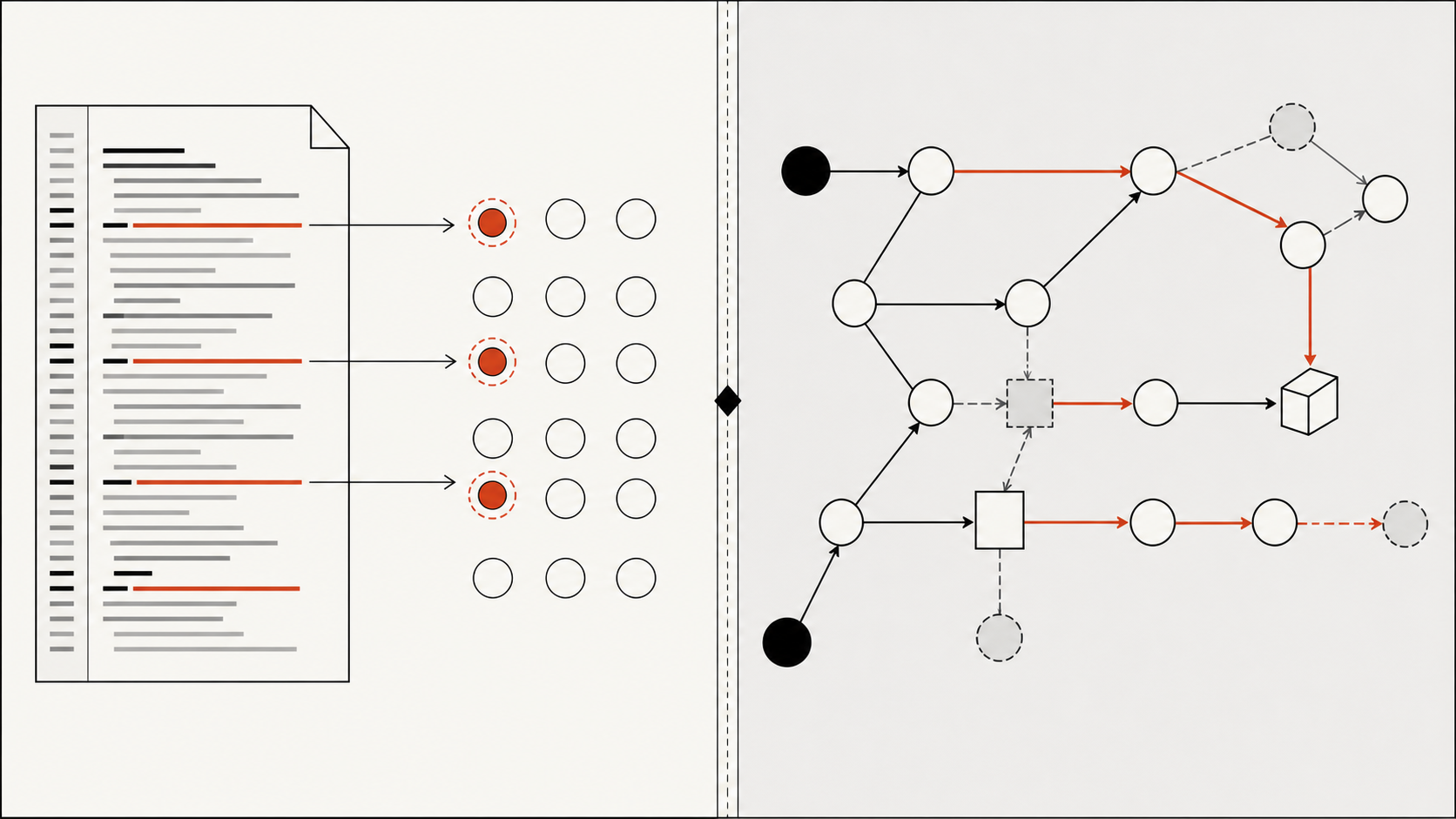
Problems arise when the task asks about a relationship that text does not encode directly. A call may cross an interface, an import may be renamed, a framework may register handlers by configuration, or a generated client may expose a different symbol from its schema. Searching for one spelling cannot prove that none of those paths exists.
The search scope can also be wrong. Running from a subdirectory, respecting an ignore file, choosing a file-type filter, or excluding generated paths changes the evidence set. Reviewers need the query, working directory, flags, and relevant exclusions before accepting a negative result.
A query such as “Ralph Wiggum Claude Code” may identify the loop implementation, but it still does not identify repository aliases, generated symbols, or indirect callers. Product vocabulary and code vocabulary remain separate search surfaces.
Text matches may also be too broad. Common names return tests, fixtures, comments, vendored files, and unrelated packages. An agent can select the closest-looking match without establishing ownership. High recall is not the same as structural relevance.
Aliases, Generated Code, and Indirect Calls
A broad query such as “Ralph Wiggum Claude Code” identifies a workflow, not the aliases used by a particular repository. A package can re-export a symbol, a module resolver can rewrite a path, or a local adapter can wrap a vendor client. Search may find the definition but not the path used by the application, or find the call site without revealing which implementation is injected at runtime.
Generated code creates another authority problem. The runtime consumer may call a generated client, while the durable contract lives in an OpenAPI file, protobuf schema, or code generator configuration. Editing the generated file can pass a local search check and still be overwritten later. Retrieval needs to connect output to its source.
Indirect calls appear in event systems, dependency injection, reflection, plugin registries, route tables, and framework hooks. Some relationships can be resolved statically; others require configuration or runtime evidence. A structure-aware index should expose uncertainty instead of inventing a precise call edge.
Tests can reveal these paths, but only if the agent knows which behavior to run. A test named after a ticket may not mention the implementation symbol. Search across test descriptions, fixtures, and module imports, then confirm that the test actually exercises the path rather than merely sharing vocabulary.
How Structure-Aware Search Helps
Structure-aware retrieval begins with entities and relationships: definitions, references, imports, implementations, callers, callees, modules, and tests. A query can ask, “Which implementations satisfy this interface, which entry points reach them, and which tests cover those paths?” That is closer to the engineering question than a list of matching lines.
A code graph can provide this layer. Graphify is one possible codebase graph system that may return a task-sized subgraph with file and symbol provenance. It should complement exact text search: text is useful for literals, configuration values, comments, and dynamic registration strings that a static graph may miss.
Results remain candidates. The agent should open the cited source, verify the active commit, inspect configuration or generation boundaries, and run relevant checks. Dynamic behavior, conditional imports, macro expansion, and incomplete language support can all produce missing or misleading edges.
This graph capability is not native to the Ralph pattern or the cited implementations. Claude Code can connect to external services through MCP, but each service must document its indexing, freshness, permissions, and failure modes.
Verification and Debugging Limits
Treat every negative search result as a bounded statement: no match was found for this query, in this scope, under these exclusions, at this commit. Before concluding a feature is absent, vary the vocabulary, inspect likely owners and entry points, follow imports or interfaces, and check schemas, generated surfaces, and tests.
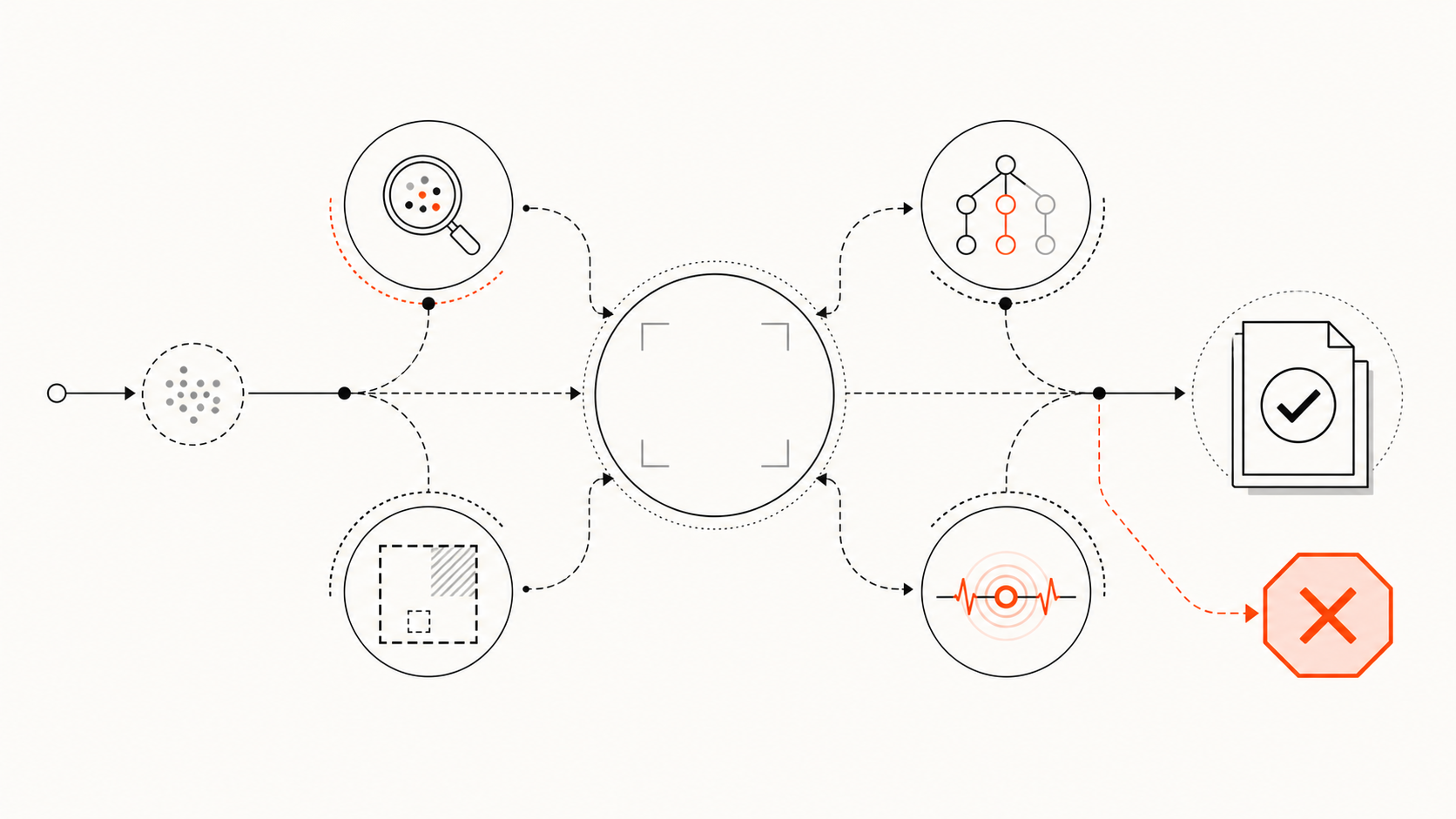
Log false negatives with enough detail to improve retrieval. Record the original task phrase, command or graph query, scope, exclusions, expected entity, actual source location, and reason it was missed. Aggregate by cause. A collection of anecdotes cannot tell whether aliases, ignored paths, language support, or task decomposition is the dominant problem.
Verification should scale with impact. A local helper may need source inspection and unit tests. A security check, migration, or public API requires broader consumer analysis and human review. Passing tests are necessary backpressure, but a narrow suite cannot prove that every indirect path was found.
Finally, do not force one retrieval system to answer every question. Exact search, symbol navigation, code graphs, build metadata, runtime traces, and human ownership knowledge cover different evidence surfaces. A reliable loop chooses among them and preserves the retrieval trail.
FAQ
When should search results be distrusted?
Distrust the conclusion, not the tool, when the query vocabulary differs from repository vocabulary, the scope or exclusions are unclear, aliases or generation are likely, or the task asks about behavior rather than text. Re-run with explicit scope and add structural or runtime evidence.
What evidence should reviewers request?
Ask for the exact query, working directory, flags, excluded paths, commit, files inspected after the search, and tests or checks run. For graph results, also request the index version, relationship type, and source provenance. The evidence should make a negative result reproducible.
How should teams log false negatives?
Store the task wording, retrieval query, expected result, missed file or symbol, root cause, and corrective action. Separate tool limitations from poor query formulation and stale indexes. Review the log periodically to improve task templates, indexes, and repository conventions.
How do we find errors in a code?
Use layered evidence: reproduce the behavior, read the relevant source, search exact values and symbols, follow structural relationships, run static checks and targeted tests, then review the diff and logs. No single search command or graph can establish correctness for every repository.
Conclusion
Ralph code search problems are usually mismatches between the question and the retrieval model. Text search can establish whether text matches exist in a defined scope. It cannot, by itself, prove that behavior, callers, implementations, or test coverage are absent.
Make negative results reproducible, add relationship-aware retrieval where the repository needs it, and verify every candidate in current source. For the implementation playbook, see how to stop Ralph rereading the repository. For the structural option, see Ralph knowledge graph integration.
Leave a Reply