Macaron-V1 large-codebase work should be evaluated as a repository-understanding problem, not as proof that a model can accept a long prompt. Test whether the coding checkpoint can identify architecture boundaries, trace dependencies, predict the impact of a change, select relevant tests, and explain uncertainty against a pinned repository revision.
MindLab Research released Macaron-V1-Coding-Venti on July 21, 2026 as a merged coding-specialist checkpoint derived from the Macaron-V1 Venti L2 Coding LoRA and GLM-5.2. Its model card lists code understanding, repository-level software engineering, terminal use, and coding-agent workflows as intended domains. It also lists a 1M context length and MIT license. Those are capability and access claims, not a completed evaluation of your codebase.
What Large Codebase Understanding Means
Large-codebase understanding is the ability to make a defensible claim about a system whose behavior is distributed across files, packages, configuration, generated artifacts, tests, documents, and runtime boundaries.
For a coding model, useful evidence includes more than a correct-looking patch. A repository-aware response should be able to:
- identify the relevant package, public boundary, and responsible owner;
- distinguish a definition from its callers, implementations, generated copies, and obsolete siblings;
- trace a likely change path through imports, calls, schemas, configuration, and tests;
- name what is directly observed, what is inferred, and what cannot be known from the checked-out source;
- select tests that validate the behavior rather than merely executing nearby files;
- preserve scope when the task asks for a narrow change instead of offering a speculative refactor.
The target is not “the model read every file.” It is a change plan or answer that a reviewer can reconstruct from current evidence. A model might correctly summarize an unfamiliar repository while failing to notice a dynamic registration path, a deployment flag, or an external client. A strong evaluation records both the right conclusion and the evidence route used to reach it.
For this reason, treat Macaron-V1-Coding-Venti as the specific subject of a trial, not “Macaron” as a generic label. The Coding-Venti card says its L2 Coding LoRA is merged into the GLM-5.2 base, so it can be deployed as a standard merged checkpoint without runtime adapter loading. The fuller Macaron-V1 Venti system and its routing harness are separate surfaces with their own context and serving behavior.
What Long Context Alone Cannot Prove
A large context window expands the amount of material a model can receive. It does not demonstrate that the model selected the right evidence, connected the right relationships, or respected authority and freshness.
The Coding-Venti model card and configuration declare a 1,048,576-position model limit. MindLab’s checked-in Mixture-of-LoRA harness, however, configures its Venti and Tall launch profiles with a 262,144-token context limit. Both details are important during a trial: the former describes the checkpoint specification; the latter describes a reference self-hosted serving profile. Neither means every hosted endpoint, local deployment, prompt shape, or repository task has the same usable context.
Do not transfer LongStraw’s multi-million-token number to Macaron-V1 inference. LongStraw is MindLab’s long-context reinforcement-learning infrastructure. Its public repository describes training-side resident state and response replay; it is not a product specification saying that Macaron-V1-Coding-Venti receives 2M tokens in production.
Even when a trial really can provide a large repository slice, several questions remain:
| Question | What a context limit cannot answer |
|---|---|
| Evidence selection | Whether the model attended to the relevant contract instead of a duplicate or stale file |
| Dependency reasoning | Whether it recognized an indirect caller, generator, feature flag, or runtime registration |
| Change safety | Whether a proposed edit preserves compatibility and deployment behavior |
| Freshness | Whether the included files and documents match the commit being changed |
| Reviewability | Whether a human can locate the sources behind the recommendation |
The adjacent 1M Context vs Knowledge Graph guide explains why capacity, retrieval, and repository relationships are separate design choices. For a model trial, use the context window to hold a bounded, known evidence set—not as a substitute for an impact-analysis method.
Tests for Architecture and Dependency Awareness
Build a private evaluation set from completed, reviewable changes. Each task should have an expected evidence path and a verification result. Avoid leaking the target diff into the prompt.
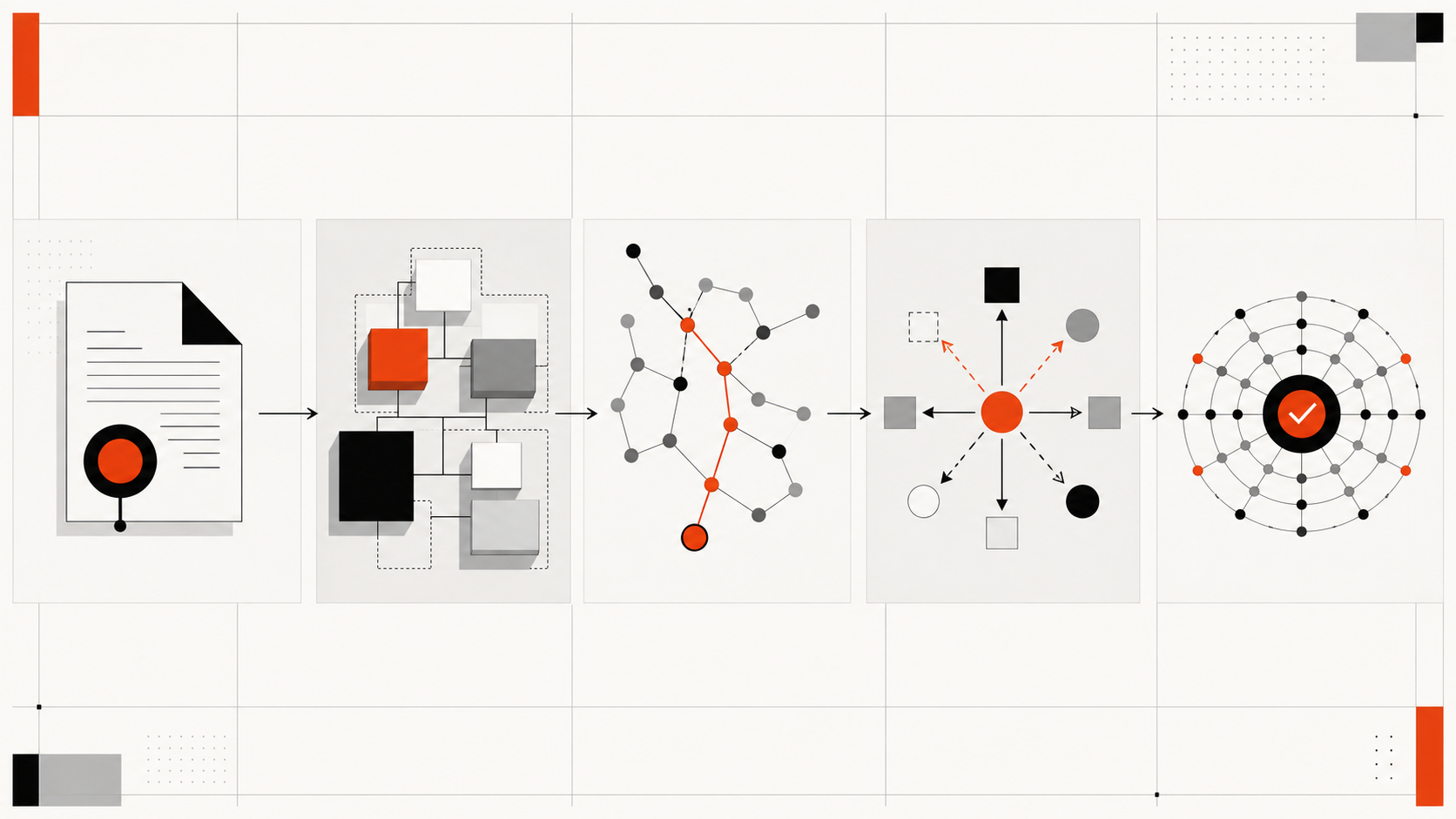
Start with five test families:
- Architecture localization. Give the model a feature request and ask which package owns the boundary, which documents establish the intent, and which files are only adjacent. Score cited paths and stated uncertainty.
- Dependency tracing. Ask for direct callers, transitive consumers, generated outputs, configuration gates, and test surfaces for one API or schema. Compare the answer with a reviewer-created path and current source search.
- Impact analysis. Present a proposed behavioral change. Require a list of compatible and incompatible consumers, migration steps, rollback conditions, and tests. Penalize ungrounded dependencies and missed public contracts.
- Cross-module repair. Seed a realistic bug whose cause and symptom live in different modules. Require a diagnosis, minimal edit plan, test rationale, and statement of what must be run in a real environment.
- Negative-evidence handling. Include a tempting but irrelevant file or stale document. Ask the model to separate confirmed evidence from a hypothesis. This measures whether it can say “not established” instead of filling gaps confidently.
Record exact inputs for every run: repository commit, model ID, serving stack, context budget, system instructions, tools, retrieval or graph configuration, temperature, and date. Then record outputs that a reviewer cares about: correct affected files, unsupported claims, missed dependencies, patch correctness, test selection, reviewer corrections, latency, and token use.
Run a baseline with ordinary repository search and file reading. Then run a long-context version, and where appropriate a graph-selected-evidence version. The comparison reveals whether capacity improves the task or merely increases prompt size. It also prevents an impressive vendor benchmark number from replacing evidence on your private architecture.
Failure Modes to Watch
Repository work fails at boundaries. Watch for these patterns during a Macaron-V1 trial:
- The complete-dump illusion: the prompt contains many files, but the answer ignores the one policy, generator, or test that governs the change.
- False impact paths: the model mistakes lexical similarity for a call or data-flow relationship, or invents a dependency that source does not support.
- Stale graph or index: structural retrieval points to a previous commit after a rename, code generation, or package split.
- Scope expansion: a narrow defect fix becomes a broad refactor because the model discovers adjacent technical debt.
- Tool compatibility confusion: OpenAI-compatible transport or an API response does not prove reliable tool calling, patch application, or terminal behavior in a specific harness.
- Benchmark transfer: vendor-reported SWE or terminal scores are treated as proof of repository understanding on a different codebase and workflow.
Mitigate these failures by setting a base commit, using read-only exploration first, requiring citations to current paths and symbols, and asking for an explicit “unknown or unverified” list. For edits, restrict write paths, run focused tests before broad checks, and route public-contract changes to the relevant human owner.
A code knowledge graph can reduce repeated discovery by making a candidate dependency path visible. It cannot guarantee completeness. Use it to select evidence, then inspect current source and tests. That balance is especially useful when a model’s window is large enough to read a subsystem but not enough to turn raw repository scale into reliable understanding.

Evidence and Version Notes
MindLab’s model card publishes a table of coding and terminal benchmarks, including SWE Verified and TerminalBench 2.1. Those are vendor-reported results. The same card says the full benchmark methodology is forthcoming, so they should not be presented as an independent ranking or a direct prediction of your codebase performance.
The most defensible claims for a release note or trial plan are narrower:
- Macaron-V1 is an official Mind Lab release dated July 21, 2026.
Macaron-V1-Coding-Ventiis a MindLab Research coding checkpoint with a stated 1M context specification, open weights, and MIT license.- The official harness exposes OpenAI-compatible APIs and routes task requests through its profile architecture.
- Reference harness launchers use 262K context, so deployment context must be measured rather than assumed.
Everything beyond that—including cost, hosted limits, patch quality, security behavior, and repository reliability—belongs in a dated trial record. Preserve model revision, checkpoint hash when available, serving configuration, prompt template, and repository commit. Without that record, a future comparison cannot tell whether a result changed because of the model, the harness, the task, or the codebase.
FAQ
What should be tested before trusting Macaron-V1?
Test representative architecture localization, dependency paths, impact analysis, cross-module repairs, and negative-evidence handling on a pinned private repository. Require source citations, expected tests, and reviewable diffs. Also test the actual serving profile and context budget you will use; do not infer production behavior from the model-card limit.
How should teams record model version results?
Store the model ID, checkpoint/revision, provider or harness version, context setting, tool configuration, prompt template, date, repository commit, task fixtures, outputs, scores, reviewer corrections, and test results. Keep vendor benchmarks in a separate evidence field so they cannot be mistaken for internal evaluation data.
When is long context not enough?
Long context is not enough when evidence is unknown, relationships are multi-hop, behavior is dynamic, documents conflict, or the change has external consumers. Use source search, an approved structure index or graph, task boundaries, and tests to select and verify evidence before relying on model synthesis.
Conclusion
Macaron-V1 large-codebase understanding is a testable workflow claim, not a property granted by a 1M context number. The Coding-Venti checkpoint is explicitly positioned for repository and coding-agent work, but only a controlled trial can show whether it understands your architecture, dependencies, impact paths, and tests.
Measure the checkpoint and harness on pinned repository tasks. Use long context to retain a known evidence set, use structural tools to locate relationships, and make current source, tests, and responsible reviewers the final authority.
Leave a Reply