Muse Spark 1.1 is a real Meta coding model with a 1,048,576-token context window, multimodal inputs, and tools for agentic workflows. Those features may help it retain more evidence and operate through longer coding tasks. They do not give it an automatically correct map of a large codebase, its runtime dependencies, or its design history.
The useful way to evaluate Muse Spark repo understanding is to separate three things: the model’s capacity, the repository evidence supplied by the harness, and the tests or reviewers that verify its conclusions. Large context creates room for evidence. It does not guarantee that the right evidence was selected.
Why Frontier Models Still Struggle With Repos
A repository is not just a long document. Its behavior emerges from relationships among symbols, modules, generated artifacts, configuration, data contracts, deployment rules, and external services. Many of those relationships are not stated in one place.
Consider a request to rename a shared field. Text search may find its definition and direct references, yet miss a serialized payload, a dynamic lookup, a migration script, or a downstream consumer in another package. A model can produce a locally convincing patch while misunderstanding the system boundary.
Large repositories also contain conflicting evidence. An architecture document can be stale. Tests may encode current behavior while comments describe an abandoned plan. Generated files can look editable. Similar names can refer to different concepts. The agent must decide which evidence is authoritative before it reasons about the change.
The hard problem therefore has several parts:
- Discovery: find the files, symbols, contracts, and owners that matter.
- Structure: identify imports, calls, data flow, inheritance, and deployment dependencies.
- Intent: distinguish current constraints from historical residue.
- Execution: make a coherent change without expanding scope unnecessarily.
- Verification: select tests that can expose missing consumers and regressions.
Frontier models can be strong at reading and generating code while still failing one of these steps. More tokens reduce some memory pressure, but they do not repair absent documentation, incomplete static analysis, weak tests, or unrecorded institutional knowledge.
What Muse Spark 1.1 Might Improve
Meta Superintelligence Labs released Muse Spark 1.1 on July 9, 2026. Meta’s model documentation identifies the API model as muse-spark-1.1, with a 1,048,576-token context window. It accepts text, images, video, and PDFs and returns text.
The model is available through the hosted Meta Model API, which Meta describes as a public preview for US developers. It is not presented in the official release materials as an open-weight model. Meta’s developer guide documents OpenAI-compatible interfaces, an Anthropic Messages format, tool calling, structured output, search grounding, and an OpenCode connection path.
These capabilities may improve large-repository workflows in practical ways:
- A larger working window can preserve more source, test output, plans, and tool history before compaction becomes necessary.
- Tool calling lets a coding harness search selectively, inspect files, edit code, and run validation instead of asking the model to answer from a static prompt.
- Multimodal input can connect screenshots or rendered output to the files responsible for a visible defect.
- Context management and subagent orchestration may help longer workflows maintain continuity across discovery, implementation, and testing.
Meta claims that Muse Spark 1.1 improved on complex-codebase tasks such as debugging, feature work, and migrations. Meta’s published table reports 80.0 on Terminal-Bench 2.1, 61.5 on SWE-Bench Pro, and 53.3 on DeepSWE 1.1. These are useful signals about agentic coding under documented harnesses, not independent proof that the model understands every repository architecture.
The key word is might. The same model can perform differently when the repository snapshot, tool permissions, system instructions, reasoning effort, network access, and acceptance tests change. Treat the model as one component of the evaluation, not the entire workflow.
What Large Codebases Require Beyond Tokens
An effective Meta coding model repository workflow needs a curated evidence layer. The agent should start with a small map of the system, then retrieve source and relationships for the specific task.
A useful evidence package includes:
| Evidence | What it should answer |
|---|---|
| Repository map | Which packages, services, and entry points exist? |
| Architecture rules | Which boundaries must a change preserve? |
| Dependency signals | Who calls, imports, implements, emits, or consumes this entity? |
| Contracts and schemas | Which interfaces cross process or repository boundaries? |
| Ownership and history | Who approves the area, and why does the current design exist? |
| Build and tests | Which commands verify the affected behavior? |
| Operational rules | How is the change deployed, observed, and rolled back? |
Do not paste all of this into every prompt. Store stable guidance in maintained project documentation, expose structural relationships through queryable tools, and let the agent retrieve task-specific source. Broad ingestion can waste context on vendored code, generated files, duplicated fixtures, and obsolete documents.
The harness also needs provenance. A model should be able to show which file, symbol, test, or document supports an architectural claim. Without citations, reviewers cannot distinguish repository evidence from a plausible inference.
Finally, the workflow needs a freshness rule. Documentation and indexes should record the repository commit or update time they describe. When evidence disagrees, current executable code and tests usually deserve more weight, but teams should resolve the conflict instead of letting the agent silently choose.
Where Code Knowledge Graphs Help
A code knowledge graph gives the agent a structured query layer over the repository. Nodes can represent symbols, files, packages, APIs, tests, owners, and design documents. Typed edges can represent calls, imports, implementations, data flow, ownership, or test coverage.
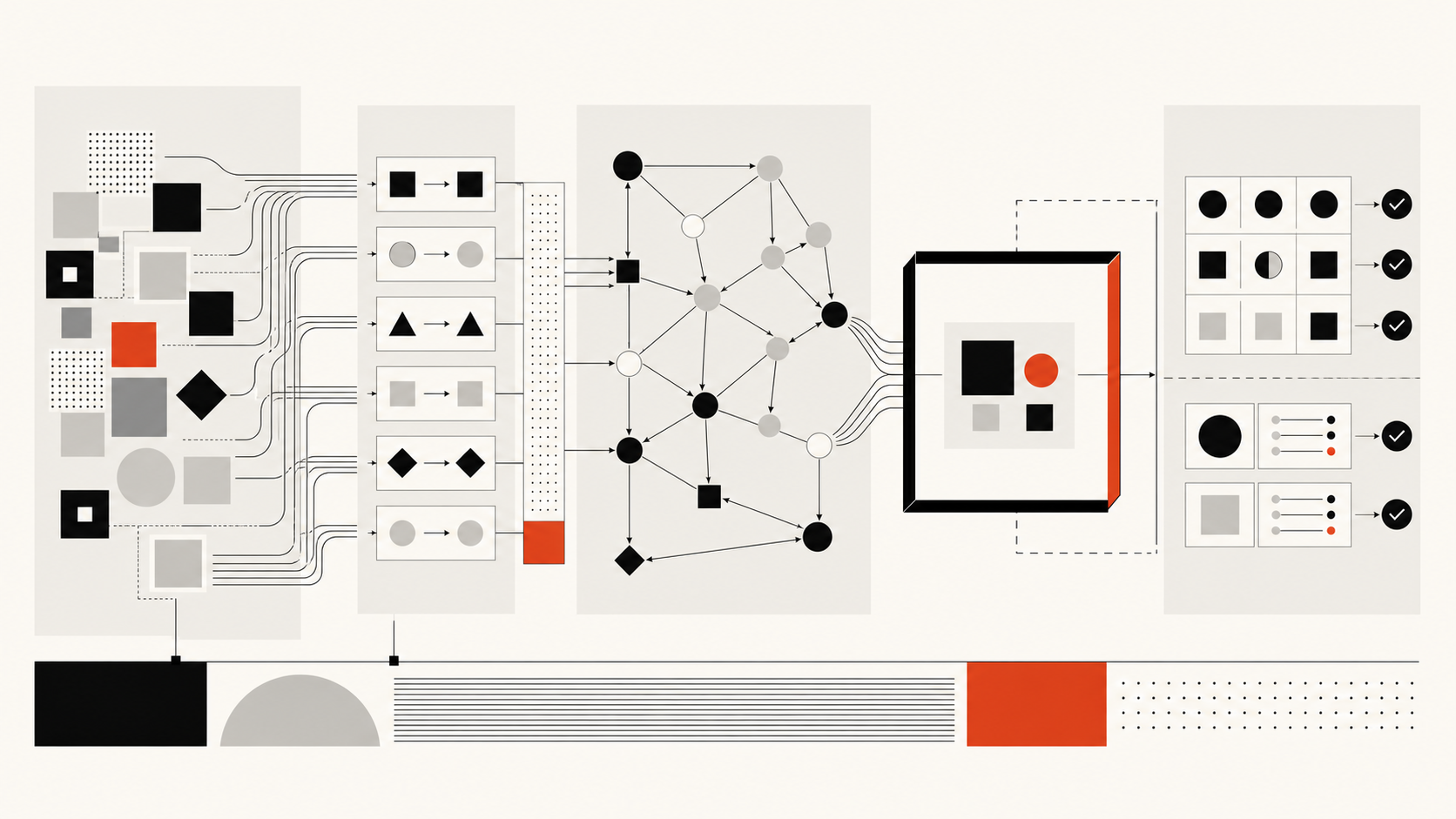
The graph changes the first question from “How much code fits in the context window?” to “Which entities and relationships could this change affect?” Muse Spark 1.1 can then inspect the underlying source, reason about the requested change, and keep the selected evidence in its working context.
This division of labor is useful:
- the graph narrows discovery and exposes cross-file paths;
- repository search retrieves exact source and recent changes;
- documentation explains policy and intent;
- Muse Spark reasons, plans, edits, and uses tools;
- tests and human review verify the result.
Graphs are not ground truth by default. Reflection, runtime registration, generated code, configuration, and external consumers can escape static extraction. A stale edge can be more misleading than no edge because it appears authoritative. Graph results should carry provenance and freshness, and they should route the model back to source.
That is the practical role of a Graphify repository knowledge layer: reduce repeated rediscovery while keeping code and verification in the loop. The same principle appears in context engineering for OpenCode, where tool access is useful only when the agent receives current, scoped repository evidence.
Facts and Claims to Verify
Model information changes quickly, so teams should separate stable facts, vendor claims, and local findings before adopting Muse Spark 1.1.
As of July 17, 2026, the following items were verified from Meta’s primary materials:
- the exact name is Muse Spark 1.1 and the developer is Meta Superintelligence Labs;
- the API model ID is
muse-spark-1.1; - the documented context window is exactly 1,048,576 tokens;
- Meta Model API is a hosted public preview for US developers;
- supported inputs are text, image, video, and PDF, with text output;
- Meta publishes coding, tool-use, agent, multimodal, and reasoning evaluations.
Keep the qualification attached to the last point. Meta’s evaluation report says coding and agentic comparisons can combine self-reported results with internal runs. It also warns that Meta’s prompts and tools may not be tuned for competing proprietary models. The numbers describe particular evaluation setups, not a universal ranking.
Before production use, recheck availability, pricing, model identifiers, regional access, rate limits, data handling, and the API’s retention controls. Then test the current endpoint rather than assuming a July preview behaves the same months later.
For a controlled model comparison, see Muse Spark 1.1 vs Claude Opus 4.8 for repository understanding. The comparison should use identical repository commits, tools, prompts, token budgets, permissions, and hidden tests.
FAQ
What repo evidence should be prepared first?
Prepare a repository map, build and test commands, architecture boundaries, public contracts, generated-file rules, package ownership, and current design decisions. Add dependency paths for the target area and mark each document with its source or last verified commit. Keep the initial packet concise so the agent can retrieve deeper evidence only when needed.
How should teams test architecture understanding?
Use a frozen private repository and ask the model to locate the owner of a behavior, cite the relevant files, trace callers and contracts, predict affected packages and tests, and explain uncertainty before editing. Score evidence precision, dependency recall, unsupported assumptions, test selection, patch correctness, and review effort across repeated runs.
When should model output be manually reviewed?
Require human review when a change crosses service or package boundaries, changes a public contract, touches security or persistence, adds a dependency, affects deployment order, or relies on a relationship that tests cannot verify. Passing visible tests is necessary evidence, not proof that every consumer or operational constraint was found.
Conclusion
Muse Spark 1.1 gives coding agents substantial working context, multimodal input, and a tool-oriented hosted API. Those features can help long sessions and complex changes, especially when a harness retrieves the right source and preserves relevant tool history.
They do not remove the central difficulty of AI codebase understanding: repositories encode structure and intent across many imperfect sources. Use the model with maintained documentation, dependency evidence, a queryable code graph, focused retrieval, tests, and architecture review. Adopt it when that complete workflow improves outcomes on your own repository—not because one million tokens appears large enough to contain the code.
Leave a Reply