Choose Claude Sonnet 5 as the practical default for frequent repository work; evaluate Claude Fable 5 for the hardest, longest-running tasks that justify higher cost and additional operational constraints. Both have one-million-token context windows, so the deciding evidence should be task completion, review effort, latency, cost, and recovery—not window size alone.
Neither model automatically understands a repository. Claude Code, project rules, search, source files, architecture documents, tests, permissions, and any external knowledge layer determine what evidence the model can use. A stronger model cannot recover design intent that the team never recorded.
Quick Verdict
Anthropic positions Sonnet 5 as a fast, capable model for regular coding and agent workflows, while Fable 5 is its most capable widely released model for demanding long-horizon work. That makes Sonnet the lower-friction starting point and Fable the escalation candidate.
| Decision factor | Claude Sonnet 5 | Claude Fable 5 |
|---|---|---|
| Practical role | Frequent edit-test loops and broad team use | Ambitious, long-running, high-difficulty work |
| Context window | 1M tokens | 1M tokens |
| Maximum output | 128K tokens | 128K tokens |
| Listed API price at verification | Introductory $2 input / $10 output per million tokens through August 31, 2026; then $3 / $15 | $10 input / $50 output per million tokens |
| Key operational difference | Faster, lower-cost default | Higher-cost escalation with model-specific safeguards and retention rules |
| Evidence standard | Private repository pilot | Same pilot, with long-horizon and failure-recovery tasks |
Prices, access, and model behavior are volatile. Anthropic’s current documentation should be checked again before publication or procurement.
What Repository Tasks Need
Repository tasks combine several capabilities that a short coding benchmark may not isolate.
The model must discover relevant files without opening the whole repository. It must trace relationships across modules, distinguish source from generated code, understand build and test commands, preserve public contracts, and recognize when a change crosses an ownership or architecture boundary.
Multi-file refactoring adds consistency demands. A renamed interface may affect implementations, tests, generated clients, documentation, telemetry, and external consumers. Repository analysis also requires negative evidence: a model should say when it cannot verify a runtime path rather than inventing one.
Long-running coding agents need operational memory across planning, editing, tests, failures, and revisions. They also need permission controls, isolated branches, reproducible commands, and a human acceptance rule. These are properties of the agent system, not only the model.
A fair comparison therefore includes at least:
- localized bugs with hidden tests;
- cross-module interface changes;
- architecture-constrained refactors;
- impact analysis without editing;
- build or CI diagnosis;
- interrupted tasks that must resume from saved evidence;
- incorrect initial hypotheses that require recovery.
Run those tasks from equivalent clean sessions and keep the repository revision, tool permissions, instructions, reasoning settings, and time budget fixed. Score navigation accuracy, missed dependencies, test-driven corrections, unsupported claims, reviewer intervention, latency, and total cost. Without that control, teams may mistake a better-prepared prompt or an easier task for a model advantage.
Model Capability vs Context Infrastructure
Anthropic says Fable 5 improves on Opus 4.8 in long-horizon autonomy, dense technical vision, code review, debugging, and search across codebases and repository history. Anthropic also positions it for large migrations, complex implementations, and multi-day agent sessions. These are vendor claims and should be tested on the target repository.
Sonnet 5 shares the same nominal one-million-token context window and 128K maximum output. Anthropic positions it as a speed-and-intelligence balance for coding and agentic work. The practical difference is not that Fable can “see the repository” while Sonnet cannot. It is whether Fable’s additional capability changes outcomes enough to justify its price, latency, safeguards, and usage model.
Context infrastructure often dominates both.
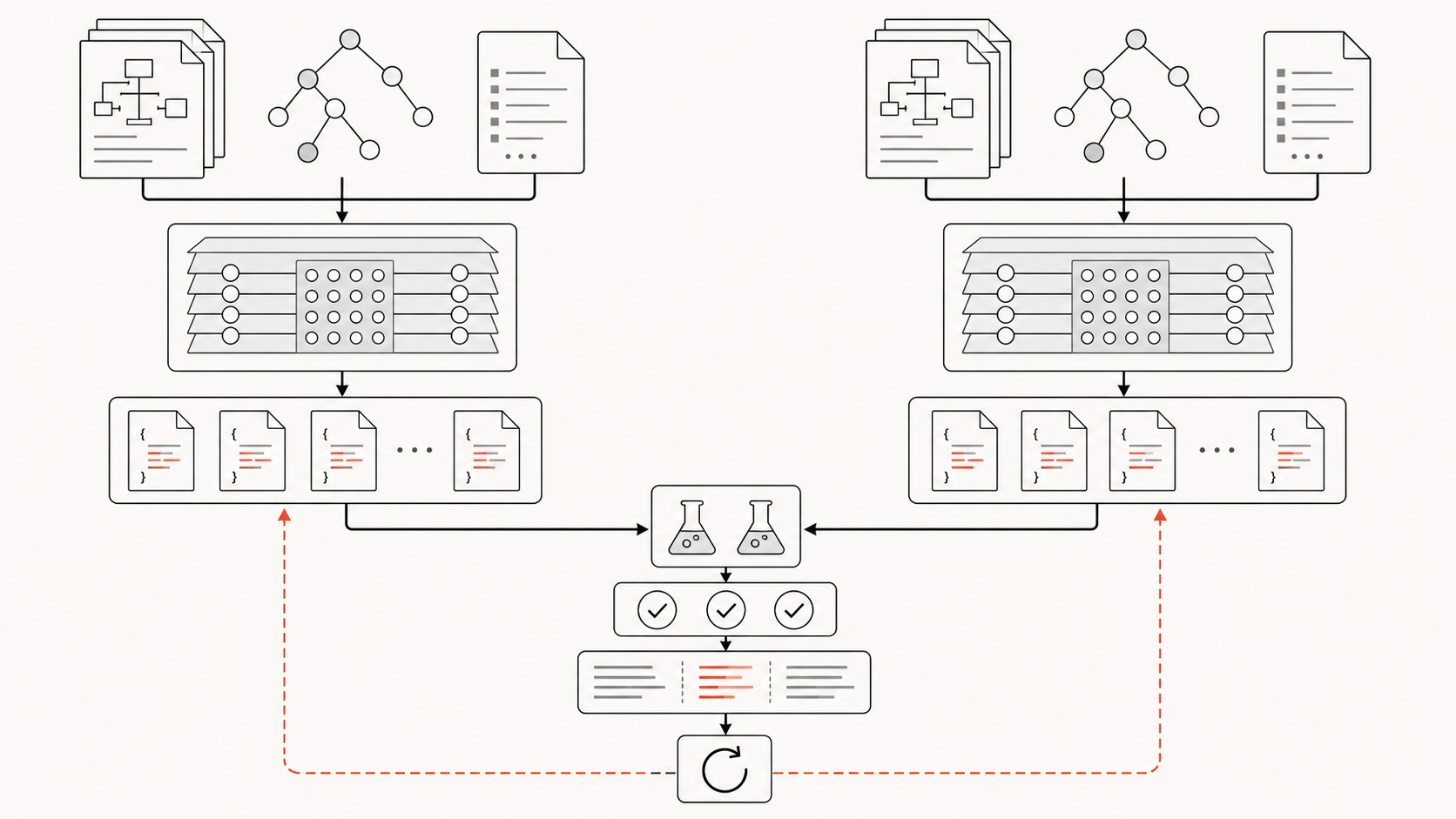
Claude Code can search files, run commands, edit code, and use project instructions. Architecture documents explain boundaries that source alone may not reveal. A code knowledge graph can expose callers, imports, tests, and cross-document relationships. Tests and build systems provide executable evidence.
This infrastructure remains useful when the model changes. Graphify’s guide to knowledge graphs for AI coding assistants explains why a reusable relationship layer can reduce repeated discovery. The Claude Sonnet 5 large-codebase guide covers the limits of context capacity in more detail.
The right model receives selected evidence from these layers. It should not be asked to infer the entire system from a flat dump of files.
Multi-File Refactoring Scenarios
For a routine refactor with clear ownership and tests, start with Sonnet 5. Examples include moving a helper, tightening a type, updating a well-documented API inside one service, or repairing a regression with a narrow failing test. Lower latency and cost can matter more than maximum model capability when the feedback loop is short.
Escalate to Fable 5 when the task has several compounding difficulties:
- the migration crosses many packages or services;
- the implementation spans hours or days;
- the plan must be revised after test or deployment evidence;
- the agent must coordinate parallel investigations;
- visual artifacts or dense technical documents are important;
- the repository history is needed to understand a regression;
- earlier models repeatedly miss interactions under the same harness.
Do not escalate merely because the repository is large. A ten-million-line monorepo with a well-indexed, isolated change may be easier than a small service with dynamic wiring and no tests.
For either model, use a repository task contract:
- freeze the starting commit;
- define allowed directories and commands;
- provide architecture and generated-file rules;
- require an impact plan before broad edits;
- run hidden regression tests;
- inspect dependency and contract changes;
- record reviewer corrections and recovery actions.
If context cost becomes a bottleneck, pxpipe is a separate option rather than a model feature. It can render selected bulky context as images and defaults to Fable 5 based on project-run reading tests. Its lossy representation is unsuitable for exact code and identifiers. See the planned pxpipe context analysis after that page is published.
Limits and Claims to Verify
First, verify availability and policy. Fable 5 launched on June 9, 2026, was suspended on June 12 after a US government directive, and was restored globally starting July 1. Anthropic currently lists it in Claude Code and the Claude Platform, but plan, provider, region, safeguards, usage credits, and retention rules can affect access.
Second, verify data handling. Anthropic’s Fable documentation states that the model requires 30-day retention and is not available under zero-data-retention terms. A team with stricter code or customer-data requirements may need a different model or deployment path.
Third, account for refusals. Fable 5 includes safety classifiers and can return stop_reason: "refusal" for covered requests. Anthropic documents fallback options. Repository pilots should include legitimate security maintenance if that workload matters, because a general coding success rate will not reveal safeguard friction.
Fourth, treat benchmarks as bounded evidence. A benchmark can measure patch completion under a harness; it rarely measures architecture comprehension, ownership, rollback safety, or reviewer effort. The pxpipe project’s small Fable SWE-bench trials are evidence about its compression path, not evidence that Fable is universally superior to Sonnet for repository work.
Finally, do not assume that equal context windows imply equal effective recall, cost, or behavior. Tokenizers, reasoning settings, tool use, client scaffolding, caching, and model updates change the result. Record exact model IDs and dates.
FAQ
What benchmark would reflect repo analysis?
Use private tasks that require dependency discovery, impact analysis, architecture constraints, hidden tests, and explanation of uncertainty. Include non-editing tasks and score missed consumers, unnecessary files, reviewer corrections, and regressions. Public patch benchmarks can supplement this set but should not replace it.
How should teams compare long-running agents?
Freeze the repository, task, permissions, tools, and acceptance tests. Run multiple trials with Sonnet 5 and Fable 5. Record completion, elapsed time, turns, cost, context compactions, retries, safeguard refusals, test outcomes, human interventions, review minutes, and recovery from wrong plans.
When should a graph layer be model-independent?
Keep it model-independent when several agents or model versions need the same repository structure, when model switching is common, or when architecture and ownership knowledge must survive individual sessions. Store provenance and refresh information so every model can verify graph results against current source.
Conclusion
The durable answer to Sonnet 5 vs Fable 5 coding is a routing policy, not a permanent ranking. Use Sonnet 5 as the default candidate for frequent repository analysis and edit-test work. Escalate to Fable 5 when difficult, long-running tasks show measurable gains under the same repository harness.
Keep project understanding outside the model choice: maintained instructions, architecture records, search, structural graphs, source links, tests, and review. Then replace or route models without forcing each new model to rediscover the repository’s truth from scratch.
Leave a Reply