There is no defensible universal winner for Pi vs Claude Code large codebase context without running both tools against the same repository revision, task, model conditions, permissions, and evidence rubric. Claude Code documents more built-in large-repository context controls. Pi offers a deliberately minimal, extensible harness. Feature presence is not proof of more accurate architecture, call-chain, impact, or test discovery.
Use this comparison to design a fair test, not to import benchmark conclusions from unrelated tasks. The current Pi project is the terminal coding harness published as @earendil-works/pi-coding-agent from the earendil-works/pi repository. This article was checked against Pi v0.82.0 and current Claude Code documentation on July 24, 2026.
Quick Verdict
For Pi vs Claude Code large codebase work, choose the harness only after running both against the same revision, permissions, context budget, and evidence rubric.
Choose Claude Code when you want official, built-in surfaces for nested CLAUDE.md, path-scoped rules, Skills, auto memory, code-intelligence plugins, MCP/plugins, subagents, and fine-grained permissions. Those surfaces can reduce setup and help control context in a large repository.
Choose Pi when you want a small terminal harness whose behavior you can extend through TypeScript Extensions, Skills, Prompt Templates, Themes, and Packages. Pi’s built-in tools are read, bash, edit, write, grep, find, and ls. It intentionally leaves features such as MCP, subagents, permission popups, plan mode, to-dos, and background Bash to extensions or external workflows.
Neither choice eliminates repository discovery. Pi repository context and Claude Code context both depend on what the tool loads, which paths it inspects, what its underlying model infers, and how the team verifies results. The correct verdict is conditional: run a controlled evaluation and publish the evidence, not a brand score.
Repository Context Criteria
Compare Pi repository context and Claude Code context with an identical fixture rather than treating either tool's feature list as proof of repository understanding.
Evaluate the same engineering jobs in both tools:
| Criterion | Evidence required |
|---|---|
| Architecture location | modules, entry points, ownership, and source citations |
| Call-chain discovery | direct, indirect, generated, and unresolved paths |
| Change impact | affected contracts, consumers, configuration, and data paths |
| Test mapping | relevant unit, integration, contract, migration, and end-to-end tests |
| Context recovery | what survives a fresh, resumed, or compacted session |
| Objectivity | unsupported claims, missing evidence, and explicit unknowns |
| Efficiency | tool/file reads, input/cache tokens where available, and time to defensible map |
Pin the same repository commit. Use the same underlying model and reasoning level where the harnesses permit it. Give both the same neutral task and committed instructions. Restrict the run to read-only analysis: Pi can allow only read,grep,find,ls; Claude Code can use plan mode or permission rules that prevent edits.
Require both outputs to cite repository-relative paths and symbols. Score an honest “unknown” above a confident unsupported edge.
Run more than one task. A single architecture question can favor the tool whose default search happens to match that repository. Use at least three bounded cases: locating an unfamiliar feature, tracing a change through an indirect contract, and mapping the tests required for a risky modification. Reset the checkout between runs and preserve raw tool logs so reviewers can distinguish agent reasoning from harness behavior.
Separate correctness from operating cost. Record wall time, file reads, shell or tool calls, and available token/usage data, but do not collapse them into one synthetic score. A fast answer with a missing consumer is not efficient engineering. A complete answer that reads the entire repository may be too expensive to repeat. Report the trade-off and its confidence interval if multiple runs are available.
Also control human assistance. Decide in advance whether the evaluator may clarify a task, approve tools, or point the agent toward a module. Apply the same rule to both harnesses and log every intervention. Otherwise the comparison measures how much guidance one run received rather than how each tool recovered repository context.
Repeat borderline cases to expose run-to-run variance.
Publish the repository fixture and scoring instructions when confidentiality allows. Reproducibility matters more than a polished comparison table.
Search demand around Pi coding agent vscode can confuse the comparison. Pi is documented as a terminal coding agent; community or editor integrations should be evaluated separately and not treated as a built-in large-repository capability. Test the official harness configuration you will actually deploy.
Architecture and Module Location
A Pi coding agent VSCode integration, if a team adopts one, is an additional interface layer; the first-party Pi harness documented here remains terminal-oriented and extensible.
Pi walks ancestor directories to the current directory and loads the first existing context-file candidate per directory, preferring AGENTS.md over CLAUDE.md. It also supports global context. That provides stable instructions, but it does not create a module index. The agent still uses reads, search tools, shell commands, Skills, or extensions to locate architecture.
Claude Code loads CLAUDE.md context, supports nested instruction files and path-scoped rules, and documents large-codebase scoping. It can use code-intelligence plugins for definitions and references when a supported language server is installed. It also recommends excluding generated or vendor code and moving specialized procedures into on-demand Skills.
Claude Code also documents importing AGENTS.md from CLAUDE.md, so cross-tool guidance can remain neutral while Claude-specific rules stay distinct from repository facts.
These controls can improve search discipline. They do not prove that Claude Code locates the correct architecture more often. A badly scoped CLAUDE.md can mislead. A language server can omit runtime registration. A Pi extension can provide a stronger project-specific index. The evaluation must inspect cited evidence and missed paths.
For both tools, a small revision-bound module map is useful. Include packages, deployable units, generated areas, owners, decisions, and coverage gaps. Let the agent verify it rather than loading an enormous prose summary.
Call-Chain, Impact, and Test Discovery
Direct text search finds literal names. Real impact can pass through aliases, dependency injection, reflection, configuration, generated clients, schemas, events, queues, and other repositories. Neither harness turns Grep into a complete call graph.
Run a fixture task with known difficulties:
- one direct caller;
- one aliased import;
- one registration or dynamic edge;
- one generated artifact with an authoritative source;
- one cross-module contract;
- one relevant test with a misleading neighbor;
- one intentionally unresolved path.
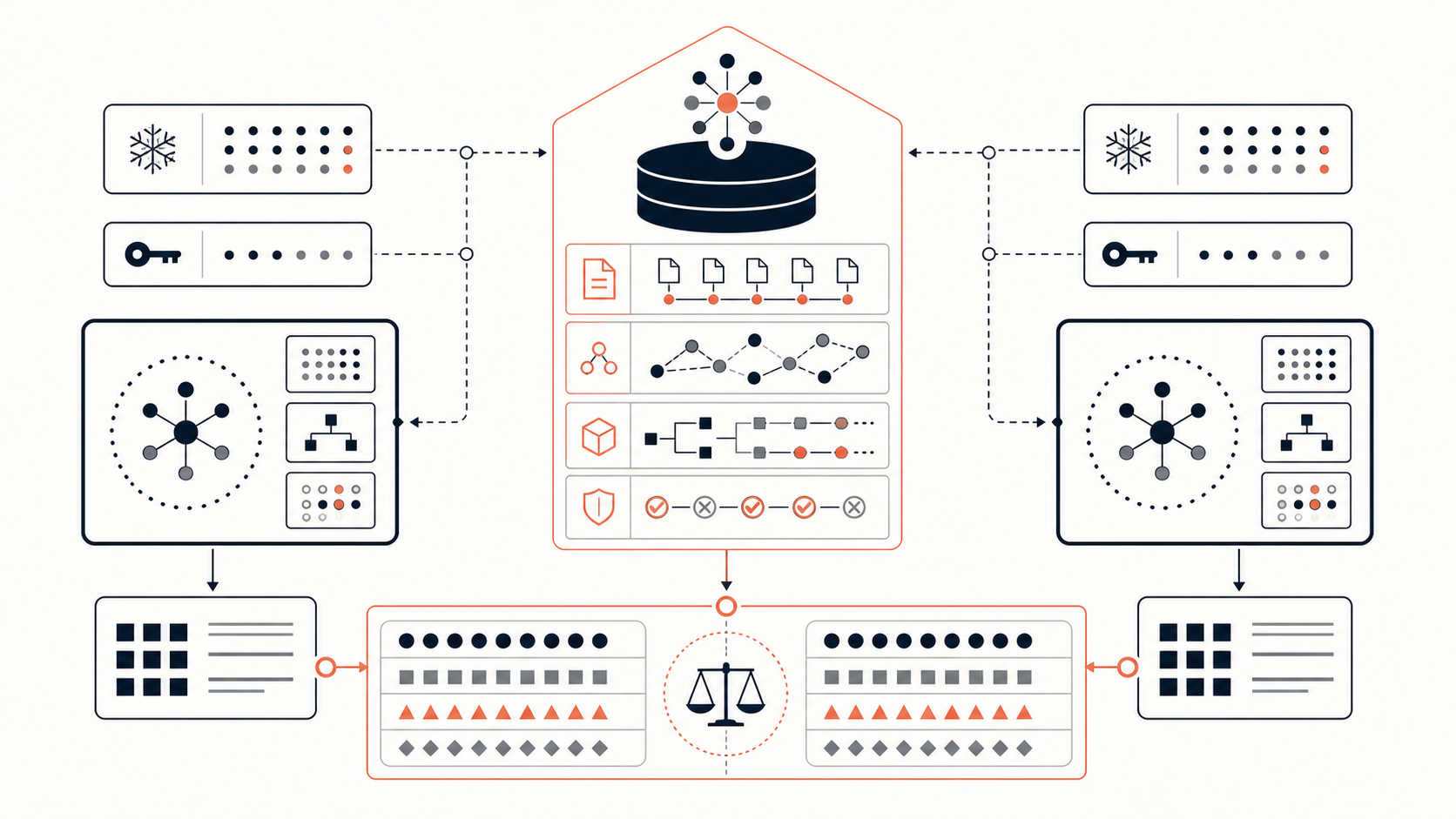
Score definitions found, paths supported, false edges, omitted edges, and tests justified. If you expose an external code graph, give both tools the same read-only query contract. Claude Code may access it through MCP or CLI; Pi needs a CLI or extension because built-in MCP is not documented.
That code knowledge graph is a shared external layer for model-independent structural queries with revision-aware provenance.
Context Recovery and Failure Modes
Pi stores sessions as JSONL trees and uses manual or automatic compaction to summarize older turns. Session data is conversation state, not a shared organization memory. Its context files and Skills can reload procedures, while extensions may add other persistence.
Claude Code supports session resume, compaction, CLAUDE.md, Skills, and per-repository machine-local auto memory. Auto memory can help one local repository workflow, but it is not a cross-machine source of truth and should not replace current source evidence.
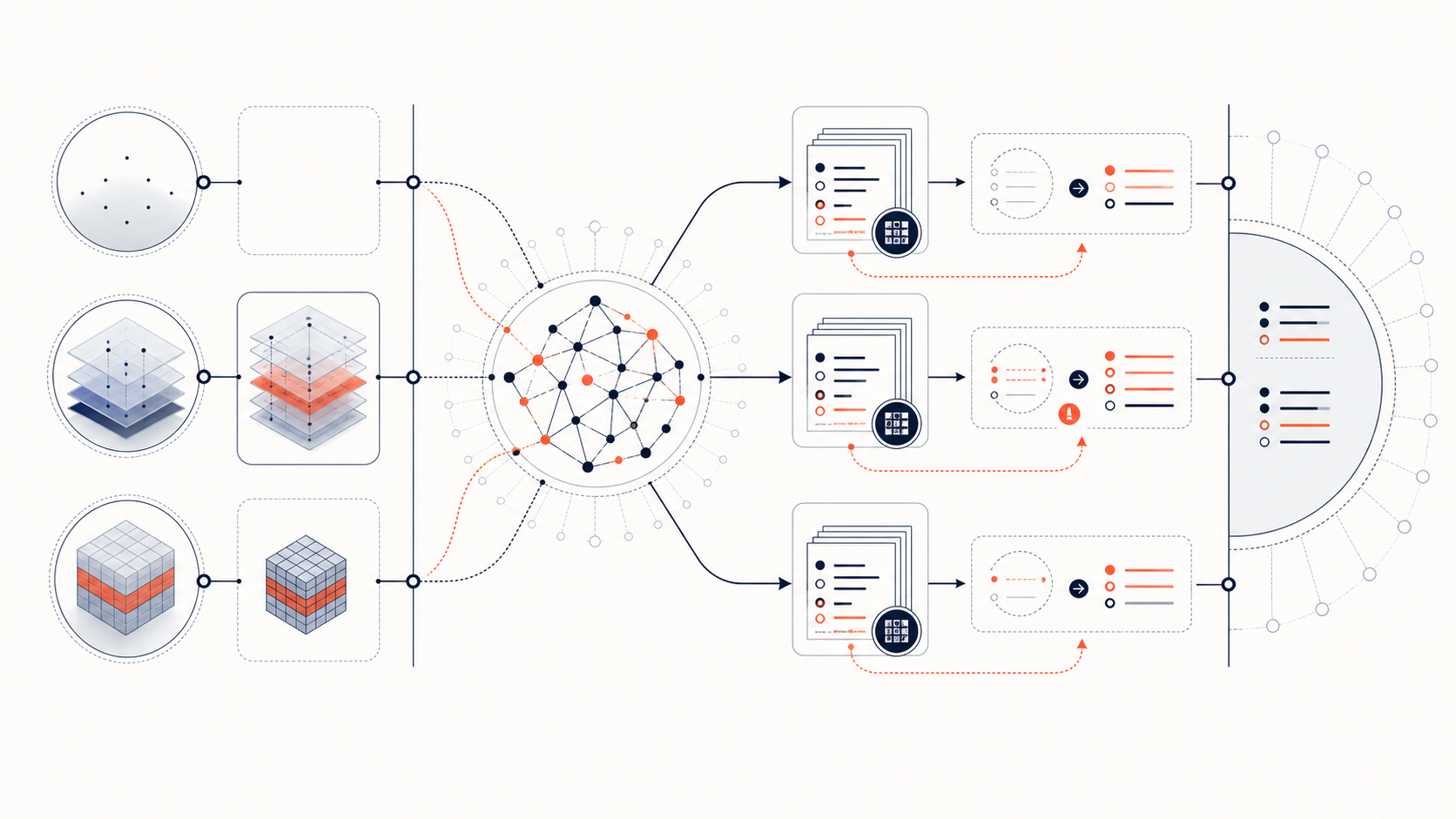
Test three recovery states:
- a genuinely fresh session with only committed context;
- a resumed session after the initial repository analysis;
- a compacted session after enough work to force summarization.
Ask each tool to restate the affected modules, evidence, unknowns, and tests. Then compare the answer with current source. Recovery quality is not how much prose survives; it is whether material claims remain supported and whether stale conclusions are rejected after the revision changes.
Common failure modes include reading popular directories instead of authoritative paths, treating session summaries as facts, trusting an external index built for another commit, and assuming permission features enforce semantic correctness.
FAQ
What evidence should teams compare?
Compare source-cited module locations, call paths, impact surfaces, test mappings, unsupported claims, explicit unknowns, tool/file reads, and recovery after fresh, resumed, and compacted states. Preserve the prompts and repository commit.
When should tests be manually verified?
Always verify material contract, security, migration, and cross-module tests before publishing a winner. Also inspect tests when an agent selects only a nearby unit test but claims broader behavior coverage.
Can both tools share one context layer?
Yes. Use committed neutral instructions plus a read-only, model-independent repository index with revision and provenance. Give each harness its own adapter and permission controls, then require current-source verification.
pi coding agent
Here, “Pi coding agent” means the current earendil-works/pi terminal harness and package, not an unrelated product named Pi. Pin the version when reproducing the comparison.
Conclusion
Claude Code has a broader documented set of large-repository controls; Pi has a smaller extensible core. That difference is useful context, not a verdict. A trustworthy comparison pins the task and revision, equalizes the evidence contract, restricts both runs to analysis, and scores supported repository conclusions. If you have not run that test, publish a protocol—not a winner.
Leave a Reply