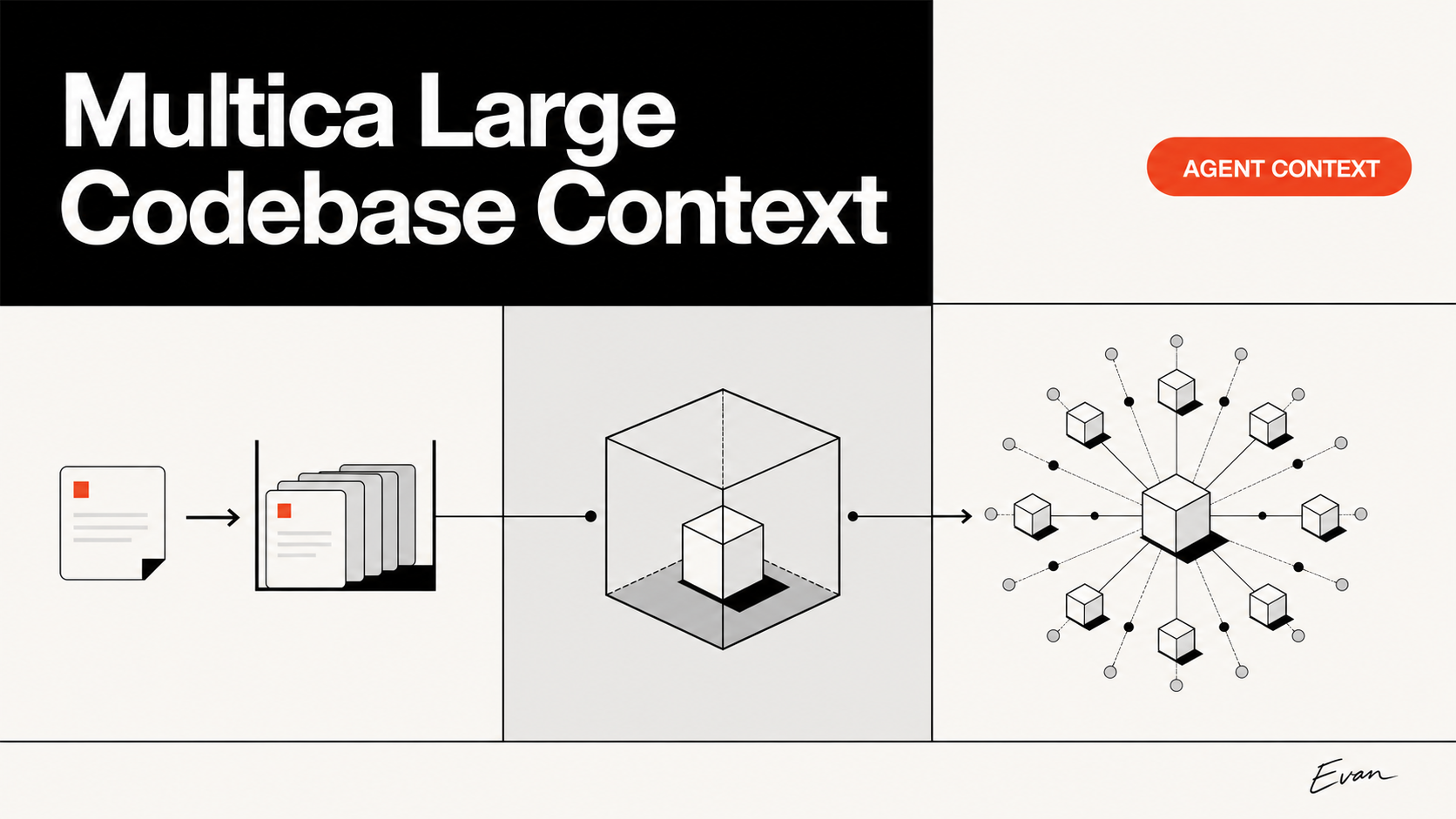
A Multica large codebase workflow can coordinate who receives a task, where it runs, and how its status is tracked. It does not by itself tell an agent which module owns a behavior, which callers depend on it, or which tests prove a change is safe. Pair Multica’s task and resource controls with a revision-bound repository evidence layer, then require the assigned agent to verify every retrieved relationship in current source.
This boundary matters because orchestration and repository understanding solve different problems. Multica’s managed backend owns workspaces, issues, task queues, and collaboration state. A local daemon invokes an installed coding-agent CLI, which performs the actual code work. Project Resources can point the run at a repository or local directory. None of those controls is a semantic model of the codebase.
The product is also early and moving quickly. This article was checked against Multica v0.4.10 on July 24, 2026. Current cloud runtime execution is described as coming or waitlist-only, while the service can coordinate local daemon execution. Public fixed cloud pricing was not listed at the verification cutoff; the appropriate buying step is to contact sales rather than assume the trial implies a permanent free plan.
Why Managed Agents Need Repository Context
Multica large codebase work needs both the platform's coordination state and a bounded account of the repository relationships relevant to the task.
A task board knows the work item. A runtime knows the checkout and tool process. A coding agent sees the prompt, instructions, files, and tool results available during its run. Large-repository work still depends on relationships that may sit outside the first obvious search result.
Consider a change to an authorization rule. The named function may live in one package, while policy registration, generated clients, database migrations, feature flags, and contract tests live elsewhere. An agent can produce a plausible local edit after finding the definition and two direct callers. The patch can still break an indirect consumer or violate an architecture decision it never read.
Useful Multica repository context therefore needs more than a repository pointer. It should provide a compact evidence packet:
- indexed repository and exact commit;
- likely modules and entry points for this task;
- direct dependencies plus known indirect or unresolved paths;
- relevant unit, integration, contract, and migration tests;
- generated-code boundaries and source generators;
- current architecture records, owners, and review constraints;
- gaps that the agent must resolve before it edits.
This packet narrows discovery without pretending to be authoritative. The agent should open the cited files in its own checkout and report any mismatch between the packet and current source.
What Task Assignment Solves
Multica repository context begins with the task's project resources and runtime brief, but those pointers do not by themselves establish call chains or change impact.
Multica is strongest when the problem is operational coordination. Its documented workflow covers issues, task creation, agent assignment, progress, retries, selected workdir or runtime, and supported provider-session resumption. That answers practical questions: who should attempt the task, where should the process run, when did it start, and what state did the coordinator record?
Project Resources add another useful layer. A Git repository resource can support an isolated per-task checkout. A local-directory resource works in the user’s directory and serializes access. Multica writes typed resource pointers to .multica/project/resources.json and summarizes available resources in the runtime brief.
Those mechanics are relevant to searches such as Multica-ai, but the product name is not evidence of automatic architecture routing. Multica does not document a built-in rule that assigns an issue to an agent because a semantic graph says that agent owns the affected module. A team may build that policy externally, but it should describe the policy as its own integration.
Project Resource preparation is also best-effort. If a fetch or resource brief fails, the task can still start without that section. A serious large-codebase workflow should treat a missing resource manifest as a visible precondition failure when the task depends on it, even if the platform does not block the run.
What It Does Not Tell Agents
The name Multica-ai identifies the coordination product; it does not imply that the product supplies a native semantic code graph.
Assignment does not establish system structure. It does not prove:
- the true runtime entry point for a feature;
- the complete call chain through registration, reflection, events, or generated code;
- the direction and authority of a dependency;
- which schema or configuration file is canonical;
- which tests cover the changed contract rather than a nearby implementation;
- whether a design note still matches the checked-out revision.
Workspace context and Skills do not close that gap on their own. Workspace context is shared guidance. A Skill is a reusable workflow package. Both can tell an agent how to investigate, what output shape to produce, or which command to run. Neither remains a current dependency model unless a separate process extracts, refreshes, and verifies those relationships.
Session resumption has the same limit. Resuming a supported provider session can restore one task’s conversational continuity. It does not reconcile that session’s conclusions with another agent, a newer commit, or a source-of-truth architecture model.
Module, Call-Chain, and Impact Knowledge
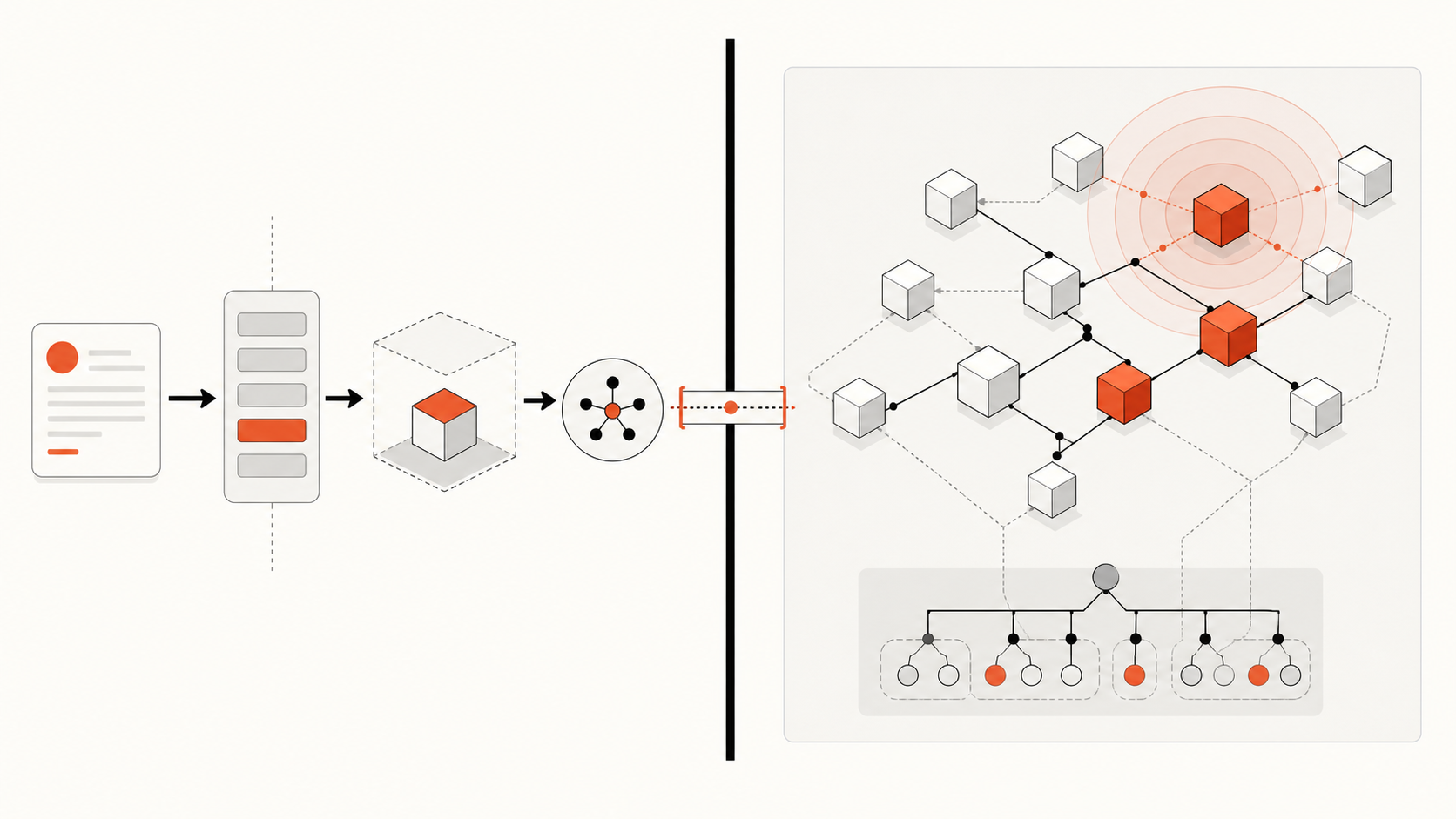
Build a small read-only repository layer that answers task-shaped questions. A generated JSON index can be enough for a modest codebase; a code knowledge graph becomes useful when relationships cross packages, repositories, schemas, events, and tests.
At minimum, store nodes for repositories, commits, modules, symbols, services, schemas, tests, and decisions. Store edges such as defines, imports, calls, registers, publishes, consumes, generates, tests, and constrains. Every edge should retain a source location, indexed revision, extractor version, and confidence or derivation method.
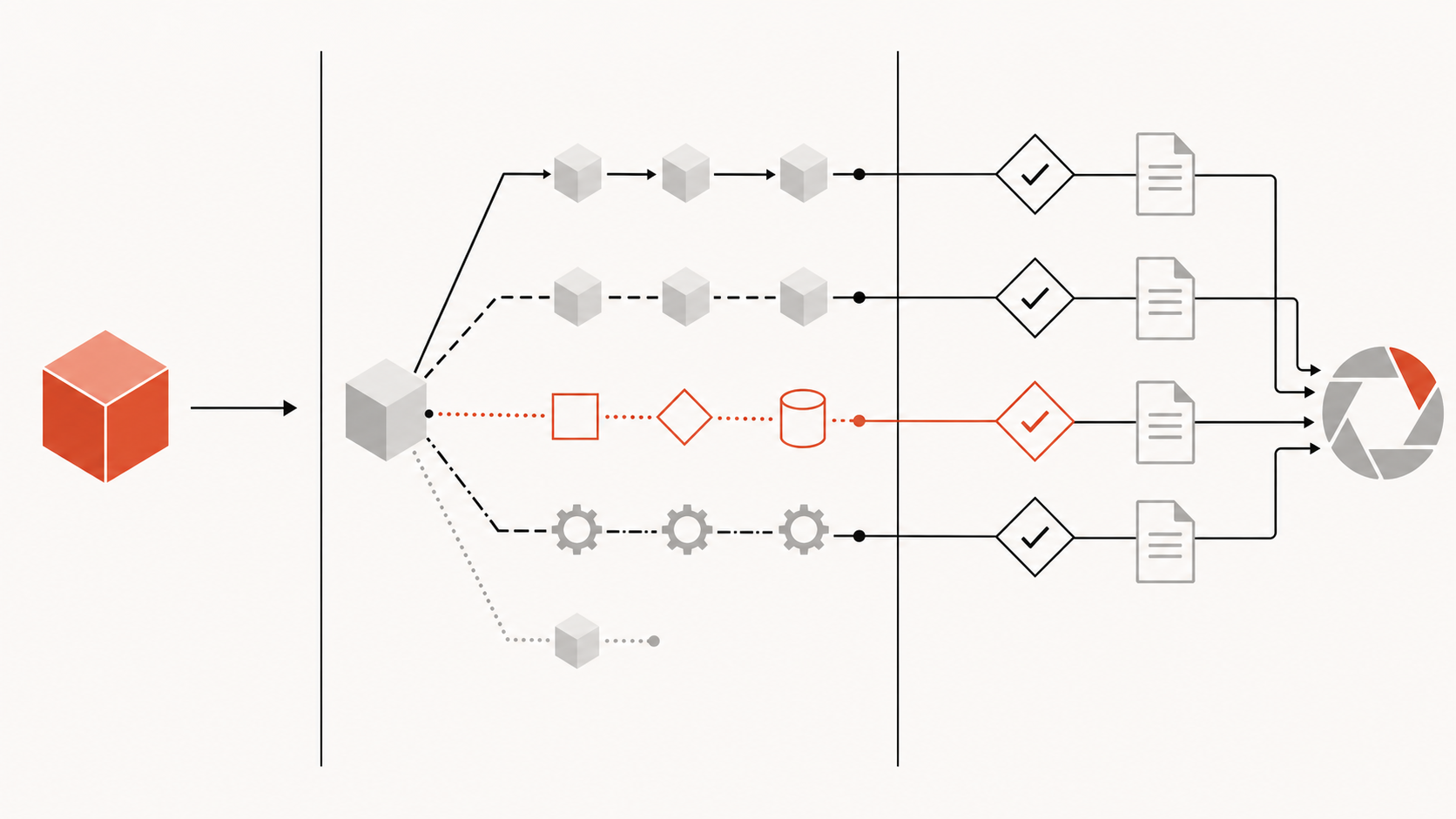
The assignment flow can then remain simple:
- Multica assigns the issue and prepares the task checkout.
- A pre-task hook or Skill requests a bounded context packet for the issue terms and target revision.
- The packet lists likely modules, dependency paths, tests, owners, and unresolved edges.
- The underlying coding agent verifies high-impact facts in source before planning edits.
- The agent records evidence and unknowns in the task result.
- Review compares the patch and tests against the same pinned revision.
This is a proposed team architecture, not a native Multica knowledge-graph feature. Keep the graph read-only for ordinary agents. Give index updates to a separate service or reviewed maintenance job so a coding task cannot rewrite the facts used to judge its own safety.
Limits and Verification Notes
Structured context can be stale, incomplete, or confidently wrong. Generated code can hide its source. Dynamic dispatch can defeat static extraction. A branch may move after the packet is built. A graph can also reveal sensitive relationships across repositories that an assigned agent should not see.
Use four controls:
- Revision binding: reject or refresh a packet when its commit differs from the task base.
- Provenance: show the file, symbol, and extraction method behind every material edge.
- Access filtering: apply repository and path permissions before retrieval, not after generation.
- Verification: require current-source checks and relevant tests before a relationship becomes a review conclusion.
Multica’s workspace roles, agent assignability, daemon tokens, and underlying coding-tool permissions are separate boundaries. A private agent controls assignment, not the visibility or mutability of every context source. A local-directory resource also operates in the real directory, so process credentials and write scope deserve OS-level containment.
Self-hosting is available, but the repository’s license is a modified Apache 2.0 license with restrictions around hosted or embedded commercial services and frontend branding. Teams evaluating deployment should review those actual terms rather than summarizing the project as stock Apache 2.0.
FAQ
Who validates assigned context?
The task owner should validate scope and revision before work starts. The coding agent should verify cited paths and relationships in its checkout, and the reviewer should check material impact and test claims. The index maintainer owns extractor health, not the final engineering decision.
When should tasks be split by module?
Split when modules have separable write scopes, tests, and integration contracts. Do not split merely because directories differ. If two tasks change the same schema, runtime registration path, or release boundary, keep one integration owner and make the dependency explicit.
What context should reviewers inspect?
Reviewers need the base commit, retrieved modules and relationship paths, files the agent actually inspected, unresolved edges, changed contracts, and the tests run. They should also see whether the resource brief or index refresh failed.
What is an example of a multi-agent system?
For this article, a practical example is a coordinator assigning separate planning, implementation, test, and review tasks to different agents while preserving isolated write state. Multica can coordinate those roles; a separate repository evidence layer keeps their structural claims comparable.
Conclusion
Use Multica for assignment, lifecycle, resource preparation, and collaboration state. Use current source plus a revision-bound map or graph for module, call-chain, impact, and test knowledge. The reliable pattern is not “the coordinator understands the repository.” It is “the coordinator delivers a bounded task and auditable evidence to an agent that must verify both.”
Leave a Reply