A Qoder CLI large codebase workflow should use AGENTS.md for stable conventions, not as a complete repository model. Large projects also need current source evidence, architecture records, dependency discovery, task boundaries, tests, and review. A separately maintained code knowledge graph can help select related evidence, but it is not documented as a native Qoder CLI feature.
This distinction matters because Qoder CLI rebuilds context for every session. Its official memory system can restore selected instructions and optional saved facts, yet neither mechanism guarantees current knowledge of callers, runtime behavior, design history, or another repository. The engineering problem is therefore evidence management, not simply prompt size.
Why Large Codebases Stress Qoder CLI
A large repository is a changing network rather than a stack of independent files. A seemingly local schema edit may affect generated clients, event consumers, migration jobs, deployment order, and another service maintained by a different team. The relevant relationship may appear in code, configuration, a design decision, or only in a failing integration test.
Qoder CLI can search, read, edit, and run commands, but tool access does not decide which evidence deserves attention. The agent still has to resolve several sources of ambiguity:
- two packages may use the same symbol name for different business concepts;
- a current test may contradict an old architecture document;
- generated files may look editable even though their source lives elsewhere;
- dynamic registration may hide a caller from ordinary text search;
- a monorepo rule may apply only after a file in a nested directory is accessed;
- an external consumer may not exist in the checked-out repository at all.
The last two points are especially important for Qoder repository context. The official memory documentation says Qoder searches upward from the workspace for project memory and stops by default at the Git root. Nested AGENTS.md and matching rules are loaded on demand after Qoder successfully reads a file within that subtree. Starting at the root does not preload every package-specific instruction.
Sessions introduce another boundary. Static memory can reload maintained instructions, while optional auto-memory can save selected reusable facts. A Subagent has its own isolated context and does not receive the parent conversation in full. The main session must pass relevant paths, evidence, constraints, and expected output when delegating work.
What AGENTS.md Can Capture
AGENTS.md is best used as a concise operating contract for humans and coding agents.
Qoder CLI documents the following static-memory scopes:
| Scope | Current location | Suitable content |
|---|---|---|
| User | ~/.qoder/AGENTS.md |
Personal workflow preferences that apply across projects |
| Shared project | <project>/AGENTS.md |
Team commands, repository boundaries, review rules, and architecture orientation |
| Local project | <project>/AGENTS.local.md |
Machine-specific URLs, local fixtures, or setup notes that should not be committed |
| Focused rules | <project>/.qoder/rules/**/*.md |
Topic-specific or file-scoped instructions |
The default context filename is AGENTS.md, although Qoder supports changing it through context.fileName. The TUI command /init can initialize or update the project file, and /memory shows the memory available to the session.
For an AGENTS.md large project setup, record facts that remain useful across tasks:
- authoritative build, test, format, and release commands;
- package ownership and boundaries that filenames do not reveal;
- generated-file rules and the location of their sources;
- security, compatibility, and review requirements;
- links or imports to approved architecture and decision records;
- the minimum verification expected before a change is complete.
Qoder also supports @path/to/file imports from AGENTS.md. That is useful for pointing to maintained architecture or testing documents without copying them into one oversized instruction file. Keep the root contract short and route readers to evidence with a clear owner and refresh rule.
The companion Qoder CLI context-engineering guide turns these layers into a maintained team workflow.
What Rule Files Cannot Represent
Rule files describe expectations. They do not automatically derive the repository’s current structure.
The difference becomes clear when a task asks a relational question:
| Question | Why a rule file is insufficient | Evidence needed |
|---|---|---|
| What calls this handler? | Callers change with code and may be indirect | Symbol references, routes, runtime registration, and source inspection |
| Which packages will a schema change affect? | Consumers may span languages or repositories | Imports, generated clients, contracts, owners, and integration tests |
| Why does this boundary exist? | A short rule rarely preserves the full rationale | Current decision record, issue history, and responsible owner |
| Is this file safe to edit? | Generation chains and deployment rules evolve | Generator config, build scripts, and current repository state |
| What should be tested? | Risk depends on the actual dependency path | Coverage, callers, contracts, and failure history |
Optional auto-memory does not close this gap. Qoder CLI currently enables it only in interactive sessions through QODER_MEMORY=1. It stores selected project background, preferences, feedback, and references as local Markdown. Those notes can become stale, and they do not become team-shared just because the source repository is committed.
Static memory is not enforcement. Qoder directs teams to permissions or Hooks when a command, tool, or path must be blocked. A deny rule and generator-aware test are stronger than prose alone.
Finally, public CLI documentation does not define a deterministic winner for contradictory prose across every user, project, local, nested, and rule layer. Avoid creating conflicts that require the model to guess. If two scopes disagree, resolve the source files and verify the loaded set through /memory.
Where Code Knowledge Graphs Help
A code knowledge graph can complement Qoder CLI by turning repository relationships into a queryable evidence index.
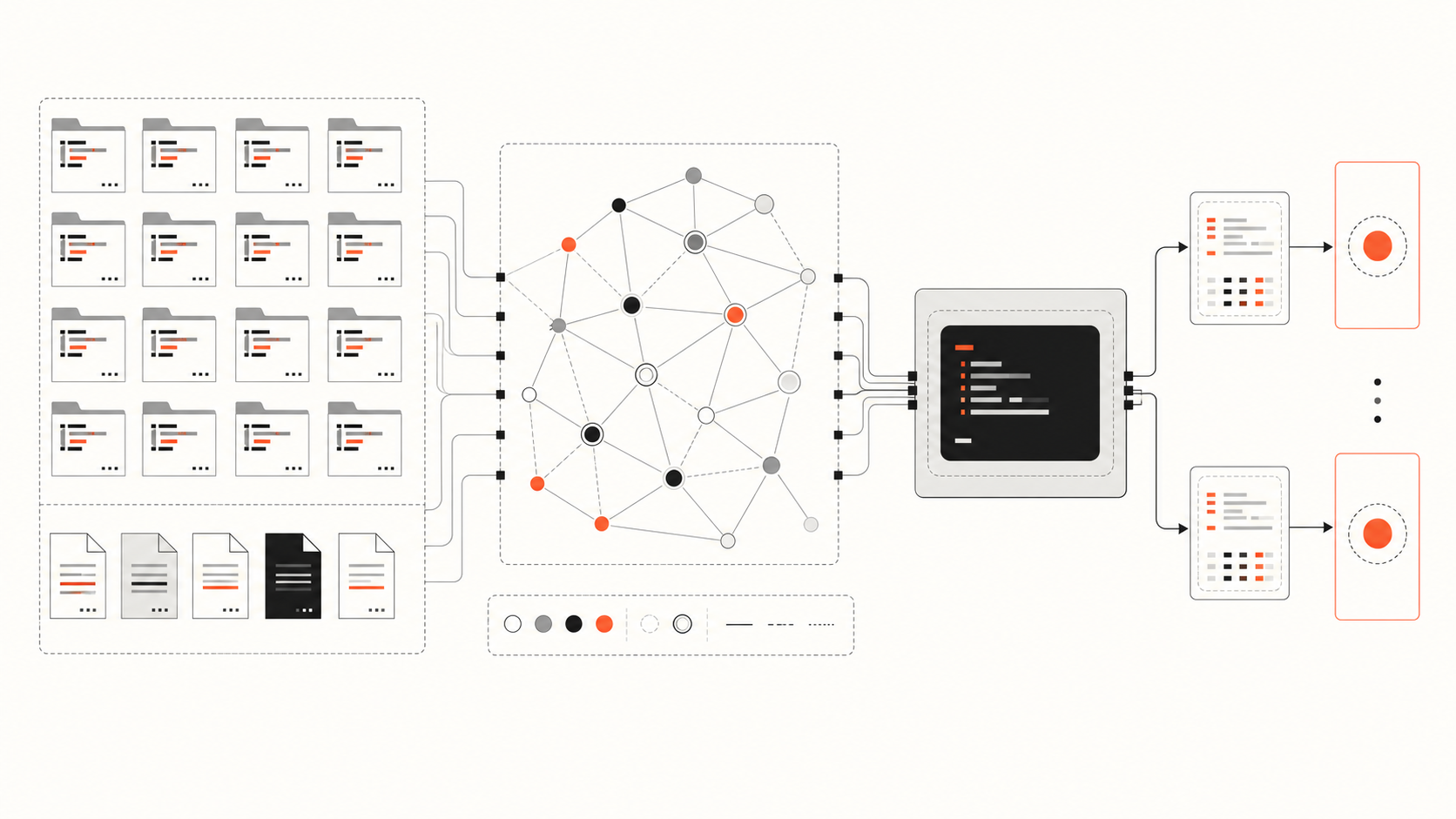
Graph nodes can represent packages, files, symbols, APIs, schemas, tests, owners, and design documents. Typed edges can represent imports, calls, implementations, generation, coverage, ownership, or rationale. The graph can then answer a narrow discovery question before the agent opens current source.
This is an external context layer, not a Qoder CLI capability claim. Qoder CLI supports MCP servers as tool sources, so a team may expose an independently maintained graph through MCP or another approved interface. The agent should still follow every graph result back to source.
A safe graph-guided workflow is:
- Freeze the task against a repository revision and define its allowed scope.
- Query the graph for the target entity, direct neighbors, cross-package paths, and related tests.
- Inspect the source files and documents behind important nodes and edges.
- Mark dynamic, inferred, cross-repository, or stale relationships as uncertain.
- Produce an impact statement before editing.
- Run focused tests, broader contract checks, and human review after the change.
Graphify is one way to generate reusable relationship artifacts from code and supporting documents. Its output should be treated as navigational evidence with provenance, not as an authority that overrides the current repository.
The broader comparison of AGENTS.md and knowledge graphs explains why the two layers should coexist. Developers using another terminal agent can apply the same boundary in the guide to helping Claude Code understand a complex repository.
Limits and Verification Notes
Every context layer can fail, so a large-codebase workflow needs explicit stop conditions.
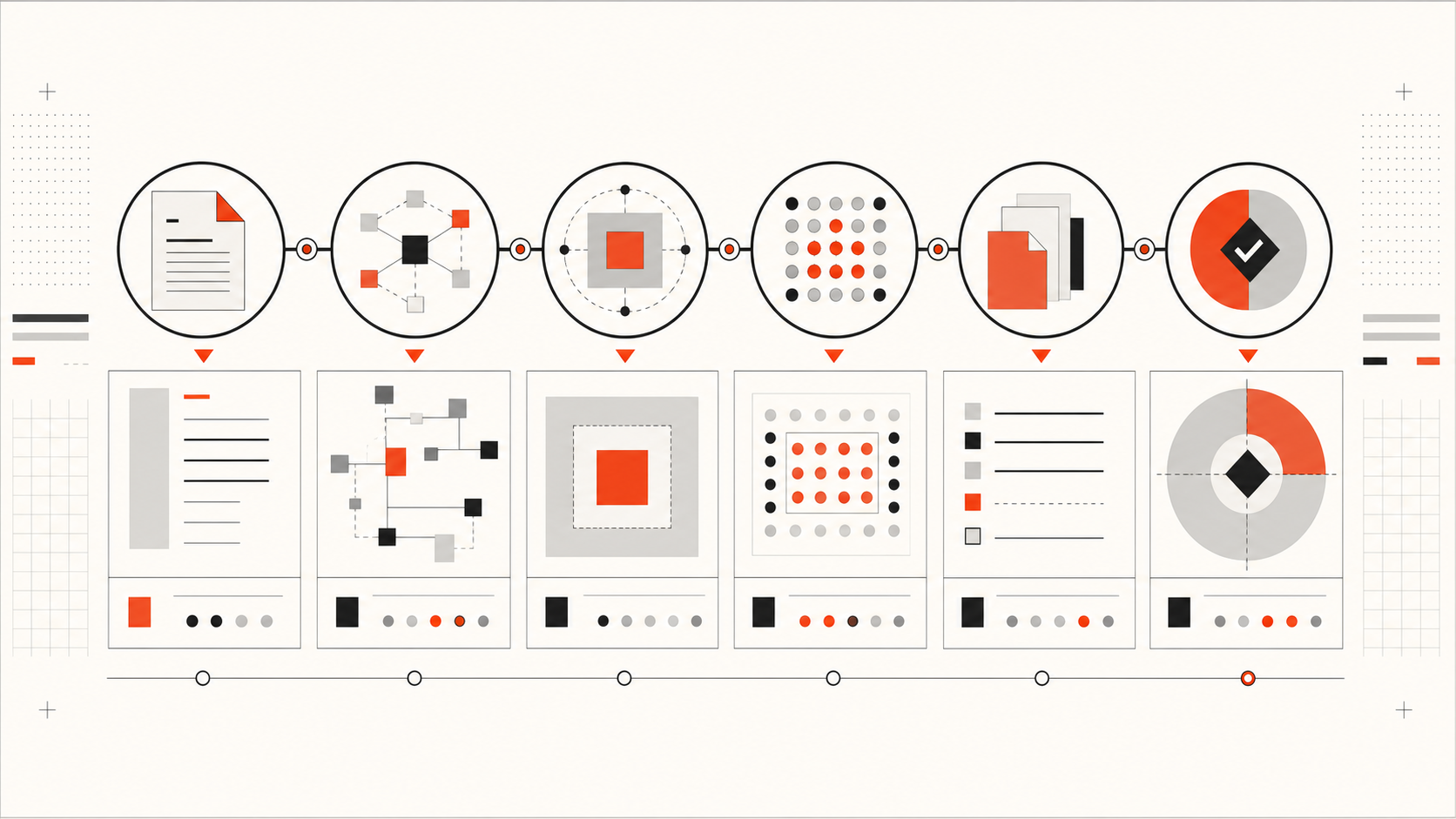
Use these controls before accepting a repository-wide result:
- Check freshness. Record the source commit for architecture documents, generated indexes, and graphs. Refresh them after structural merges.
- Confirm loaded instructions. Use
/memorywhen nested or scoped rules matter. Do not assume a file loaded because it exists. - Separate guidance from controls. Put mandatory restrictions in permissions or Hooks, not only prose.
- Constrain delegation. Qoder Subagents have isolated contexts and configurable tools and permissions. Pass an evidence packet instead of assuming shared conclusions.
- Inspect the installed surface. Built-in Subagents can vary by version and enabled features;
/agentsorqodercli agents listis the source of truth. - Verify graph edges. Reflection, configuration, generated code, runtime registration, and external systems can escape extraction.
- Test behavior. Run the smallest relevant tests first, then contract, integration, or repository-wide checks justified by the impact path.
- Require an owner. Architecture, security, persistence, public API, and deployment changes need review by the responsible boundary owner.
No current public benchmark establishes that Qoder CLI understands every large repository or that one configuration wins universally. Evaluate the workflow on representative private tasks: architecture location, dependency tracing, constrained multi-file changes, test selection, and recovery from an incorrect assumption.
FAQ
Who should maintain project memory files?
Assign ownership by subject. The platform or developer-experience team can maintain root commands and common workflow rules; package owners should maintain local boundaries and tests; security and operations owners should approve their policies. Review shared memory through normal pull requests, and name an owner for every imported architecture document.
When should teams refresh repository context?
Refresh context after package moves, public-contract changes, generator updates, dependency rewiring, major migrations, ownership changes, and revised architecture decisions. Also refresh before a high-risk task when the graph or document revision predates the affected code. Event-based refreshes are more reliable than an arbitrary calendar alone.
What belongs outside agent instructions?
Keep secrets, credentials, customer data, transient logs, speculative hypotheses, full source dumps, and fast-changing task status outside shared instructions. Store executable controls in permissions or Hooks, current behavior in source and tests, design rationale in approved records, and structural relationships in a refreshable index or graph.
Conclusion
Qoder CLI can load durable project guidance, scoped rules, optional local memory, and specialized Subagents. Those are useful foundations for AI codebase understanding, but they are not a complete representation of a large repository.
Use AGENTS.md to state stable conventions and route the agent toward maintained evidence. Use source, tests, architecture records, and dependency tooling to establish current facts. Add an external code knowledge graph when repeated cross-file and cross-document relationship questions justify its maintenance cost.
The decision rule is simple: if a repository claim cannot show its source, revision, relationship path, and verification method, treat it as a lead to investigate—not a fact to edit against.
Leave a Reply