GPT-5.6 Sol can support difficult multi-file refactoring, but the model should not define the impact boundary by itself. Give the agent a dependency map, current architecture constraints, relevant tests, and a staged approval process. Use the model to reason over verified evidence—not to guess which files, services, schemas, or consumers matter.
OpenAI lists GPT-5.6 Sol as its frontier model for complex reasoning and coding, with a 1,050,000-token context window and up to 128,000 output tokens. Those specifications make it a credible candidate for long code changes. They do not establish a dedicated multi-file refactoring accuracy rate, and they do not replace repository-specific impact analysis.
Why Multi-File Refactoring Is Hard
Multi-file refactoring is difficult because the visible edit is rarely the complete change.
Renaming a public type, changing an event schema, moving a package boundary, or replacing an authentication path can affect several kinds of dependency at once:
- compile-time imports and symbol references;
- runtime calls, reflection, registration, or dependency injection;
- generated clients, schemas, fixtures, and migrations;
- configuration, feature flags, and deployment order;
- tests that prove behavior at different layers;
- downstream repositories or services outside the agent's workspace;
- architecture decisions that explain why an unusual boundary exists.
Text search can find identical names. It may miss relationships encoded through configuration, convention, generated code, or dynamic dispatch. A large context window can hold more files, but it does not label which source is authoritative or prove that every dependent was retrieved.
The risk also changes by refactoring type. A private helper rename is usually local. A shared API, storage schema, authorization rule, or message contract can require cross-team review and a coordinated rollout. The agent should classify that risk before it receives broad write access.
A useful pre-edit question is: What evidence would prove that this impact set is complete enough to proceed? If the answer is only “the model read many files,” the workflow has not established a defensible boundary.
What GPT-5.6 Sol May Improve
GPT-5.6 Sol may improve the reasoning and execution layer around a complex refactor.
OpenAI's official model page documents support for tools including file search, hosted shell, Apply Patch, Skills, MCP, and related Responses API workflows. OpenAI's GPT-5.6 launch report also publishes results for SWE-Bench Pro, DeepSWE v1.1, Terminal-Bench 2.1, and long-context evaluations.
These results support treating Sol as a strong coding-agent candidate. They do not measure whether it preserves every contract in a particular repository. Terminal tasks, issue resolution, and long-horizon engineering overlap with refactoring work, but none is a direct “multi-file refactoring correctness” benchmark.
In a well-designed workflow, the model may help with:
- decomposing a broad change into reviewable slices;
- comparing an interface with implementations, callers, and tests;
- maintaining a plan through repeated edit-test-debug cycles;
- interpreting failures and revising the impact hypothesis;
- reviewing the combined diff for omissions and inconsistent edits.
The 1.05M context capacity is useful when the task genuinely needs substantial primary evidence. It should not become a reason to load the entire repository by default. OpenAI's own longest-range retrieval results are lower than its shorter-range results, reinforcing the distinction between accepting tokens and using every relevant relationship reliably.
For the general model-versus-repository boundary, see GPT-5.6 Sol and Codebase Understanding.
Why Dependency Graphs Matter
A dependency graph turns the first phase of refactoring from broad reading into explicit relationship queries.
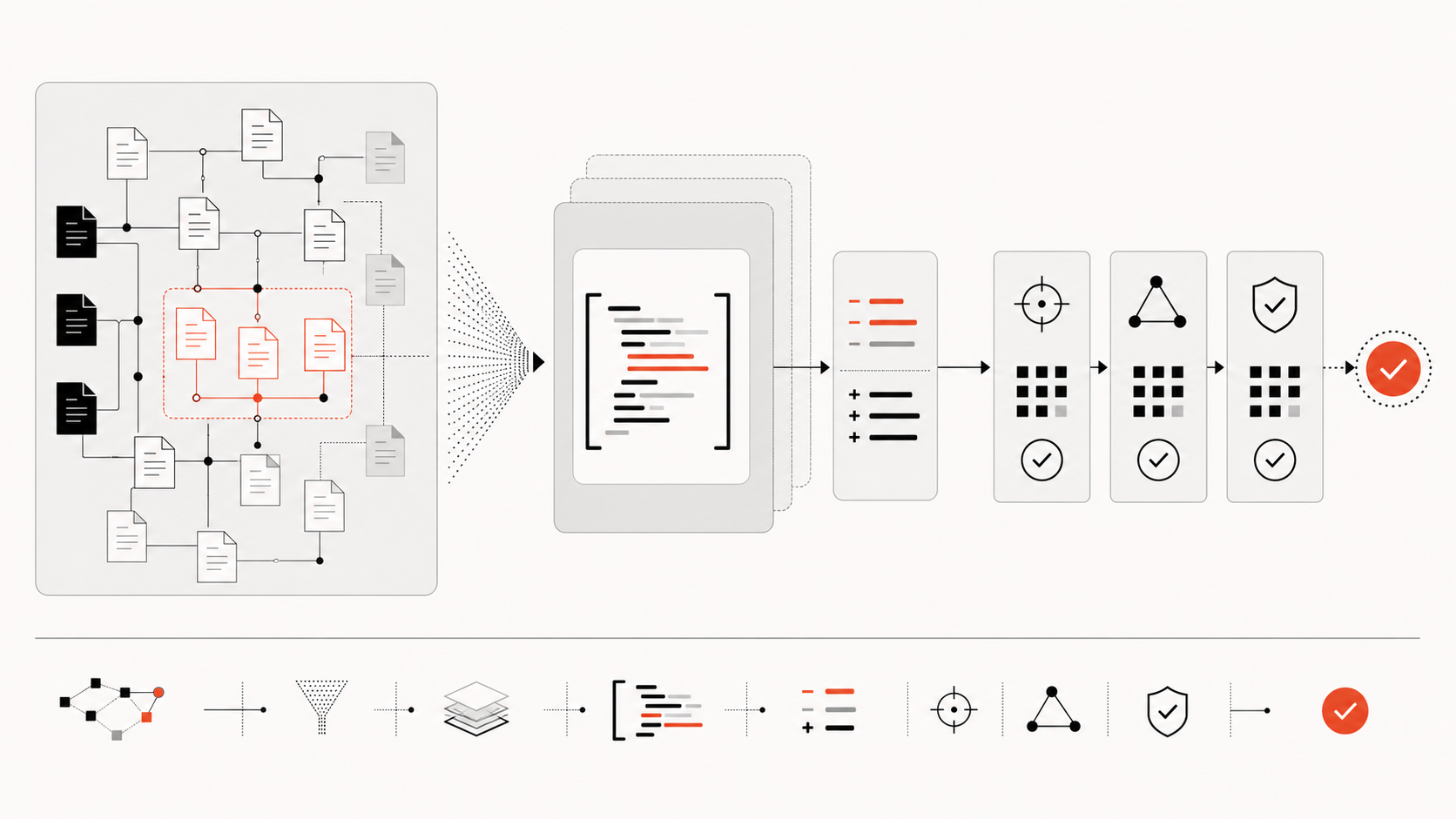
The graph narrows candidates; source files and tests remain the authority for the final change.
Useful nodes can represent packages, files, symbols, routes, schemas, tests, owners, and architecture decisions. Edges can represent imports, calls, implementation, generation, coverage, ownership, or deployment dependencies. The agent can then ask concrete questions:
- Which modules call or implement this contract?
- Which tests cover the affected path?
- Which generated artifacts derive from this schema?
- Which packages are downstream of this boundary?
- Which architecture document explains the dependency direction?
Graphify provides a model-independent query layer for this kind of repository structure. The graph is not a substitute for current code. It is a navigation and impact-analysis aid that points the agent toward evidence to open and verify.
Graph freshness is part of correctness. Record the source commit used to build the graph and refresh it after structural changes. If a graph, documentation page, and current source disagree, the agent must surface the conflict instead of silently choosing the easiest account.
This separation also makes model trials fairer. GPT-5.6 Sol and another model can receive the same repository snapshot, graph queries, permission boundary, and acceptance tests. The team can then compare reasoning and execution rather than accidentally comparing different context preparation.
Map Impact, Tests and Design Constraints
A safe refactoring pilot should produce an impact packet before the first edit.
The packet should contain:
| Evidence | Questions it must answer |
|---|---|
| Change contract | What behavior or interface is changing, and what must remain compatible? |
| Dependency set | Which callers, implementations, consumers, generated files, and external systems may be affected? |
| Architecture constraints | Which boundaries, ownership rules, or decisions limit the solution? |
| Test map | Which focused, integration, type, build, and migration checks prove the change? |
| Rollout plan | Does the change require ordering, a compatibility phase, a feature flag, or rollback support? |
| Approval boundary | Who must approve API, schema, security, or cross-team changes? |
Ask the agent to cite files and symbols behind each claim. Unknowns should remain explicit. A fabricated complete-looking map is more dangerous than an honest gap.
Then separate exploration from mutation:
- start with read-only repository discovery;
- review the impact packet and dependency explanation;
- grant write access for a bounded slice;
- run focused tests immediately;
- expand to integration, build, type, and migration checks;
- inspect the combined diff and regenerate structural context;
- require human approval before merge or rollout.
Make the pilot representative but recoverable. A change with known dependents and reliable tests is more informative than a trivial rename, while a production-critical schema migration is too risky for the first trial.
The comparison framework in Sonnet 5 vs Fable 5 for Repository Tasks provides additional model-trial controls.
Limits and Human Review Points
GPT-5.6 Sol can still miss a dependent, misunderstand an intentional exception, select incomplete tests, or produce a plausible migration that fails under real deployment order.
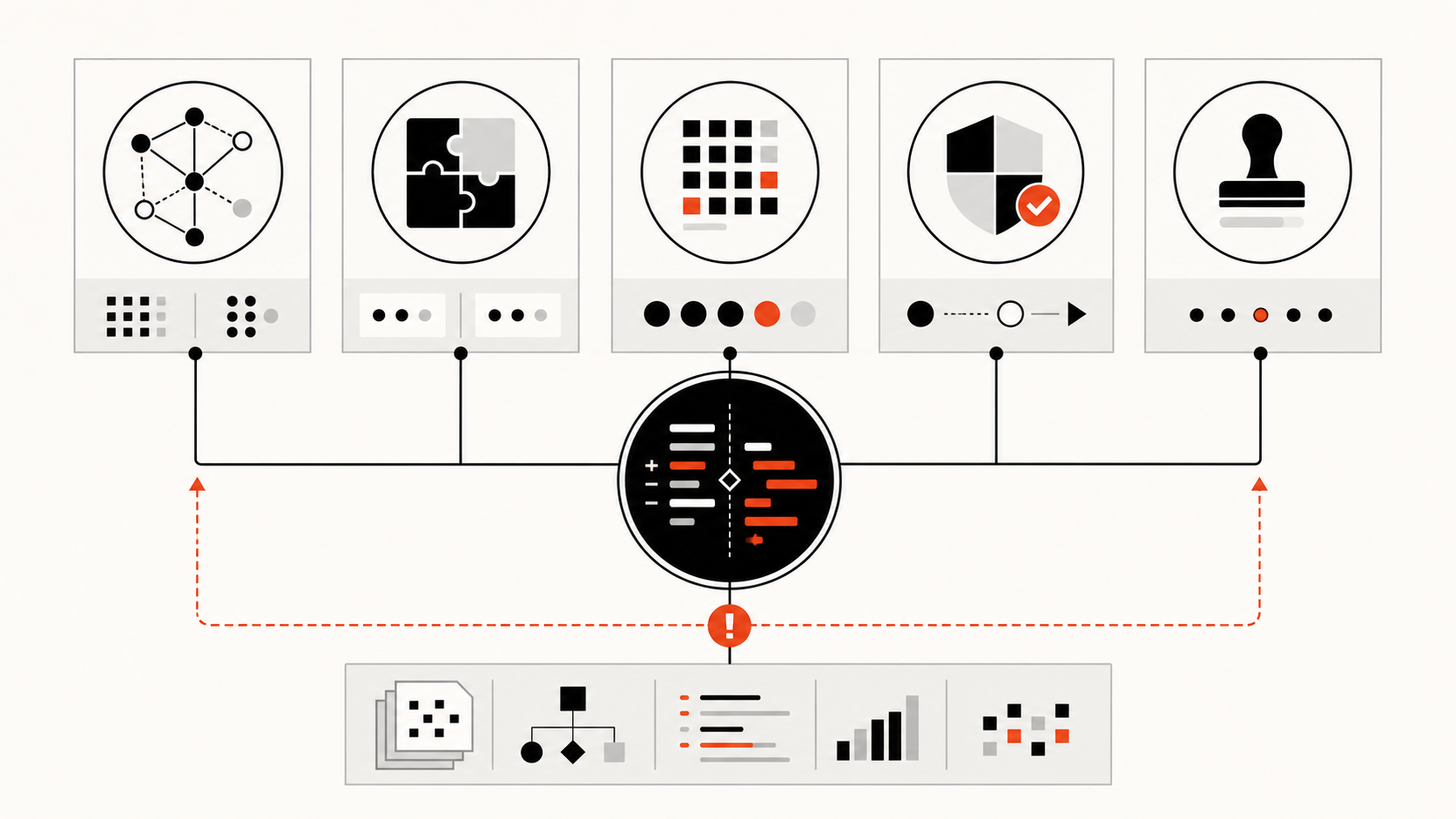
High-impact changes need explicit evidence and approval gates even when the model completes the patch and tests.
OpenAI's published benchmark results are vendor-reported under named harnesses and settings. They should not be converted into a universal claim that Sol is the best model for every repository or that a benchmark percentage is a refactoring success rate.
Human review should be mandatory when the change affects:
- public APIs or shared libraries;
- database schemas, migrations, or data retention;
- authentication, authorization, secrets, or security controls;
- billing, compliance, or customer-data paths;
- cross-repository contracts or deployment order;
- generated code whose source-of-truth workflow is unclear.
Record the model ID, reasoning setting, repository revision, tools, retrieved evidence, commands, test results, reviewer decisions, latency, and cost. This creates a reproducible trial and makes it possible to distinguish model improvement from better prompting or better repository context.
Finally, avoid carrying stale reasoning across a changed task. If tests invalidate the original dependency hypothesis, rebuild the plan from current evidence rather than preserving a coherent but obsolete narrative.
FAQ
What changes need dependency review first?
Review shared APIs, schemas, security boundaries, generated artifacts, public packages, cross-service messages, and changes with external consumers before editing. A local private helper with strong tests can use a lighter process.
How should teams pick a refactoring pilot?
Choose a bounded, reversible change with multiple known dependents, reliable acceptance tests, and a clear human owner. Avoid both trivial renames and first-run production migrations. Run the same task from clean sessions when comparing models.
What test signals should agents inspect?
Inspect focused unit tests, caller and contract tests, integration tests, type checks, build output, migration checks, generated-file diffs, and CI failures. The agent should explain why each selected test covers part of the predicted impact.
Conclusion
GPT-5.6 Sol provides substantial context capacity and a strong coding-agent tool surface, but safe multi-file refactoring is a repository-systems problem.
Use dependency graphs to bound discovery, current source to verify relationships, tests to challenge the change, and human review to approve high-impact decisions. The practical rule is simple: do not grant broad mutation authority until the agent can explain the affected contracts, cite the evidence, and name the checks that would disprove its plan.
Leave a Reply